

New Delhi: The far-reaching impact of the novel coronavirus (COVID-19) pandemic continues to dominate news headlines and agendas across all sectors around the globe. The outbreak has posed unprecedented challenges and in many cases, government continuity plans are being put to test for the first time.
However, even as the stakeholders at all levels of government and the private sector hustle to direct their efforts towards formulating business continuity and contingency plans, immediate relief is far away from sight.
Like every other industry, the COVID-19 is having a rapidly escalating impact on Government to Government initiatives, strategic projects, development, and infrastructure programs in the Indian subcontinent as well. Although the full extent of these impacts remains to be seen, below is an overview of some of the key projects across the Indian subcontinent nations, which are bearing brunt of the virus.
Nepal
The Himalayan nation is positioned at a critical juncture during this pandemic. Pocketed between China and India, Kathmandu continues to be highly susceptible to incidents emanating from its immediate neighbors.
Prime Minister KP Sharma Oli-run government is China’s second-largest trading partner and the infection is certain to impact its economy as well. With six confirmed cases of the novel coronavirus (COVID-19) infection, Kathmandu’s economy is starring at major crisis even though it was immune to earlier financial sufferings – including the recession of 2007-09. The COVID-19 is set to target three main aspects of the Nepali economy above all – international trade, strategic projects, and remittance inflow,
Over 60 power projects take a hit
The plan of PM Oli and his cabinet of generating at least 1,000 megawatts of electricity in the current fiscal year unlikely to materialize with the pandemic having a direct effect on the projects. The slow but rising cases of infection have halted construction works on several projects.
“As a result of the fear of infection, works have stopped on more than 60 hydroelectric projects with a combined generation of 3,500 MW, including 30 projects under construction that have a combined generation of 1,500 MW” Shailendra Guragain, chairman of the Independent Power Producers Nepal said.
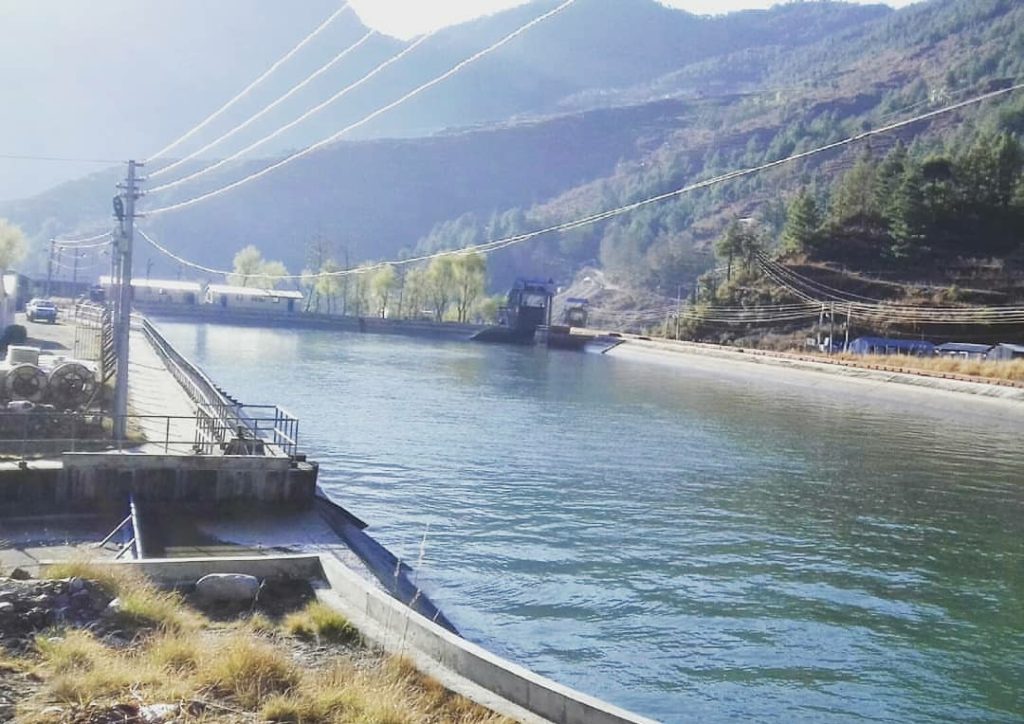
According to sources all these 30 projects have Chinese construction contractors, engineers, and consultants, using Chinese equipment and materials. Projects such as Upper Tamakoshi, Sanjen, Rasuwagadhi, Middle Bhotekoshi which are capable of generating at least 1,000 MW in the current fiscal year are also reeling under the direct or indirect impact of the virus.
Some 200 Chinese workers were involved in the construction of the 111 MW Rasuwagadhi Project. They left Nepal in the first week of March and have returned to China. Government officers claimed that around 80 of these workers have tested positive to the COVID-19 and would not be able to return.
Work continues to be suspended on the 57 MW Sanjen project. Chinese engineers and workers have not returned from Beijing for the supply and installation of electromechanical components in the project.
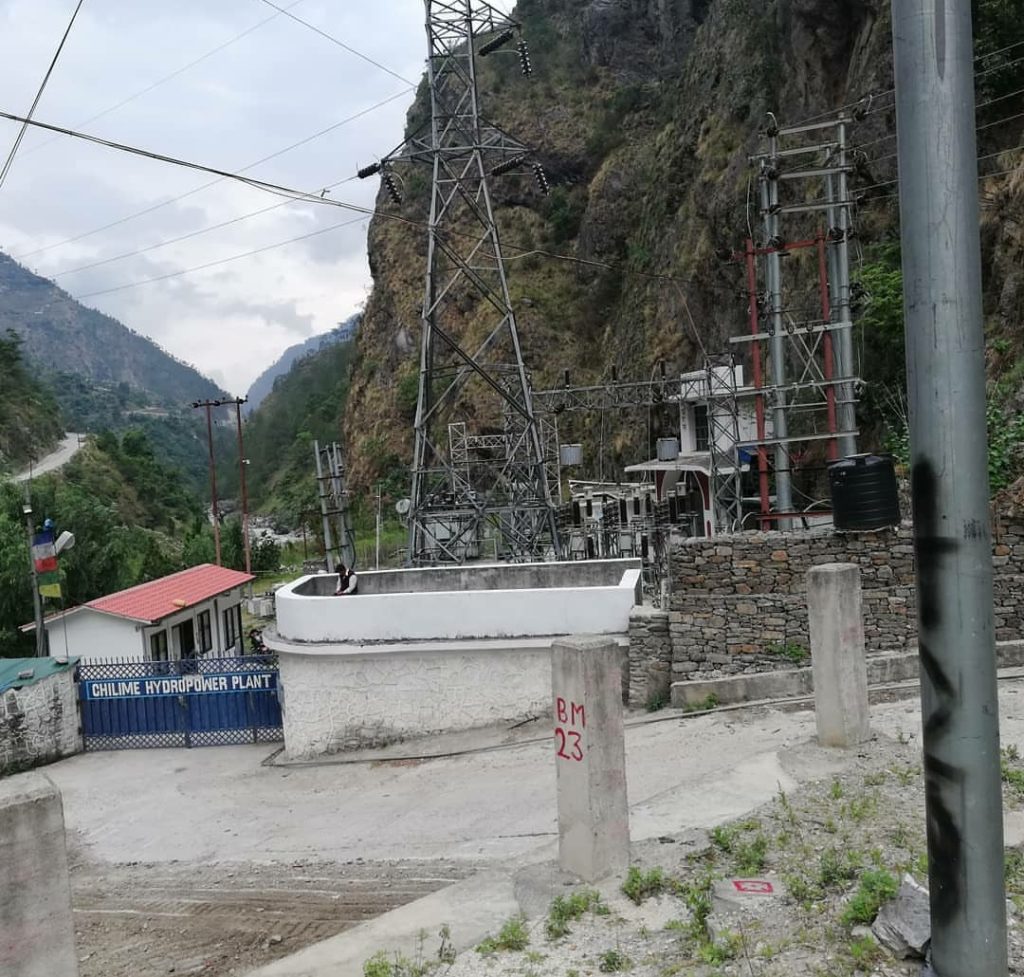
Lack of materials and goods from China has also seized work on the Chilime Trishuli 220 KV transmission line. The pandemic has suspended the import of materials from China and even stopped contractors from paying the wages of the workers.
Chinese contractor company – Pinggao Group Ltd – which is overseeing the work on the Chilime Trishuli project is based in the Hunan province of China. This province is connected with the epicenter of the novel coronavirus (COVID-19).
The required materials for the construction of the substation are inspected in China and the required materials for the transmission line are examined in India. Materials from China arrive via Kolkata and the widespread outbreak of the novel coronavirus has affected the transportation of the materials. According to project officials, two hydropower projects in the region were aimed to commence production within the current fiscal year.
Petrol exploration suspended
Kathmandu’s shared dream of finding petrol, with China, in the Dailekh region has been disturbed.
A large team of Chinese geologists, researchers, surveyors, technicians, engineers and support workers had carried out field research for five months in the Panchakoshi area. The team has already completed primary work. However, they have not been able to travel to China to examine it.
According to government sources, the Chinese Embassy in Nepal has not let its citizen to return to the mainland due to the outbreak. Though the first phase of the work — that is, the collection of data — has been completed, most members of the team from Beijing have been staying in camps set at Chupra and Dullu regions.
“They (Chinese team) have completed the work of underground statistics collection around 200 kilometers for five months. The next step in the project is still uncertain, as the data and samples they have collected cannot be sent to China,” a government official with the Nepalese Department of Mines and Geology (DoMG) said.
Chinese firms, involved in the project, are also worried that the investment for the exploration of petroleum products will increase with the suspension of work due to the outbreak, the official added.
The petroleum exploration work has been carried out taking Kotila of the Panchakoshi area to the Paduka area as the base. A 10-line seismic survey was carried out. The team had carried out petroleum, geological, magnet, telluric, geochemical and sampling survey. On the basis of the lab test report, the Chinese team will carry out deep drilling between four to six kilometers in the region.
Trade
In the past fiscal year 2018-19, the trade volume between Nepal and China was to the tune of $1.81 billion. All the trading ports with China have remained closed for the past month due to the COVID-19 outbreak. Trade between the two neighbors has come to a grinding halt.
Nepalese businessmen have started voicing the shortages of workers in large-scale projects being constructed by Chinese companies. The Chinese contractors have been bringing Chinese nationals to work on infrastructure projects.
Garments, daily consumer goods, electronics, and raw materials are imported from China. There is already a shortage of such goods in the market. Two of the trading ports with China such as Rasuwagadhi and Tatopani remain closed for a month.
Even freight containers from China that arrive through the ports in India have not arrived. There are large-scale shortages of goods in Nepali markets. The shortages have led to the price spiral to rise. “The impact on the suspension of import-export with China is already visible in the market. Most trade activities have suffered and will take a toll on us,” Bachhu Poudel, chairman of the Nepal Trans Himalayan Chamber of Commerce said.
Most of Nepal’s raw materials arrive from various regions and districts of China. With the closure of the ports, the industries and market have taken a nosedive.
Consignments from China such as fruits and construction materials are on the border, as PM Oli has sealed border. The Chinese have also not been able to bring in materials for the projects they are constructing in Nepal.
The fear of the virus has not compelled Nepalese traders and businessmen to search for partnerships in other South-east Asian nations such as Vietnam, Thailand, and Cambodia.


