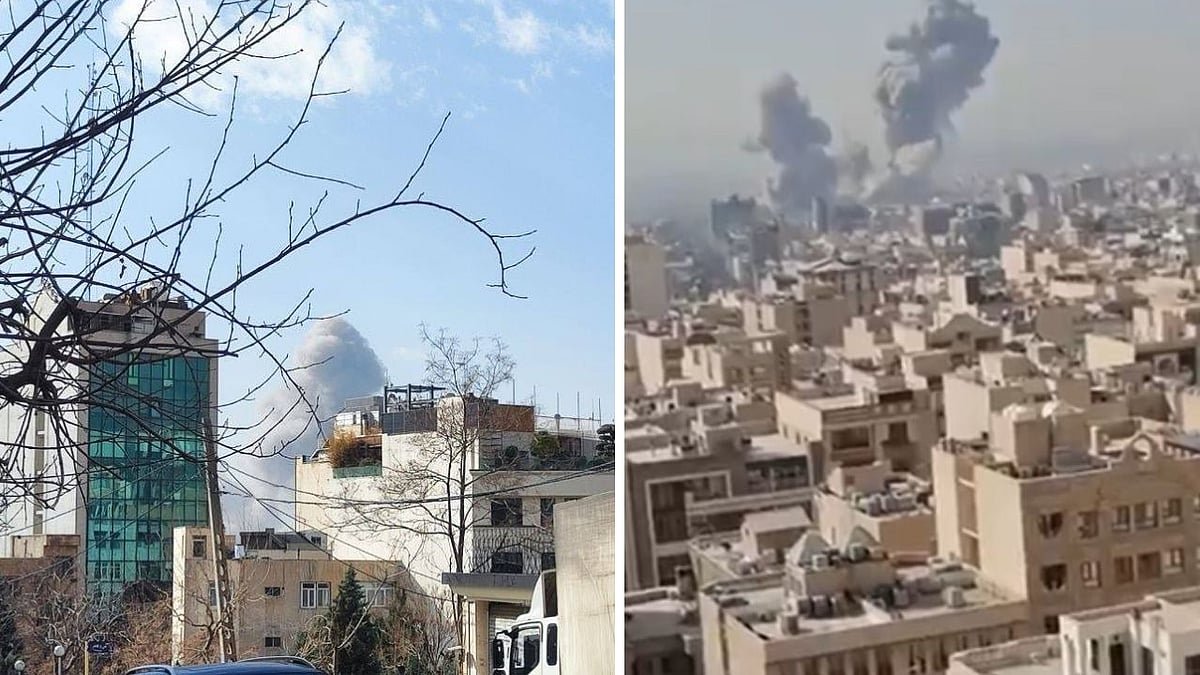
A dramatic escalation shook the Middle East on Saturday as powerful explosions echoed through central Tehran following what Israel described as “preventive” missile strikes. The sudden assault has intensified already fragile tensions between the two longtime adversaries.
Blasts Rock Key Areas of Tehran
According to Iranian state-linked media, multiple projectiles hit sensitive zones in the capital, including areas near University Street and the Jomhouri district. Thick plumes of smoke were reported rising from around Pasteur Street — a highly secured neighborhood known for housing major government offices.
Emergency teams were rushed to affected sites, though Iranian authorities have yet to officially confirm the extent of the destruction or any casualties. Eyewitness accounts circulating locally described loud shockwaves that rattled buildings across central Tehran.
Israel Activates Nationwide Precautions
Soon after the strikes, the Israeli military triggered air raid sirens across several cities as a precaution against potential retaliation. Officials said the alerts were designed to prepare civilians for any incoming missile attacks.
Authorities also implemented emergency measures, including closing schools nationwide, advising employees to work remotely, and suspending large public gatherings. Security forces were placed on high alert, particularly in border regions.
The Israeli government stated that the action was intended to neutralize what it called “immediate threats,” though further operational details were not disclosed.
Nuclear Talks Add to Diplomatic Pressure
The escalation comes at a time of heightened diplomatic friction between the United States and Iran over a possible revival of nuclear negotiations. Former U.S. President Donald Trump recently described Iran as “very difficult” and “very dangerous” while speaking about stalled diplomatic efforts.
A fresh round of discussions between Iranian and American representatives had taken place in Geneva, with additional meetings reportedly planned. However, distrust has deepened in recent years as Israel and Iran shifted from covert hostilities to more open military exchanges involving airstrikes and missile operations.
Fears of Wider Middle East Conflict
Security analysts warn that Saturday’s developments mark one of the most serious flare-ups in recent times. The direct nature of the reported strike could potentially trigger countermeasures not only from Iran but also from allied regional groups.
Global leaders are closely monitoring the situation, fearing that continued escalation could drag the wider Middle East into a prolonged confrontation.
For now, both Tehran and Tel Aviv remain on high alert as the world watches anxiously for the next move in this rapidly unfolding crisis.