

London: A few days ago, India looked unstoppable. Back-to-back thumping victories over Pakistan and the Netherlands had sent a strong message across the ICC Women’s T20 World Cup. Runs were flowing, wickets were falling, and perhaps most importantly, India had built a massive net run rate advantage that placed them in an enviable position in Group A.
Then came South Africa. At Old Trafford, India suffered their first setback of the tournament as Marizanne Kapp produced a match-winning all-round performance to guide the Proteas to a six-wicket victory. It wasn’t a crushing defeat, nor was it a result that derailed India’s campaign. But it did make the road to the semifinals a little more complicated.
The good news for Harmanpreet Kaur’s side? Their fate remains firmly in their hands.
The Value of Those Early Big Wins
Tournament cricket often rewards teams that start fast, and India did exactly that. The 64-run win against Pakistan at Edgbaston and the 95-run hammering of the Netherlands at Headingley were worth far more than just four points. Those victories created a healthy net run rate cushion that could prove invaluable in the closing stages of the group phase.
Currently, Australia sits at the top of Group A with six points from three matches. India is next with four points from three games, while South Africa and Bangladesh also have four points.
What separates India from the chasing pack is their superior net run rate. Even after the loss to South Africa, India’s NRR remains comfortably ahead of both South Africa and Bangladesh. In a tournament where qualification often comes down to tiny margins, that advantage could become India’s biggest ally.
The reality is simple: those dominant wins over Pakistan and the Netherlands may end up carrying almost as much weight as victories in the final week.
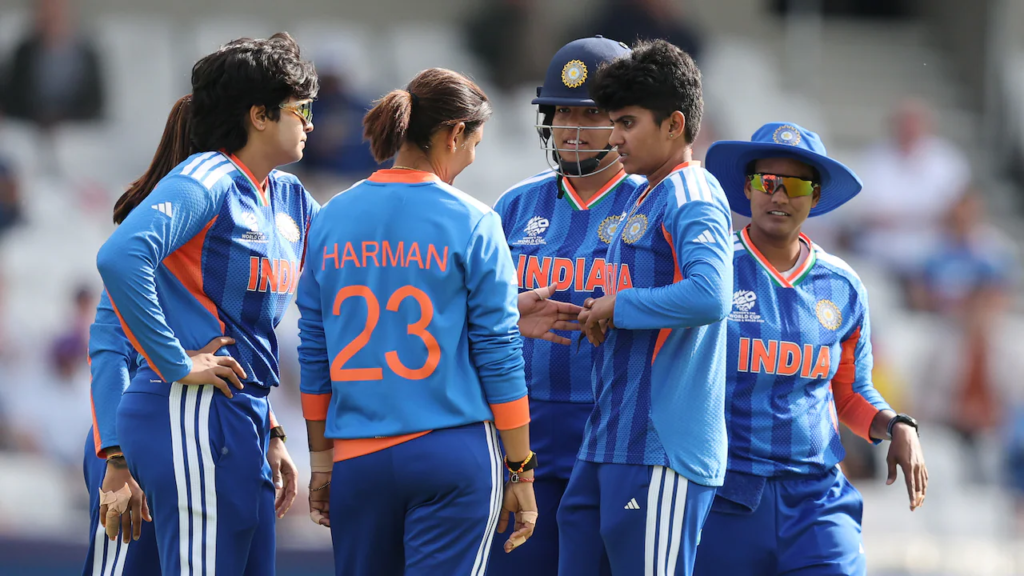
Bangladesh: The Match India Cannot Afford to Ignore
The temptation is to look ahead to Australia. After all, the June 28 clash at Lord’s has all the ingredients of a classic. Two of the strongest teams in the world, a packed crowd, and potentially a semifinal place on the line all add up to a classic.
But before that comes Bangladesh. And that is where India’s complete focus must be. Bangladesh has quietly kept itself alive in the competition and knows that a win over India would dramatically change the group’s dynamics. They have nothing to lose and everything to gain.
For India, the encounter is the match that could determine how much pressure they will carry into Lord’s. A victory would move Harmanpreet’s team to six points and keep multiple qualification routes open. It would also allow India to approach the Australia game from a position of strength rather than desperation.
A defeat, however, would leave them walking a tightrope. That’s why the Bangladesh fixture is arguably India’s most important group-stage game, even more important than the blockbuster contest against Australia.
The Lord’s Challenge Awaits
If India clear the Bangladesh hurdle, attention will immediately turn to Lord’s. Australia remains the gold standard in women’s cricket. They are unbeaten in the tournament and possess the best Net Run Rate in the group.
But India have every reason to believe they can compete. The squad that lifted the ODI World Cup last year has developed a confidence and maturity that was missing from previous campaigns. There is depth in the batting, variety in the bowling, and, perhaps most importantly, experience in handling pressure.
The qualification scenarios remain fluid. India will secure a semi-final spot if they win both remaining matches and either Australia or South Africa slips up elsewhere. Even if they beat Bangladesh and lose narrowly to Australia, their superior NRR could still become a deciding factor if South Africa drop a game. The key is ensuring they reach Lord’s with control of their destiny.
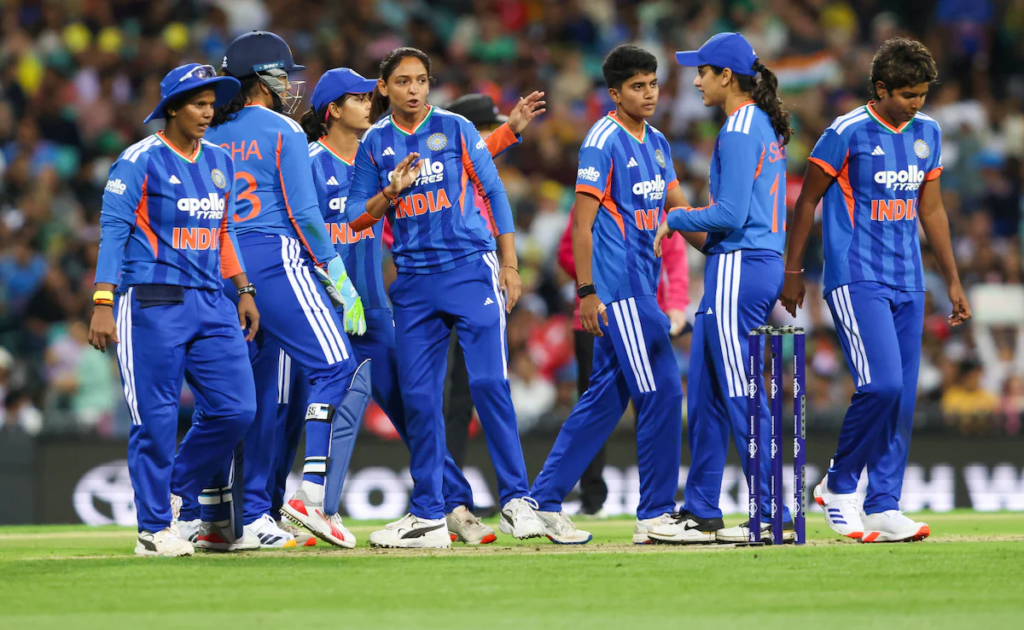
A Test of Character More Than Skill
The defeat against South Africa raised a few concerns. India were probably 10 to 15 runs short of what looked possible after the powerplay, and they allowed Kapp and Tazmin Brits to rebuild after taking early wickets.
Yet there is another way to view that result. Good teams often learn more from a defeat than from a comfortable victory. India now has an opportunity to respond. They have already shown they can dominate opponents. The next challenge is to show they can recover quickly from a setback.
That quality separates contenders from champions. With Harmanpreet Kaur leading a squad that blends experience with youth, India remain one of the strongest teams in the tournament. The semi-final is still very much within reach.
It is now time for the most critical phase: transforming the promise into qualification and qualification into a genuine title challenge.


