

How a Tribal Community in Rajasthan Rebuilt Its School Through Collective Action
In the tribal belt of Rajasthan’s Banswara district, where development often arrives slowly and infrastructure gaps are part of everyday life, the village of Hadmat has created an example that goes far beyond a school building. Without waiting for political intervention or government grants, villagers came together, raised money through local contributions, and rebuilt critical infrastructure in their Government Higher Secondary School — ensuring that children could study in safer and more dignified conditions. What emerged was not just a tin shed over classrooms, but a powerful example of community ownership and collective responsibility.
A School in Decline
For years, the condition of Government Higher Secondary School, Hadmat, had been deteriorating. Roofs leaked during monsoon, walls had weakened, and students struggled to study in extreme heat. Teachers, parents, and villagers all recognised the problem, but like many rural infrastructure issues, it remained trapped between administrative delays and limited resources. The turning point came during a monthly meeting of the Gram Swaraj Samuh, formed under the guidance of Vaagdhara and the Krishi Evam Adivasi Swaraj Sangathan. During discussions around student attendance and learning conditions, the issue resurfaced once again. But this time, the conversation did not end with complaints. The village decided to act.
A Community Steps Forward
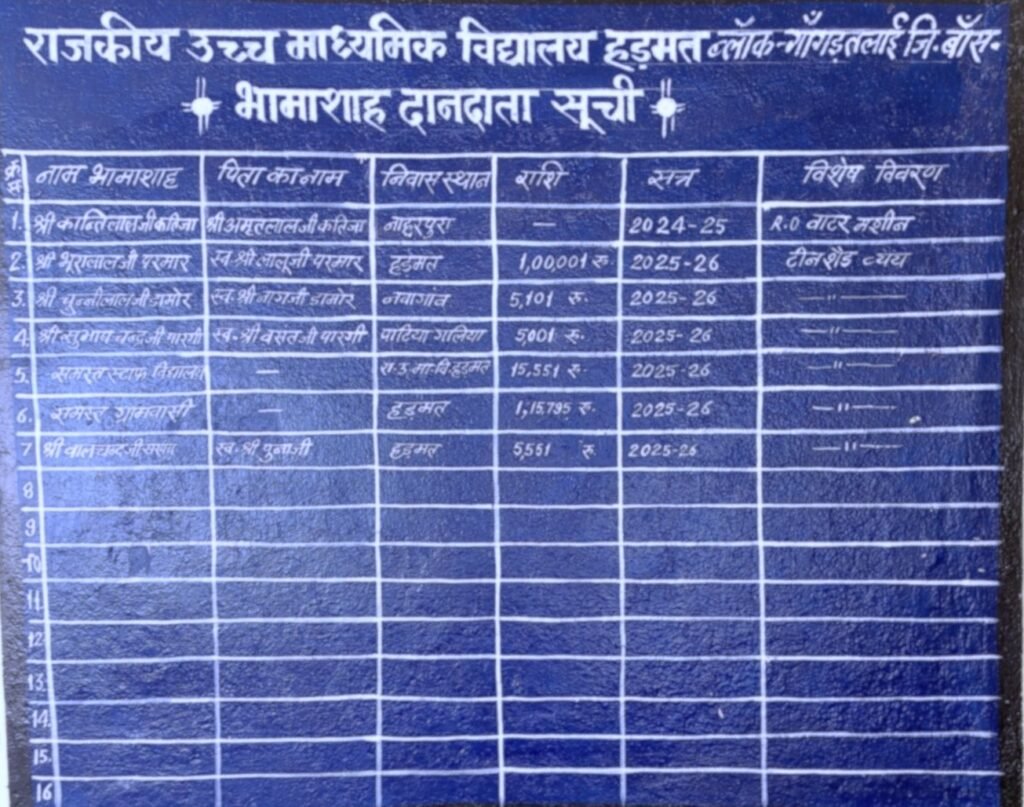
The proposal was simple but ambitious — install three sets of tin roofing in the school through collective effort, without waiting for external assistance. Members of the Gram Swaraj Samuh began going door to door, explaining the need for better learning spaces for children. Gradually, awareness spread across the village. A community gathering was organised, and contributions began to come in — small and large. The most significant contribution came from Bhuralal Parmar, a resident of Hadmat, who donated ₹1 lakh for the project.
“These are the children of the village. If their place of learning improves, their future improves,” he said. Support also came from outside the village. Chunnilal Damor from Navagaon contributed ₹5,001, saying education was not the responsibility of a single village alone. Subhashchandra Pargi from Patiya Galiya village also contributed ₹5,001, describing the initiative as a collective social responsibility.
Teachers Join the Effort
The teaching staff of the school collectively contributed ₹15,551 towards the initiative. Teachers Rajesh Garasia and Parmesh Katija played active roles throughout the process, participating not just financially but also organisationally. “If children do not even have a proper place to sit, how can they focus on learning?” one of the teachers remarked during the campaign. The village sarpanch, Walchand Punaji, also joined the effort with his own contribution, strengthening community confidence in the project.
Small Contributions, Large Meaning
What made the initiative remarkable was not only the amount raised, but the way it was raised. Villagers collectively contributed over ₹1.15 lakh through donations of varying sizes. Some gave ₹1,000, some ₹500, and many contributed according to their capacity.
No contribution was considered small. The effort reflected not charity, but ownership.
By the end of the campaign, nearly ₹2.47 lakh had been collected. The funds were used to install three tin shed structures in the school. Today, students sit under secure roofing where once they struggled in damaged classrooms.
Beyond Infrastructure
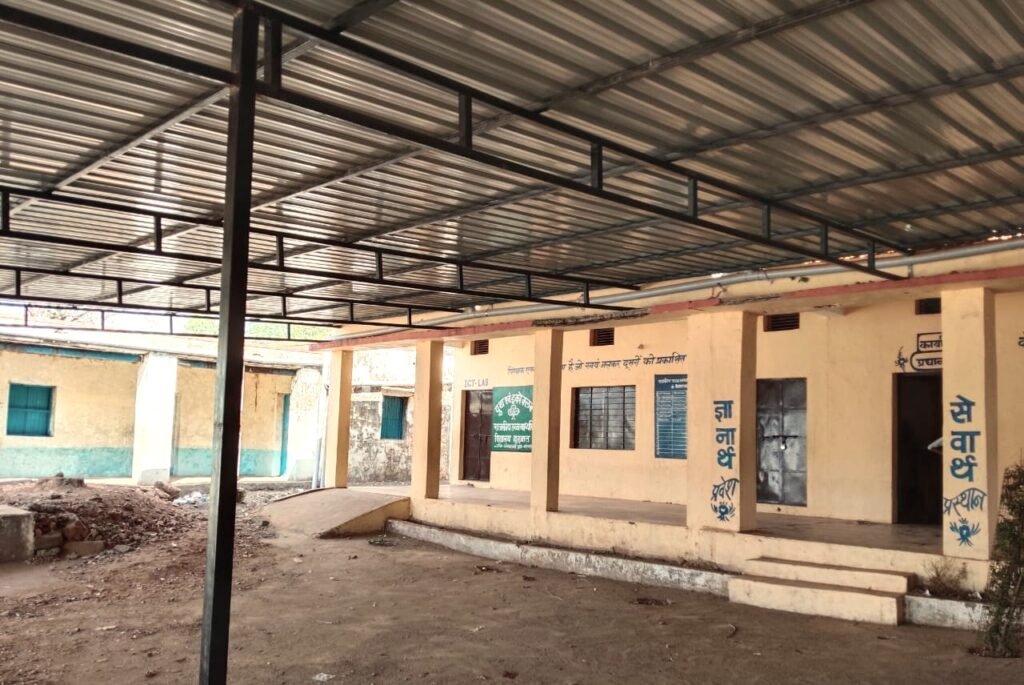
The real achievement of Hadmat is not the construction itself. The deeper significance lies in what the process demonstrated — that communities can solve local problems collectively when trust and participation exist. In an era where villages often wait for external intervention, Hadmat showed that local mobilisation can create meaningful change. The initiative also reflects the idea of Swaraj in practice — not as a slogan, but as community-led responsibility.
A Model of Rural Participation
The story of Hadmat is ultimately about more than a school. It is about how rural communities, despite economic limitations, continue to invest in education and collective futures. When villagers, teachers, and local institutions came together, they built more than infrastructure. They built confidence. And perhaps most importantly, they showed children that their future matters enough for an entire village to stand behind it.
Author Bio
Vikas Parasram Meshram is a development practitioner, writer, and grassroots communicator focusing on rural livelihoods, education, tribal development, and community-led change across India.


