

London: England kept their dream of winning the ICC Women’s T20 World Cup on home soil alive with a composed 40-run victory over South Africa in the second semi-final at The Oval on Thursday. Recovering from an early top-order collapse, the hosts rebuilt through a magnificent partnership between captain Nat Sciver-Brunt and Heather Knight before their bowlers completed the job to set up a blockbuster final against Australia at Lord’s.
The victory not only ended South Africa’s hopes of reaching a third successive Women’s T20 World Cup final but also echoed another memorable chapter in England’s World Cup history. Nearly nine years after defeating South Africa in the 2017 Women’s ODI World Cup semi-final on home soil before lifting the trophy, England once again overcame the Proteas when it mattered most.
Early South African Pressure Rocks England
South Africa arrived at The Oval carrying an impressive record in recent ICC knockout matches, having reached the finals of the last two Women’s T20 World Cups and the most recent Women’s ODI World Cup. They had also eliminated England in the semi-finals of both the 2023 Women’s T20 World Cup and the 2025 Women’s ODI World Cup, making them dangerous opponents despite England’s unbeaten run through the group stage.
Winning the toss, South Africa opted to bowl first on a surface offering early assistance to the seamers, and the decision paid immediate dividends. Disciplined bowling and intelligent use of the new ball reduced England to 23 for three, leaving the hosts under severe pressure and threatening to take complete control of the contest.
Sciver-Brunt and Knight Rewrite the Script
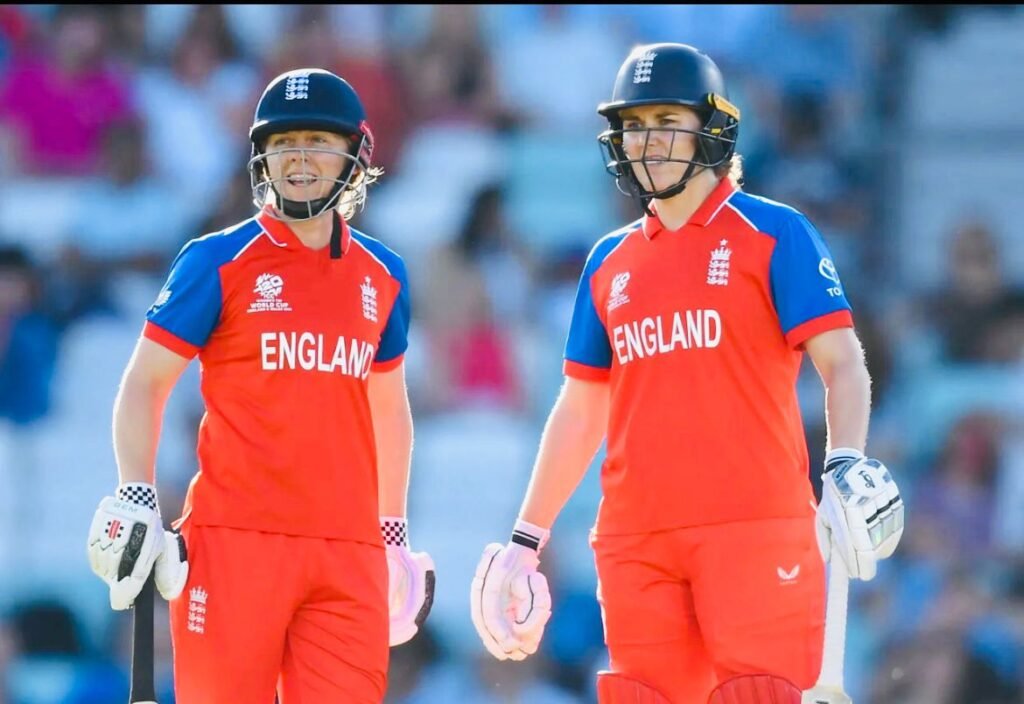
What followed transformed the semi-final.
Returning after missing the closing stages of the group stage with a calf injury, captain Nat Sciver-Brunt produced an innings of remarkable composure and authority. Alongside the vastly experienced Heather Knight, she first stabilised the innings before gradually shifting the momentum back in England’s favour.
Rather than searching for boundaries from the outset, the pair focused on intelligent strike rotation, sharp running between the wickets and disciplined shot selection. Once settled, they capitalised on every scoring opportunity, steadily wearing down South Africa’s bowlers.
Their fourth-wicket partnership of 133 runs became the highest stand in a Women’s T20 World Cup knockout match, completely changing the complexion of the game.
Sciver-Brunt struck a magnificent 75 from just 47 deliveries, while Knight contributed an equally valuable 58 from 47 balls. Although South Africa eventually dismissed both set batters, England’s lower order ensured the momentum continued as the innings closed on an imposing 169 for five.
England’s Bowlers Seal the Contest
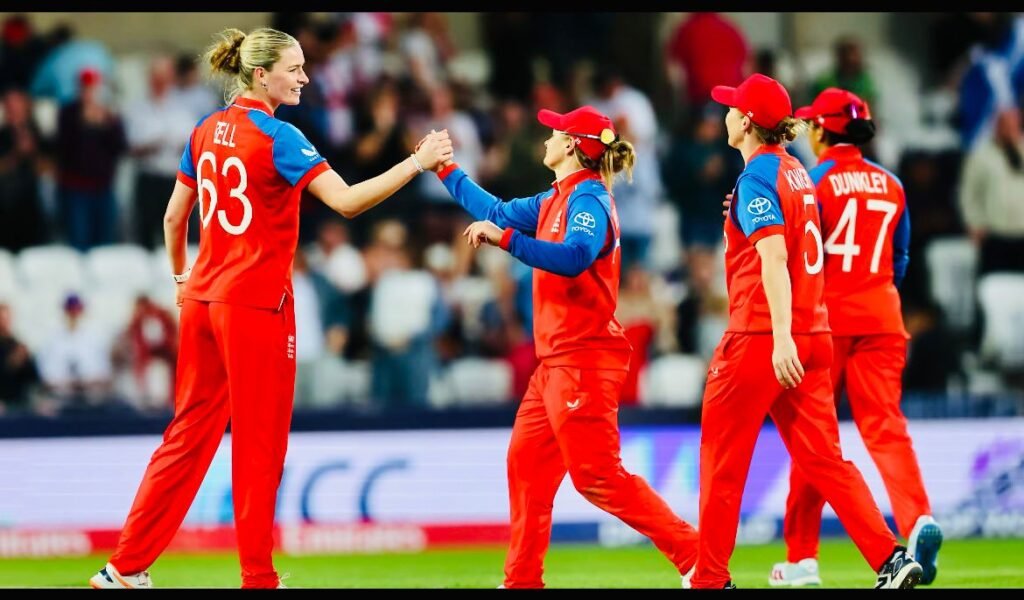
South Africa required a strong start in pursuit of 170, but England quickly tightened their grip.
Captain Laura Wolvaardt and Tazmin Brits put together a promising opening stand before left-arm spinner Linsey Smith removed Wolvaardt for 17. Moments later, Freya Kemp deceived Annerie Dercksen with a slower delivery, reducing South Africa to two wickets down before the innings had settled.
England’s bowlers remained disciplined throughout the chase, varying their pace intelligently and refusing to offer easy scoring opportunities. Although Tazmin Brits fought hard with a determined half-century, South Africa never managed to build the substantial partnerships required to keep pace with the asking rate.
Sharp fielding complemented England’s disciplined bowling as every run became increasingly difficult to score.
South Africa eventually finished on 129 for eight, falling 40 runs short of the target.
The Captain Delivers When It Matters Most
Much of the pre-match discussion centred on whether Sciver-Brunt would recover in time after her calf injury.
She answered every question emphatically.
Her innings combined patience, authority and outstanding game awareness. When England’s batting line-up was under intense pressure, she trusted her experience, rebuilt the innings and accelerated at exactly the right moment.
Her influence extended beyond the bat. She marshalled her bowlers confidently, set proactive fields and led with calm authority throughout South Africa’s chase, earning a thoroughly deserved Player of the Match award.
Heather Knight proved the ideal partner, using all her experience to support England’s recovery and help establish a match-winning total.
South Africa’s Brave Campaign Ends
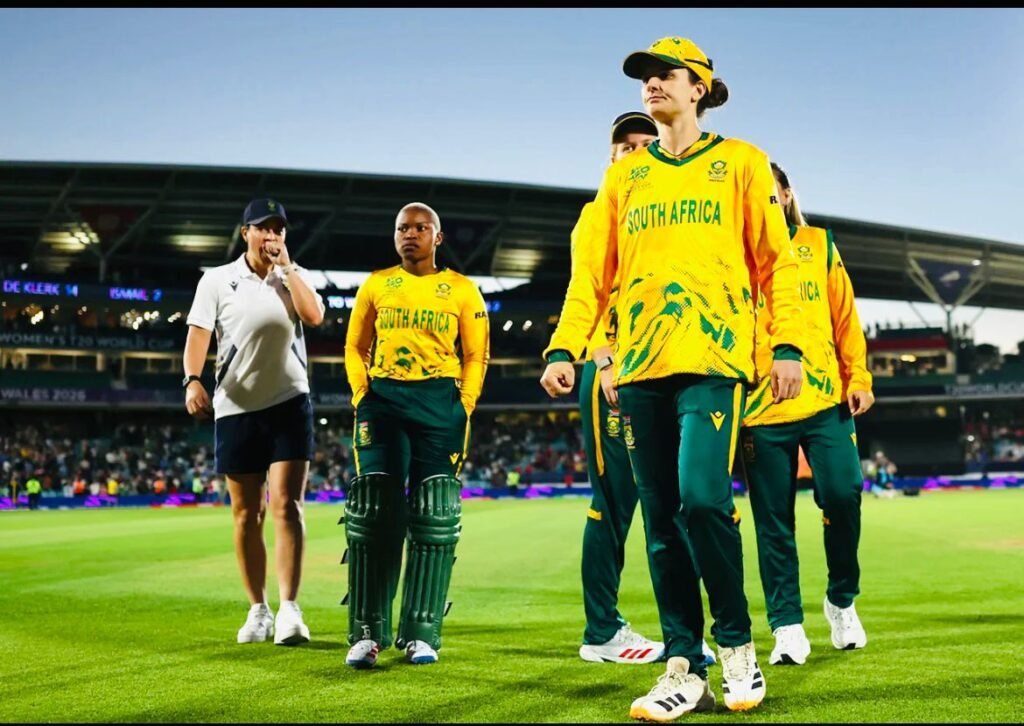
The Proteas once again demonstrated why they remain among the strongest teams in international cricket.
Their bowlers executed their plans superbly in the opening overs, dismantling England’s top order and creating the ideal platform for an upset. However, their inability to break the match-defining partnership between Sciver-Brunt and Knight ultimately proved decisive.
During the chase, South Africa never managed to construct the sustained partnerships needed under pressure. Despite Tazmin Brits’ resilient half-century, the steady fall of wickets prevented the Proteas from mounting a serious challenge.
Their campaign ended in disappointment, but another World Cup semi-final appearance further underlined South Africa’s growing consistency on the global stage.
Lord’s Awaits a Blockbuster Finale
England now stand just one victory away from winning the Women’s T20 World Cup for the first time since lifting the inaugural title in 2009.
Standing in their way will be Australia, the tournament’s most successful side, who booked their place in the final after defeating the West Indies in the first semi-final.
Sunday’s showdown at Lord’s promises another memorable chapter in one of women’s cricket’s greatest rivalries.
England have reached the final through resilience, adaptability and collective belief. They recovered from an early collapse, trusted the experience of their senior players and produced another disciplined bowling display under pressure.
On Sunday, however, those qualities will face the ultimate examination against Australia—the undisputed benchmark in women’s cricket.
The stage is now set for a fitting finale between the tournament’s two best teams.


