

X: @prashanthamine
New Delhi: At the time of the Partition in 1947, there were about 1,130 Hindu temples and 517 Sikh Gurudwara’s in Pakistan. Today out of these only 14 Mandir’s and 21 Gurudwara’s are functional, besides these 266 Mandir’s are non-functional and 51 Gurudwara’s are non-functional. What is still worse, is that there is simply no trace of 850 Hindu mandir’s and 438 Sikh Gurudwara’s in Pakistan now!
The Evacuee Property Trust Board (EPTB) of Pakistan has a recorded possession of 1,09,404 acres of Agricultural land (Evacuee property) and 46,499 acres of urban sub-units or constructed properties. Today, just like the temples and shrines, these Evacuee lands and properties have been illegally encroached upon and illegally monetized.
All this data clearly reveals that while India honoured its part of the Nehru-Liaquat Ali agreement of 1950 in letter and spirit in protecting the rights of minorities and their properties in India. Pakistan paid a mere lip-service to the 1950 Pact.

Pakistan has not even honoured the Pant-Mirza agreement of 1955 that allows devotees from either sides to annually visit shrines across the border. The agreement was signed on May 15, 1955 by then Union Minister for Home Affairs, Govind Ballabh Pant and Pakistan’s Minister for Interior, Major General Iskander Mirza in New Delhi.
Out of the total functional 35 Hindu temples and Sikh Gurudwara’s in Pakistan, it has allowed pilgrims from India to visit only 15 of them. The list of 15 religious shrines includes 12 Gurudwara’s, 2 Mandir’s and 1 Sufi shrine.
Every year Pakistan allows only 20 groups of pilgrims from India to visit these 15 religious shrines.

The 15 religious shrines identified under 1974 Protocol on Visits to Religious Shrines between India and Pakistan in Pakistan are:
1. Shadani Darbar in Hyat Pitafi, Ghotki, Sindh
2. Katasraj Dham in Chakwal, Punjab
3. Gurudwaras of Nankana Sahib, Punjab
4. Gurudwara Panja Sahib, Hassanabdal, Attock, Punjab
5. Samadhi of Marahaja Ranjit Singh Ji, Lahore, Punjab
6. Gurudwara Dera Sahib, Lahore, Punjab
7. Gurudwara Janam Asthan, Nankana Sahib, Punjab
8. Gurudwara Deewan Khana, Lahore, Punjab
9. Gurudwara Shaheed Ganj, Singhanian, Lahore, Punjab
10. Gurudwara Bhai Tara Singh, Lahore, Punjab
11. Gurudwara of Sixth Guru, Mozang, Lahore, Punjab
12. Birth place of Guru Ram Das, Lahore, Punjab
13. Gurudwara Cheveen Padshahi, Mozang, Lahore, Punjab
14. Shrine of Hazrat Data Ganj Baksh, Lahore, Punjab (Sufi Shrine)
15. Sadhu Bela, Khanpur and Mirpur Mathelo, Sindh
Sikh Festivals/Occasions
| No. | Name of Festival / Place of Main Ceremony | No of Pilgrims allowed | Duration of Stay |
| 1 | Baisakhi Festival-Gurdwaras Punja Sahib, Hassanabdal | 3000 | 10 Days (April) |
| 2 | Martyrdom Day of Guru Arjun Dev Jee – Lahore | 1000 | 10 Days (June) |
| 3 | Death Anniversary of Maharaja Ramjet Singh – Lahore | 500 | 10 Days (June) |
| 4 | Birthday Celebrations of Guru Nanak Dev Jee – Nankana Sahib | 3000 | 10 Days (November) |
Hindu Yatrees
| No. | Name of Festival / Place of Main Ceremony | No of Pilgrims allowed | Duration of Stay |
| 1 | Katas Raj Temple District Chakwal | 200 | 5 Days (Feb/Mar) |
| 2 | Shadani Darbar, Hayat Pitafi, Mirpur Mathelo | 400 | 10 Days (Nov/Dec) |
| 3 | Katas Raj Temples, District Chakwal | 200 | 5 Days (Oct) |
The list of religious shrines does not include the Hinglaj Mata Mandir situated in the Hingol National Park in the Baluchistan province of Pakistan. The shrine is still revered by many Hindus in India as one of the Shakti Peethas of Goddess Sati (incarnation of Goddess Parvati). The Baloch people and the minority Hindu community have been struggling desperately trying to maintain the cave temple.

On August 18, 2004, then Union Minister for External Affairs, E. Ahmed in an written reply to an unstarred question raised by Avinash Rai Khanna (BJP) in the Lok Sabha had categorically stated, “Under the Protocol, it is the obligation of the concerned country to make every effort to ensure that the places of worship in the agreed list are properly maintained and their sanctity preserved. Government are aware of reports that some of the shrines in Pakistan are not being maintained properly and their sanctity is not being preserved.”
The Katas Raj temple in Chakwal district of Pakistan is included in the 1974 Protocol on Visits to Religious Shrines between India and Pakistan, in Pakistan. In 2017, the Chief Justice of Pakistan Supreme Court expressed his displeasure over missing idols from the temple.
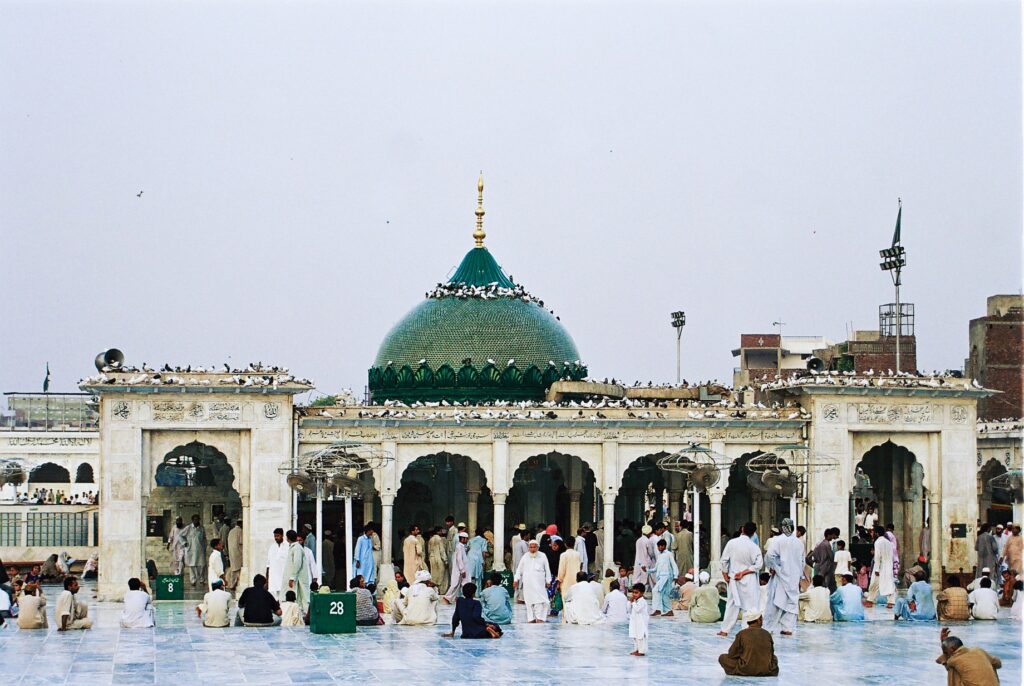
In 2014, the Hindu temple of Kali Bari in Dera Ismail Khan was converted into Hotel Taj Mahal. While a Hindu crematorium in Dera Ismail Khan was turned into a Frontier Constabulary Office, leaving no place for the local Hindu community to cremate their dead.
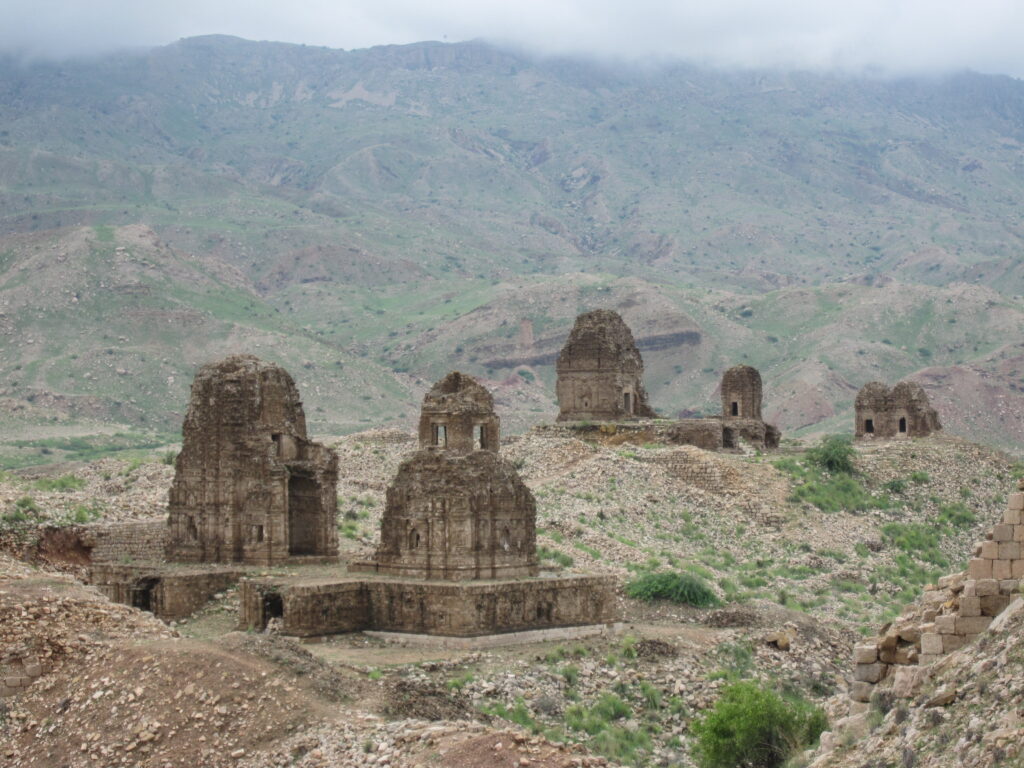
What pains not just the minority Hindu community in Pakistan, more so Archaeologists and Historians, is to see the ruins of Kafir Kot or Kafirkot temple complex in Dera Ismail Khan of Khyber Pakhtunkhwa province. The 5,000 year old Aditya Sun temple or Sun temple of Multan has long been lost to attacks from invaders.

Nearly 317 religious shrines, which includes 266 Hindu temples and 51 Sikh Gurudwara’s have lost their religious character due to pillage over the years and illegal occupation. Pakistan in its bid to create a new identity for itself, post 1947 has allowed the pillage and in the process has almost erased its own rich cultural heritage forever.
According to Pakistani author Ilyas Chattha, “India claimed that the Hindu and Sikh refugees left behind Rs 38.1 billion worth of resources in Pakistan, compared with the Muslim refugee evacuee property in India of just Rs 3.8 billion.”
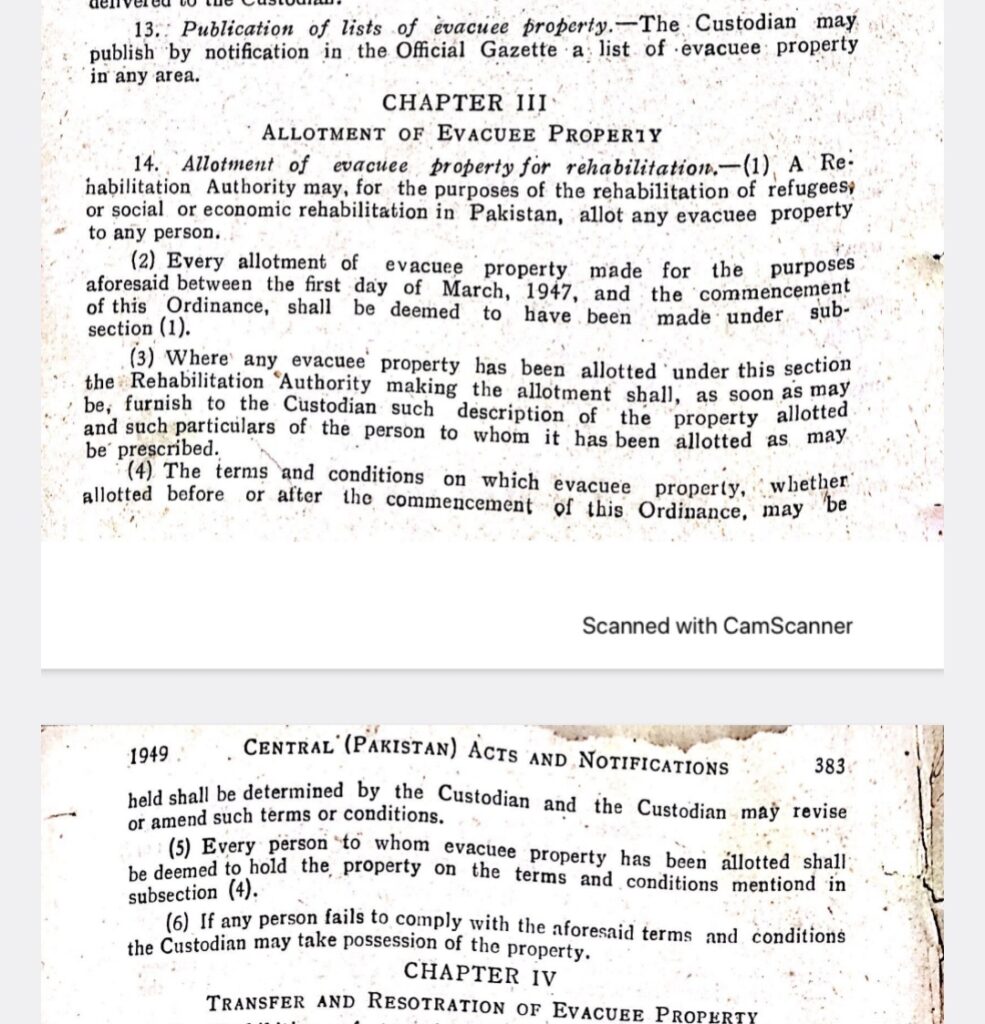

On January 25, 1975, Pakistan enacted “The Evacuee Property and Displaced Persons Laws (Repeal) Act, 1975”, which repealed various laws pertaining to evacuee properties. The repeal has impacted the availability of remedies for some claimants. To make matters worse the Custodian General of Evacuee Property has no jurisdiction in revision to re-open earlier proceedings, or cases where the property had been declared evacuee property but the claimants argued that they were not evacuees.

As per a 2018-19 report of the Evacuee Property Trust Board (EPTB) of Pakistan, the EPTB was then managing 1,09,369 acres of Evacuee Trust (ET) land and 15,619 ET properties all over Pakistan. Most of these properties are located in Punjab and Sindh province and majority of them are illegally occupied.
The total income out of the ET lands was Rs. 3,67,704 crore annually and Rs.11,61,261 crore out of ET properties. Accusations have been rife that certain people through illegal encroachments made huge profits at the expense of the EPTB.

Besides this there were 55 ET land/properties which were meant for educational and health purposes. Most of them were located in districts of Hassanabdal, Garhi, Habibullah, Attock, Multan, Bhakkar, Nankanna Sahib and Sheikhupura amongst 17 districts of Pakistan.
Interestingly enough Pakistan on October 15, 1949 had promulgated the Ordinance for The Administration of Evacuee Property in Pakistan. The Ordinance itself under Chapter III had then provided that all the Evacuee Properties left behind by those who migrated to India, to be redistributed amongst the Refugees coming into Pakistan from India.

The Pakistani Federal Government enacted two laws – Scheme for the lease of Evacuee Trust Agricultural Land, 1975 and the Scheme for the management and disposal of urban Evacuee Trust Properties, 1978. Both the laws effectively allowed the Evacuee properties to be leased out or disposed-off to Pakistani citizens.
In 2020 EPTB of Pakistan comprised of 18 members. Out of these 18 members, only 8 members are from Hindu and Sikh communities. Being in a minority the Hindu and Sikh communities do not have any say in the decisions and affairs of the Board which is headed by a Pakistani.
Pakistan promulgated the Evacuee Properties Ordinance in 1949, almost a year before inking the Nehru-Liaquat Agreement in 1950. India enacted The Enemy Property Act on August 20,1968, almost 18 years later to deal with the vexed issue of ownership of the properties left behind by those who migrated to Pakistan in 1947.
Until 2005, India was grappling with the Enemy Property Act that was enacted only in 1968 as a fallout to the 1965 Indo-Pak war! The matters have been made complicated in India by those who migrated to Pakistan in 1947. While migrating to Pakistan they bequeathed their properties to their kith and kin who chose to stay back in India.

The most-high profile of the Enemy Property case is that involving Bollywood actor Saif Ali Khan Pataudi in Bhopal, Madhya Pradesh. The properties in question are valued at approximately Rs 15,000 crore (about $1.7 billion USD) and include Flag Staff House, Noor-Us-Sabah Palace, and other properties in Bhopal.
The controversy stems from the migration of Abida Sultan, the eldest daughter of the last Nawab of Bhopal, to Pakistan after the Partition. Saif Ali Khan’s grandmother, Sajida Sultan, who was also a daughter of the Nawab, inherited properties but was later declared the successor, potentially giving the government the right to seize them.
Saif Ali Khan inherited a portion of these Bhopal properties from his father, Mansoor Ali Khan (Tiger Pataudi), and his maternal grandmother, Sajida Sultan.

The court has asked the Pataudi family to appeal the decision before the appellate authority, the Joint Secretary, Freedom Fighters and Rehabilitation Division, MHA. A final hearing is expected in May this year.
The Supreme Court case Union of India & Anr. Vs Raja Mohammed Amir Mohammad Khan (2005) held that if an “enemy” (defined in the Enemy Property Act) died and their property devolved to an Indian citizen, it would cease to be “enemy property”. Specifically, the Supreme Court ruled that property ceased to be “enemy property” if the successor of an “enemy” was a citizen of India.
This ruling was later negated by subsequent ordinances and, ultimately, by the Enemy Property (Amendment and Validation) Act, 2017. The act prohibits the transfer of enemy property by the enemy or their legal representatives, declaring any such transfer since 1968 as void.
The act has specific provisions concerning the rights of legal heirs. While the property might be termed as “enemy property,” the rights of legal heirs, especially those residing in India, are protected. However, it’s crucial to note that while legal heirs can claim the property, the final decision rests with the government, keeping in mind the larger interest of the nation.
Matters have been complicated further at least in India, with the practice of cross-border marriages. Many families still do have their relatives living on the other side of the border in Pakistan. The recent Operation Sindoor has revealed a vexed issue of Pakistani wives living in India.
Saif Ali Khan’s uncle in Pakistan is Shahryar Khan, who was a former chairman of the Pakistan Cricket Board and a foreign secretary of Pakistan. Additionally, Saif’s paternal uncle, Major General Isfandiyar Ali Khan Pataudi, has also been associated with the Inter-Services Intelligence (ISI) in Pakistan. Many of his distant relatives from Pakistan had attended his wedding in India in 2012.
Another more high-profile Enemy Property controversy is that of the Mehrangir Mansion located in Mumbai, this was the residence of Homi J. Bhabha, the father of India’s nuclear program. While not directly under the Enemy Property Act, it was sold amidst controversies related to properties left behind by those who had migrated.
As per the current records of the Custodian of Enemy Properties, there are 12,983 such Enemy Properties spread over 23 states and union territories in India.
Out of the 23 states, 16 states in India which have significant number of Enemy Properties which include – Uttar Pradesh 5,688, West Bengal 4,354, New Delhi 633, Tripura 500, Maharashtra 430, Goa 244, Telangana 234, Madhya Pradesh 148, Gujarat 127, Bihar 94, Chhattisgarh 78, Haryana 71, Kerala 68, Tamil Nadu 66, Meghalaya 53 and Uttarakhand 51.
After amending the act in 2017, the Union Government in 2021 disposed-off Gold and Silver jewelry left behind by those who migrated to Pakistan. The revenue so generated was deposited to the Consolidated Fund of India. On January 22, 2021, 1699.79 gms Gold @ Rs. 28966.63 per 10 gms was sold for Rs. 49,14,071. Another auction was carried out on February 4, 2021, 28895.73 gms silver @ Rs. 46.41 per 10 gms was sold for Rs. 10,92,175.
At the time of partition in 1947, the minority Hindu, Sikh, Christian, Buddhist, Bahai’s and Parsi population in Pakistan was estimated to be around 20% to 25%. Today, as per 2017 Census of Pakistan, the minority population has come down to – Hindus 1.60%, Christians 1.59%, Ahmedis 0.22%, Schedule Caste 0.25% and Others 0.07%.
In contrast to Pakistan, as per the first Census of 1951 in independent India, Hindus comprised 84.1% of the population, while the minority populations of – Muslims was 9.8%, Christians 2.3%, Sikhs 1.9%, Jains and Buddhists – less than 1%.


