

I recently watched Main Vaapas Aaunga on the big screen. It is one of the finest Hindi films I have seen in recent times. At its heart is an extraordinary performance by Naseeruddin Shah.
Playing a ninety-five-year-old man with dementia, confined to a hospital bed for much of the film, he is completely believable. There are no dramatic speeches, no obvious attempts to tug at the heartstrings. A glance, a hesitation, the faintest flicker of recognition—and an entire emotional world unfolds.
Yesterday, while the rain lashed and the wind howled outside, I watched Made in India: A Titan Story. Jim Sarbh is outstanding in the central role, while Naseeruddin Shah delivers a beautifully restrained portrayal of J.R.D. Tata. Once again, he seems less interested in imitating a famous man than in understanding him.
Watching these performances reminded me that I have been watching Naseeruddin Shah for almost half a century.
As a university student in Delhi, I had the privilege of watching him perform the lead role in Kafka’s Metamorphosis at Kamani Auditorium. Even today, I remember the spell he cast over the audience. Long before multiplexes and streaming platforms, there was something magical about watching a great actor transform himself before your eyes on a stage. It remains one of my most cherished memories of theatre.
My association with his work, however, began even earlier.
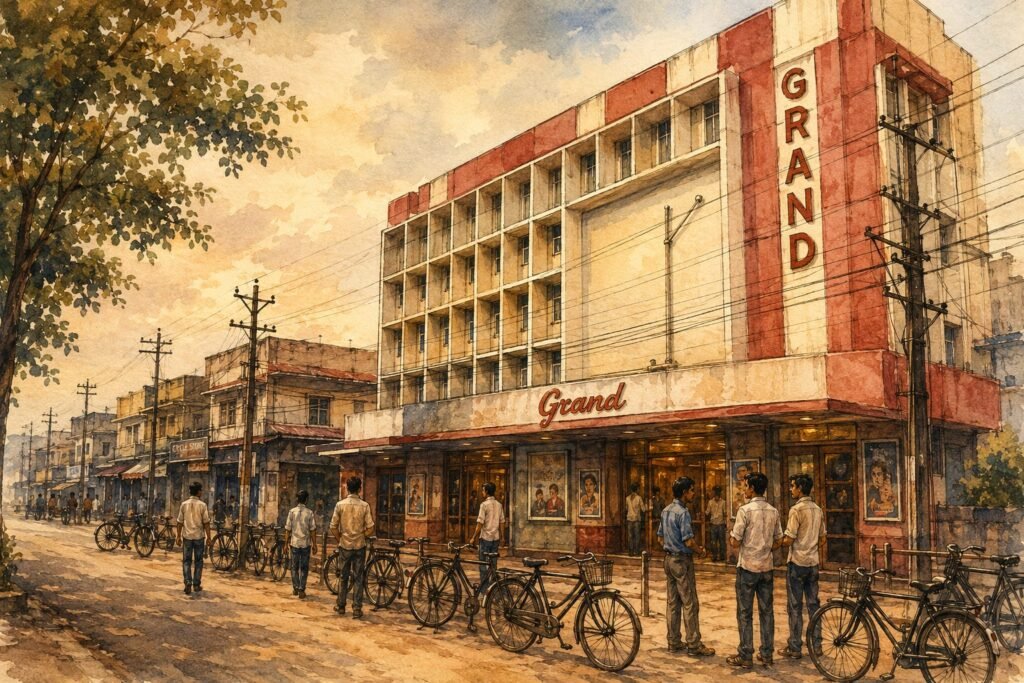
As a teenager in a small town, I would pedal my bicycle to watch what were then called “art films”. Those films opened windows to a world I had never known. They taught me that cinema could do much more than entertain; it could illuminate, provoke, disturb and inspire.
In many ways, my understanding of cinema—and, indeed, of social realities—was shaped and deepened by those early encounters.
Naseeruddin Shah was at the heart of that movement, alongside gifted contemporaries such as Om Puri, Shabana Azmi and, of course, my teenage obsession, Smita Patil.
Together, they transformed Indian cinema. They proved that quiet realism could be more powerful than spectacle, and that ordinary lives could be every bit as compelling as heroic fantasies.
Over the years came unforgettable performances in Sparsh, Aakrosh, Albert Pinto Ko Gussa Kyoon Aata Hai, Masoom and the inspired madness of Jaane Bhi Do Yaaro. His portrayal of Mirza Ghalib remains definitive. On the English stage, he became Albert Einstein with equal conviction. Few actors have travelled so effortlessly across cinema, television and theatre.
If I were asked today to name the greatest Indian actor of all time, I think I would choose Naseeruddin Shah.
Not merely because of his astonishing range, though that alone would place him among the finest. Nor because of his longevity, though few actors have remained so consistently relevant across five decades.
I would choose him because he has always served the character rather than his own image.
Whatever the role, one rarely catches him acting.
One simply believes.
There is another quality that I admire: a quiet dignity.
He has never seemed anxious to cultivate superstardom. He has trusted his craft to outlast fashion.
In an age that often mistakes celebrity for achievement and volume for intensity, Naseeruddin Shah reminds us that the highest form of acting is not display, but truth.


