

Part V of VI | India’s Energy Security Series
In geopolitics, dependence is manageable only until supply chains remain stable.
Mumbai: India today finds itself in an unusual position in the global energy order. It is simultaneously one of the world’s fastest-growing economies, one of the largest energy consumers, and one of the most import-dependent major nations. This combination creates both strength and vulnerability. India’s expanding economy gives it purchasing power and diplomatic relevance. But its dependence on imported hydrocarbons also exposes it to geopolitical shocks far beyond its borders. This contradiction has become more visible over the past few years.
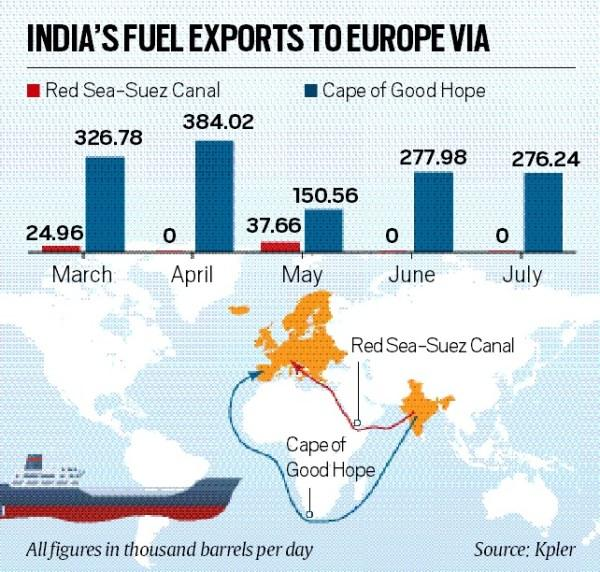
The Russia–Ukraine war reshaped global energy flows. Western sanctions altered oil trade routes. Europe scrambled for LNG supplies. Shipping patterns changed. Then came renewed tensions in West Asia, once again raising fears around the Strait of Hormuz — one of the world’s most critical energy chokepoints. For India, these developments were not distant geopolitical events. They were direct reminders of how deeply its economic stability remains tied to external energy systems.
Yet India’s response has also revealed a different reality — one of strategic flexibility. Despite pressure from multiple geopolitical camps, India continued purchasing discounted Russian crude after the Ukraine conflict. This decision drew criticism in some Western circles, but from India’s perspective it was driven by economic pragmatism and energy security calculations. Cheap crude helped reduce import pressure, stabilise domestic supply, and protect consumers from sharper price shocks.
In purely strategic terms, it was a rational decision. At the same time, India maintained relationships with Gulf producers, expanded sourcing diversification, and avoided becoming excessively dependent on any single supplier. This balancing approach has become one of the defining features of India’s modern energy diplomacy. But an uncomfortable question remains beneath this apparent flexibility. Is India’s import dependence part of a deliberate long-term strategy, or is it ultimately a compulsion created by structural limitations at home?
The answer is more complicated than political narratives often suggest. India’s energy demand is rising at extraordinary speed. Industrial growth, infrastructure expansion, urbanisation, transport networks, aviation, petrochemicals, data centres, and digital systems all require enormous quantities of energy. Even with aggressive renewable expansion, hydrocarbons continue to dominate actual consumption patterns. This means India requires massive and uninterrupted energy inflows simply to maintain economic momentum.
Domestic production alone cannot currently support this demand. Oil production has declined over the years. Gas output has fluctuated but remains insufficient. Major discoveries capable of fundamentally altering the import equation have not emerged at the required scale. Under these conditions, imports become unavoidable. In that sense, dependency is not entirely a policy choice. It is partly a structural reality. But dependency also creates strategic consequences.
The more dependent a country becomes on external energy systems, the more exposed it becomes to geopolitical instability, maritime disruptions, shipping costs, sanctions regimes, currency volatility, and diplomatic pressures. This is particularly relevant for India because geography itself creates concentration risk.
A substantial portion of India’s crude imports still originate from the Gulf region or transit through highly sensitive maritime corridors. Any prolonged disruption in these routes would affect not just fuel availability, but inflation, logistics, industrial production, and fiscal stability. This is why India’s energy diplomacy has become increasingly multidirectional. The country now buys oil from the Gulf, Russia, the United States, Africa, and Latin America. It negotiates long-term LNG contracts while simultaneously expanding renewable investments. It participates in global climate discussions while continuing to prioritise hydrocarbon security.
To some critics, this appears contradictory. In reality, it reflects the complexity of India’s position. India is attempting to manage a difficult transition between present-day energy dependence and future energy diversification. This balancing act explains why India cannot abruptly disengage from fossil fuels, even while publicly supporting green transitions. The country’s developmental needs remain too large, and the alternatives are not yet capable of replacing hydrocarbons at sufficient scale.
At the same time, permanent dependence carries long-term strategic risks. This creates the central dilemma of India’s energy policy. If imports are treated purely as a short-term necessity, the country risks remaining vulnerable indefinitely. But if dependence is openly accepted as a permanent structural condition, energy sovereignty itself becomes difficult to achieve.
The challenge therefore is not whether India should import energy. That debate is unrealistic for the foreseeable future. The real challenge is whether India can gradually reduce the strategic risks associated with that dependence. This requires a broader definition of energy security. Energy security is no longer only about securing enough oil cargoes. It is also about diversification, storage capacity, resilient shipping routes, domestic alternatives, refining strength, gas infrastructure, currency management, and technological transition.

India has already demonstrated that it can navigate complex global energy disruptions better than many expected. Its handling of Russian crude diversification, supply management, and diplomatic balancing showed a degree of strategic agility. But agility during a crisis is different from structural resilience and this distinction may define India’s future. Because the deeper question is not whether India can survive external shocks. The deeper question is whether India can continue expanding economically while remaining heavily dependent on systems it does not fully control.
That is the strategic paradox at the heart of India’s rise. Import dependence may currently be a necessity. But if India’s long-term ambition is true strategic autonomy, then reducing vulnerability cannot remain optional forever. At some point, resilience must evolve into sovereignty and that transition may become one of the defining national projects of the coming decades.
Next in the Series
Part VI: Energy Resilience vs Energy Sovereignty — Can India Reduce Its Dependence?
Author Signature
Vivek Bhavsar is Editor-in-Chief of TheNews21. He writes on power, policy and the structural risks shaping India’s economic and strategic future.


