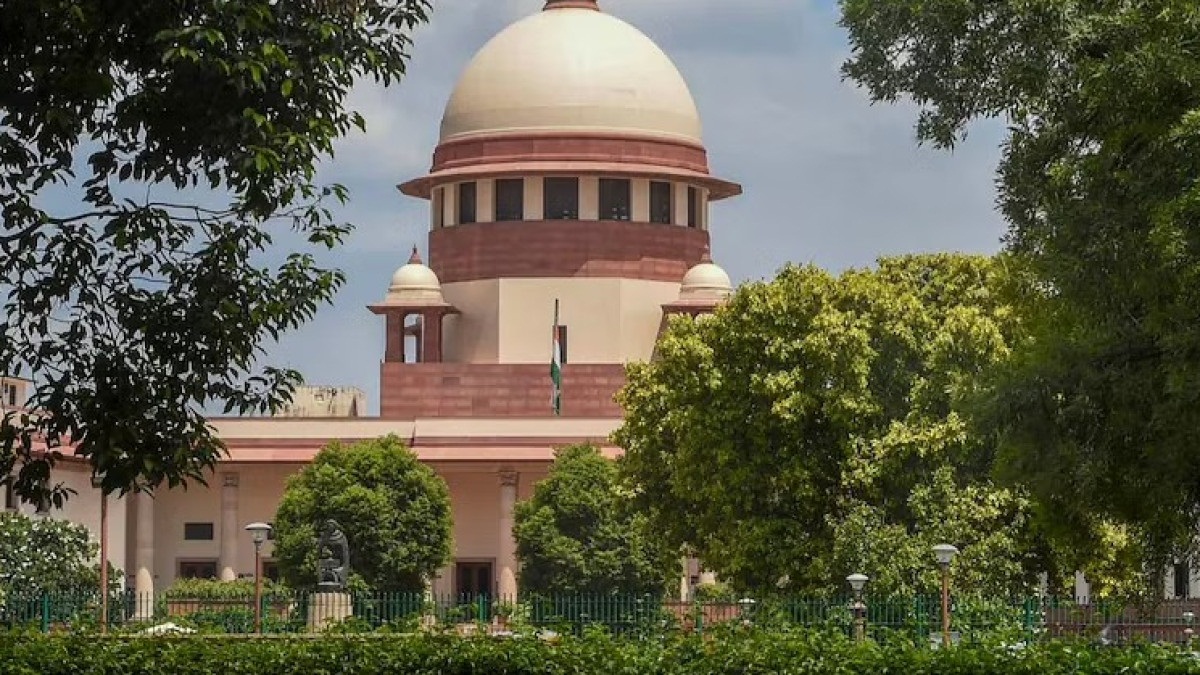
The Supreme Court on Friday declined to entertain a Public Interest Litigation (PIL) that sought the introduction of a uniform national policy granting menstrual leave to women students and working professionals across India. The court observed that making such leave legally mandatory could unintentionally reinforce stereotypes and may even harm women’s employment prospects.
A bench led by Chief Justice of India Surya Kant and Justice Joymalya Bagchi expressed concern that compulsory menstrual leave laws could discourage employers from hiring women in the first place.
During the hearing, the judges emphasised that while menstruation is a genuine health issue that deserves sensitivity and understanding, turning it into a mandatory legal requirement might produce unintended social and professional consequences.
Court Warns of Possible Impact on Women’s Employment
While responding to the petition, the bench said the demand for mandatory menstrual leave could create a negative perception about women’s capabilities in the workplace.
The court remarked that such pleas could indirectly portray women as weaker or inferior due to menstruation, which may reinforce social stigma rather than promote equality.
“These pleas are made to create fear, to call women inferior, that menstruation is something bad happening to them,” the bench observed during the hearing.
The judges also pointed out that employers may become reluctant to hire women if they are legally required to provide additional paid leave every month.
“This is an affirmative right. But think about the employer who needs to give paid leave,” the court said, highlighting the balance between workplace rights and employment opportunities.
Petition Cited Existing Policies in Some States and Companies
The PIL was filed by petitioner Shailendra Mani Tripathi. His counsel, senior advocate M. R. Shamshad, argued that menstrual leave policies already exist in certain places and should be expanded nationally.
He informed the court that some states and private organisations have voluntarily introduced such measures. For example, educational institutions in Kerala have allowed relaxations for female students, and a few companies in the private sector have also implemented menstrual leave policies for their employees.
However, the bench responded by drawing a distinction between voluntary initiatives and legally mandated policies.
Court Supports Voluntary Policies, Not Legal Compulsion
Chief Justice Surya Kant acknowledged that voluntary measures by institutions and companies are positive steps that recognise women’s health needs.
“Voluntarily given is excellent,” the CJI said.
At the same time, he cautioned that making menstrual leave compulsory through legislation could have unintended consequences for women’s careers.
“The moment you say it is compulsory in law, nobody will give them jobs. Nobody will take them in the judiciary or government jobs; their career will be over,” the Chief Justice observed.
The bench therefore made it clear that it was not inclined to issue a mandamus directing the government to create such a policy.
Court Asks Authorities to Examine the Proposal
Although the court refused to pass any binding order, it noted that the petitioner had already submitted a representation to the relevant authorities regarding the issue.
The bench directed the concerned officials to examine the proposal carefully in consultation with different stakeholders before taking any final decision.
After giving these directions, the Supreme Court disposed of the PIL, leaving it to policymakers and authorities to evaluate whether menstrual leave policies should be introduced voluntarily or through administrative measures.
The debate over menstrual leave continues in India, with supporters arguing that it recognises women’s health needs, while critics worry about its possible impact on workplace equality and employment opportunities.