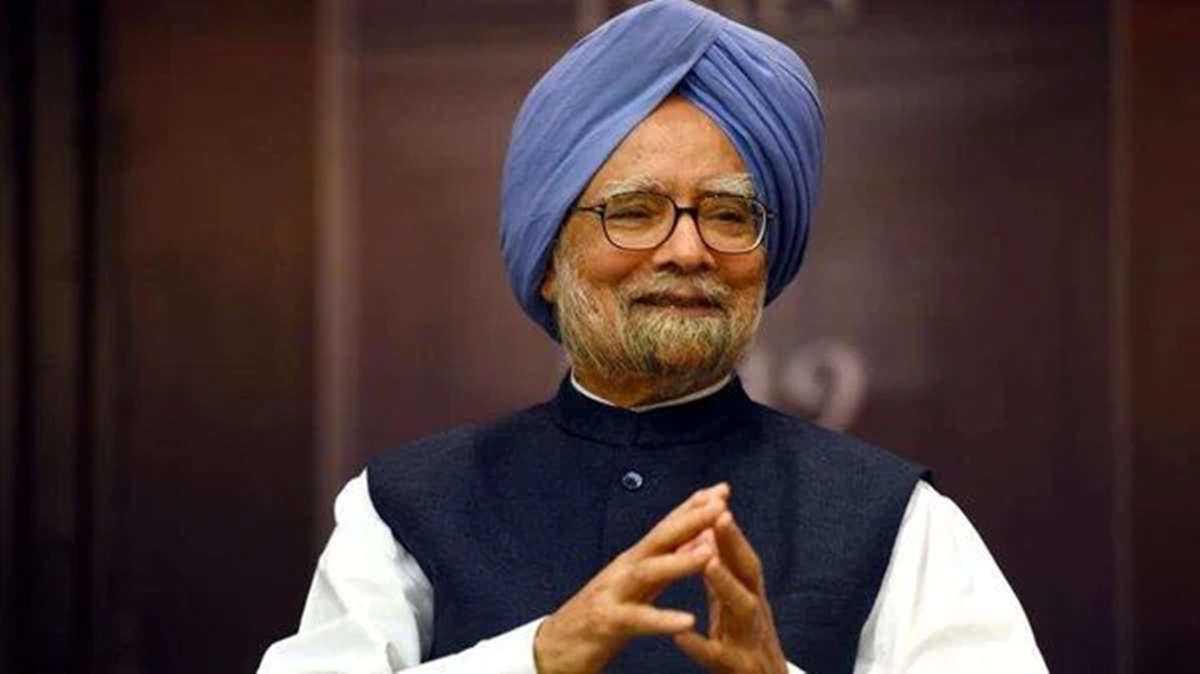
Mumbai: The tenure of UPA-II (2009-2014) was marred by numerous corruption scandals that continued to overshadow the government’s legacy. From the 2G spectrum scam to the Adarsh housing scam, Commonwealth Games irregularities, Coalgate, and the Railgate controversy, the period was often synonymous with allegations of corruption. At the helm of this government was Prime Minister Dr. Manmohan Singh, whose leadership became a focal point for criticism, especially from the opposition.
As the scandals piled up, the Bharatiya Janata Party (BJP), then in opposition, relentlessly cornered the Singh-led UPA government. It accused Singh of being a ‘reluctant’ Prime Minister, often working under the influence of Congress President Sonia Gandhi. Despite the party’s protestations, a narrative emerged of a leadership split within the Congress, with Singh seemingly overshadowed by Gandhi’s influence.
In the midst of these turbulent times, Manmohan Singh, known for his calm and composed demeanor, defended his government and his role as Prime Minister with a blend of reasoned arguments and poetic brilliance. One notable instance was his response to the allegations surrounding the coal block allocation.
In the Lok Sabha, while presenting his statement on the coal scam, Singh was interrupted by a vociferous uproar from the opposition. Undeterred, he defended his government, saying, “Allegations of irregularities are baseless because the figures presented by CAG are not based on facts. If coal has not been extracted yet, how can there be talk of loss?” He also remarked that the CAG’s calculations were “controversial” and “argumentative.” Singh took full responsibility for the decisions made by the coal ministry, asserting, “I want to assure the honourable MPs that being the in charge of the ministry, I want to say that whatever decision the coal ministry has taken, I take full responsibility for it.”
But it was not just his diplomatic responses that captured the attention of the public and political circles; Singh also showcased his poetic acumen when he took to the media outside Parliament. He quoted a famous couplet, “Hazaron jawabon se acchi hai meri khamoshi, najane kitene sawalon ke aabru dhak leti hai.” The couplet, which roughly translates to “My silence is better than thousands of answers, for it shields the dignity of countless questions,” was a sharp retort to the relentless questioning by the opposition and served as a poetic defense of his calm and composed nature amidst a storm of accusations.
Another memorable incident occurred during a debate on cash-for-votes in the Lok Sabha on March 23, 2011. During the session, Sushma Swaraj, the Leader of Opposition, sarcastically criticized Singh, saying, “Tu idhar udhar ki na baat kar, ye bata ke kaaravaan kyon loota, mujhe rahajanon se gila nahin, teri rahabaree ka savaal hai,” which loosely translates to “Don’t talk about irrelevant matters, explain why the caravan was looted. I have no complaints with robbers, only with your leadership.”
In a rare show of wit, Singh responded with a couplet of his own: “Maana ke teri deed ke kaabil nahin hoon main, tu mera shauk to dekh, mera intajaar to dekh,” which loosely means “I admit I am not worthy of your gaze, but look at my passion, look at my patience.” This poetic exchange between the two leaders lightened the mood in the House, with even Sushma Swaraj and the entire opposition smiling at the reply.
These moments reflected Manmohan Singh’s ability to maintain his composure and defend himself in the face of adversity with a mix of reason, eloquence, and poetic flair. While his tenure as Prime Minister was marked by significant policy decisions and economic reforms, it was also shadowed by accusations of corruption and an ongoing political battle with the opposition. Yet, Singh’s calm leadership and ability to remain dignified under pressure remain defining features of his tenure, with his use of poetry in Parliament becoming a memorable aspect of his leadership style.