X: @vivekbhavsar
Part 2 – The Data Story
Repayments tell only half the story. RTI documents show interest and hidden fees are quietly inflating Maharashtra’s World Bank loan costs far beyond the sanctioned amounts.
Mumbai: For the first time, thanks to RTI disclosures from the Union Ministry of Finance, a complete picture of Maharashtra’s financial relationship with the World Bank is visible. The numbers tell a story that rarely enters the public domain.
Between 2000 and 2026, Maharashtra has drawn on more than a dozen World Bank loans, spanning agriculture, water resources, sanitation, urban transport, and health. On paper, these loans looked attractive — long tenures, low interest spreads, and international credibility. But once repayments, interest obligations, and “commitment charges” are factored in, the loans are anything but concessional.
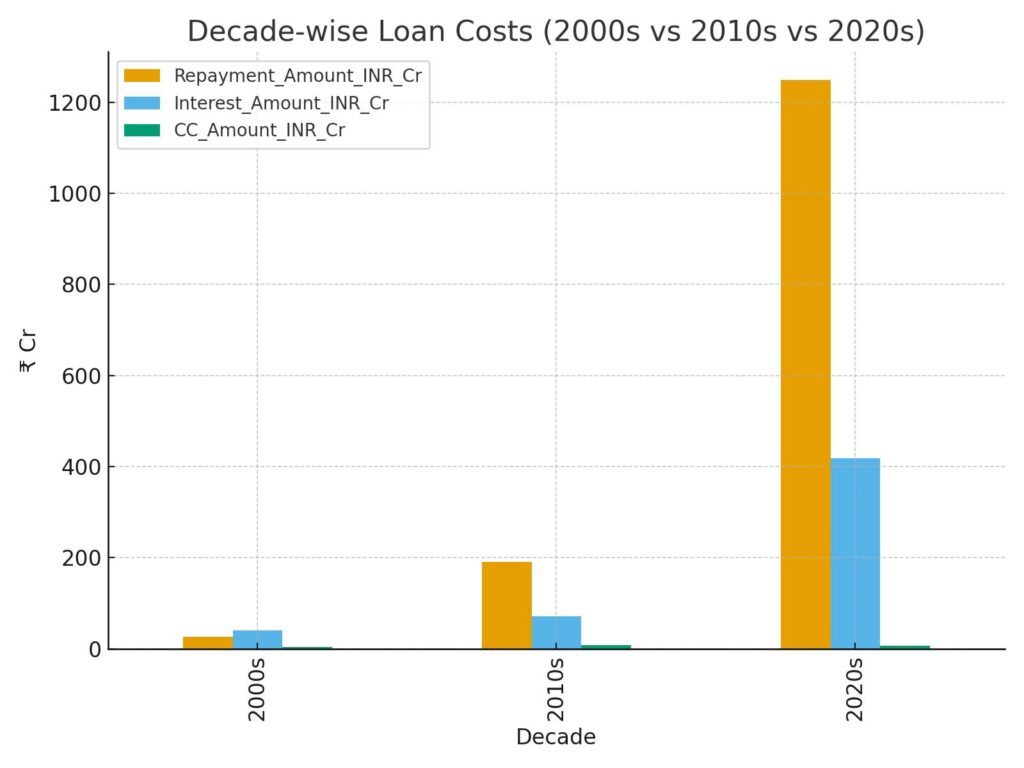
Repayments Alone Tell Only Half the Story
From 2000 to 2010, Maharashtra’s annual repayments on World Bank loans were modest, averaging between ₹50–₹100 crore a year. But with new project sanctions in the late 2000s and early 2010s — notably the Mumbai Urban Transport Project (MUTP-2A), Water Sector Improvement, and the Agricultural Competitiveness Project — repayment obligations ballooned.
By 2019–20, repayments alone had surged past ₹400 crore annually. In the 2020s, the figures exploded further:
- 2022–23: ₹570 crore
- 2023–24: ₹648 crore
- 2024–25: a record ₹891 crore in a single year
This surge reflects both the size of recent projects and the bunching of repayment schedules that hit Maharashtra’s books simultaneously.
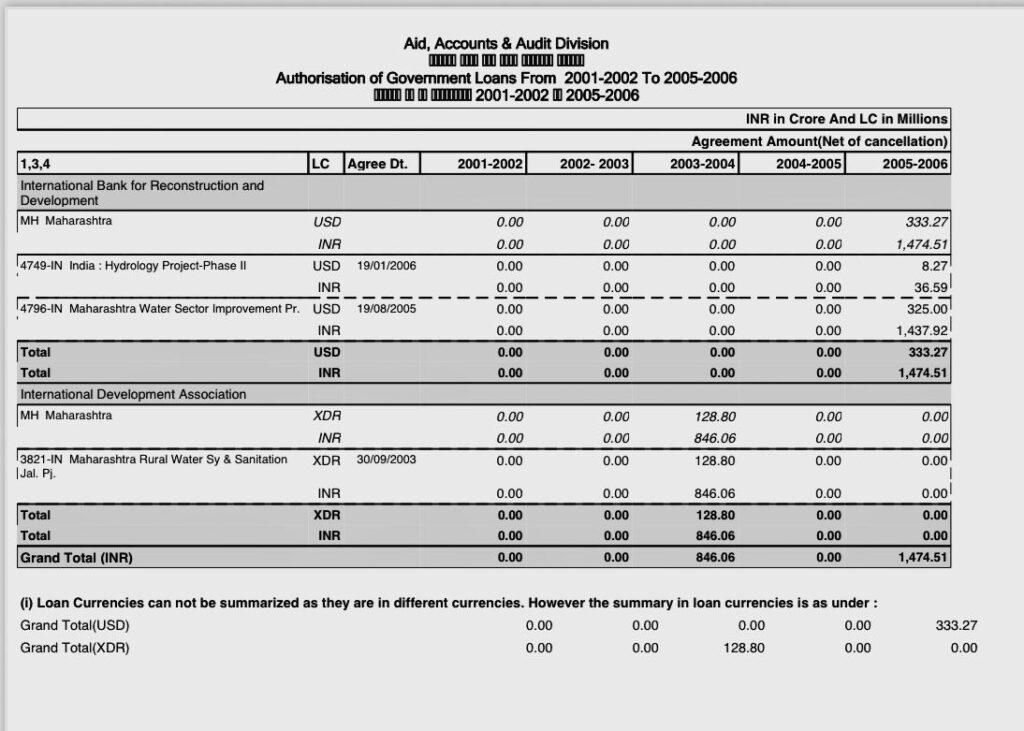
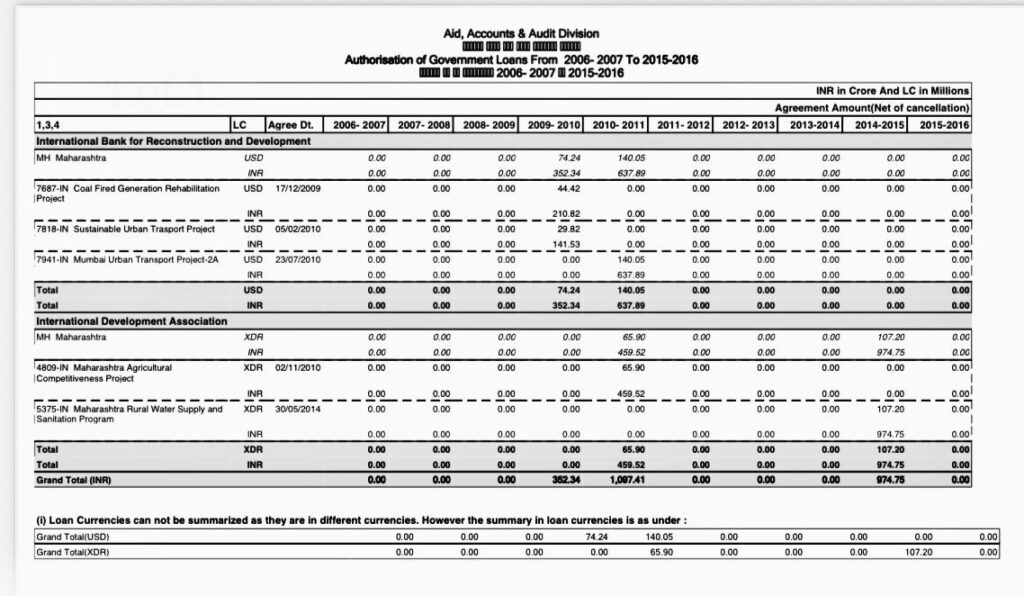
Government of Maharashtra Loan Authorisation (2001–2002 to 2005–2006): World Bank loans worth ₹1,474.51 crore authorised under Hydrology Project Phase II, Maharashtra Water Sector Improvement Project, and other schemes. Source: Aid, Accounts & Audit Division.
The Hidden Burden: Interest Payments
If repayments were the only story, Maharashtra’s burden might have been manageable. But the real weight lies in interest charges.
- Legacy loans like the Earthquake Emergency Program and Jalswarajya Rural Water Supply kept generating interest bills of ₹5–10 crore per year well into the 2010s.
- By the late 2010s, interest on MUTP-2A alone crossed ₹27 crore annually.
- In the 2020s, the picture turned alarming:
- Climate Resilient Agriculture Project (2018): ₹226 crore in interest in 2024–25 alone
- Agri-Business Transformation Project (2019): ₹18 crore in interest in 2024–25
- MUTP-2A (2010): nearly ₹49 crore in interest in 2024–25
In other words, Maharashtra is now paying more every year in interest on some projects than it originally borrowed for others.
Commitment Charges – The Quiet Leak
Even less visible are commitment charges — penalty-like fees imposed by the World Bank on undisbursed portions of loans. While they appear small in isolation (fractions of a crore in the early years), they have added up over time.
Also Read: Maharashtra’s World Bank Loan Trap: Hidden Costs Bleeding the State
For instance:
- The Agricultural Competitiveness Project carried commitment charges of ₹3–4 crore annually through the mid-2010s.
- Climate Resilient Agriculture was billed ₹7.42 crore in 2020–21 simply because sanctioned funds were not fully drawn.
- The Agri-Business Transformation Project paid around ₹3 crore per year in recent years in such charges.
These fees provide no development value — they are pure financial leakage.
All-In Cost – The Shocking Totals
When repayments, interest, and commitment charges are combined, the true All-In Cost of World Bank loans becomes clear.
- The MUTP-2A loan (2010) has already cost Maharashtra well over ₹1,000 crore, far above its original sanctioned value.
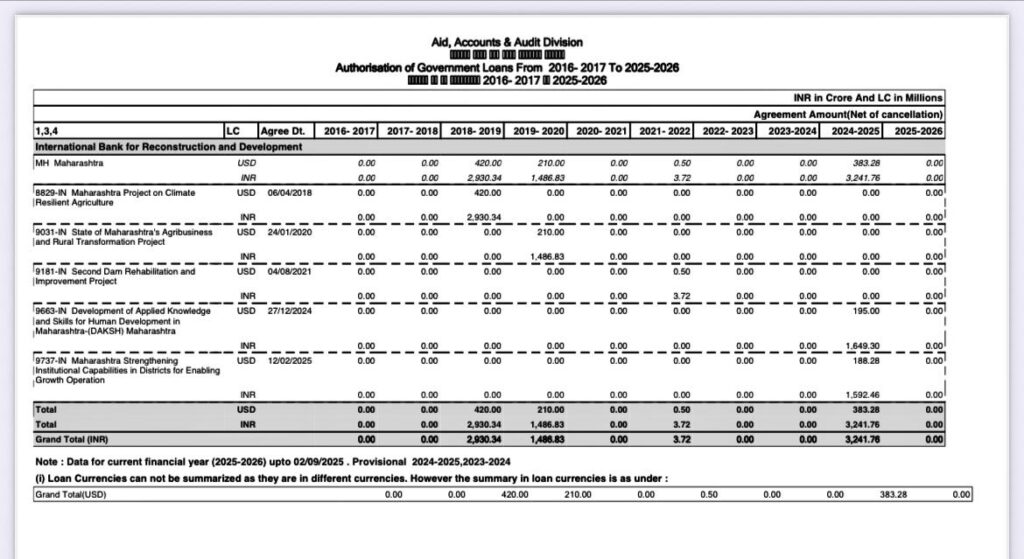
- The Climate Resilient Agriculture Project (2018), sanctioned at ₹2,930 crore, is on track to cost the state 40–50% more once interest and fees are fully accounted for.
- Across two decades, the state has paid out tens of thousands of crores — much of it invisible in official project reports.
This analysis destroys the myth that World Bank loans are “cheap” or “soft.” In reality, they are structured to look attractive on sanction day but end up draining state finances over decades.
 Next in Part 3, we’ll zoom in on specific case studies — Climate Resilient Agriculture, MUTP-2A, and Water Sector Improvement — to show how individual projects turned into financial traps.