

Five years ago, seasonal migration defined life in Rajasthan’s Lamba Ghata village. Today, women cultivate vegetables, earn independent incomes, lead community initiatives and dream of a better future for their children. This is the inspiring story of how water, collective action and women’s leadership transformed an entire village.
Five years ago, when the monsoon clouds drifted away from Lamba Ghata village in Rajasthan’s Banswara district, they carried with them the village’s only dependable source of livelihood. Farming, sustained almost entirely by rainfall, would come to an abrupt halt. Fields that had briefly turned green slipped back into barrenness, and with them faded the hope of earning a living at home. What followed became an annual ritual of survival. Families packed their belongings, locked their homes, and travelled hundreds of kilometres to industrial towns such as Mandsaur in neighbouring Madhya Pradesh, or Ahmedabad and Surat in Gujarat, in search of work.
Today, the same village presents an altogether different picture. Women cultivate vegetables throughout the year, rear livestock, travel to local markets to sell their produce, earn independent incomes, and actively participate in decisions that shape their families’ future. Children remain in school, seasonal migration has reduced significantly, and farming has once again become a source of dignity rather than uncertainty.
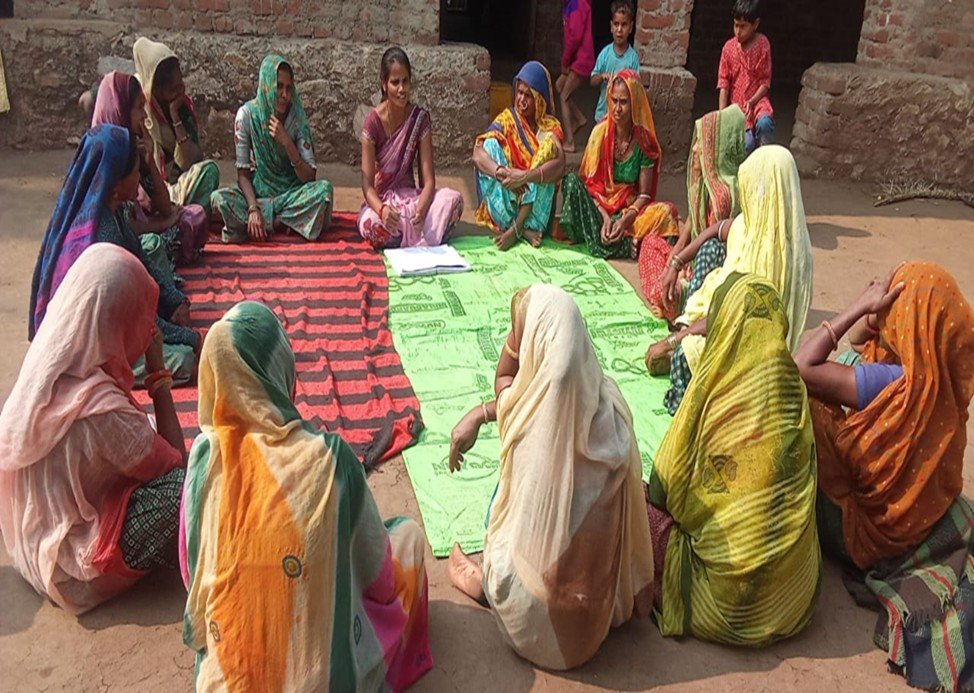
The story of Lamba Ghata is, therefore, much more than a story about irrigation. It is a story about how access to water, collective action and women’s leadership transformed not only livelihoods, but also confidence, identity and hope. Until a few years ago, agriculture in the village depended almost entirely on the mercy of the monsoon. Irrigation facilities were so limited that even the modest flow from nearby streams reached only a handful of farmers during the rabi season. For the overwhelming majority of families, farming could never provide year-round employment or financial security. Once the harvest ended, migration became an unavoidable necessity rather than a choice.
Every year, the pattern repeated itself with quiet predictability. Families returned to cultivate their fields during the rainy season, harvested whatever the land could yield, and then dispersed once again to distant cities in search of daily wage labour. For the women who remained behind, those months carried an emotional burden that often went unseen.
Maju Devi, a resident of Lamba Ghata, still remembers those difficult years. “When my husband would leave, months would pass without any news. The fields lay dry and barren, and I would simply wait—sometimes for the rains, sometimes for him to return.” Her words capture a reality shared by countless women across India’s rain-fed tribal regions, where migration separates families for months and agriculture offers little certainty beyond a single cropping season.
Economic hardship was accompanied by another, less visible challenge. When VAAGDHARA began organising community meetings in Lamba Ghata in 2021, women’s participation remained extremely limited. Barely thirty to forty per cent attended the meetings, and even those who came rarely spoke. Years of social conditioning had convinced many that public discussions belonged to others.
Kala Devi recalls those early meetings with remarkable honesty. “Even going to the meeting felt like a big thing then. Speaking there was beyond our imagination. We used to think, ‘What do we know? Who will listen to us?'”
It was in this environment that VAAGDHARA introduced its community-centred approach through the ideas of Sachcha Swaraj (True Self-Governance), Sachchi Kheti (True Farming) and Sachcha Bachpan (True Childhood). Community institutions such as the Saksham Samuh, Gram Swaraj and Bal Swaraj groups were gradually formed to encourage collective participation and local leadership.
The challenge, however, was not merely organisational. The organisation had to address two deeply connected barriers. The first was encouraging women to step beyond the boundaries of their homes and participate in community meetings. The second was helping them discover the confidence to speak, question, express their opinions and take part in decisions that affected their own lives.
Transforming attendance into participation required patience, trust and sustained engagement. That responsibility was shouldered by community facilitator Indira Devi, who refused to accept silence as the natural order of village life. She travelled from house to house, speaking not only with women but also with elderly family members and men, patiently explaining how communities elsewhere had improved irrigation, increased vegetable cultivation and gradually reduced the need for seasonal migration.
Meeting after meeting, she repeated a simple yet powerful message: “Until water reaches our fields, our children will continue wandering in the dust. Even one well can change the future of ten families.”
Those words were not slogans. They were an appeal rooted in everyday experience, expressed in a language every woman in the village understood. Slowly, they began to replace resignation with possibility. Months of dialogue, persuasion and community mobilisation eventually produced the first tangible breakthrough.
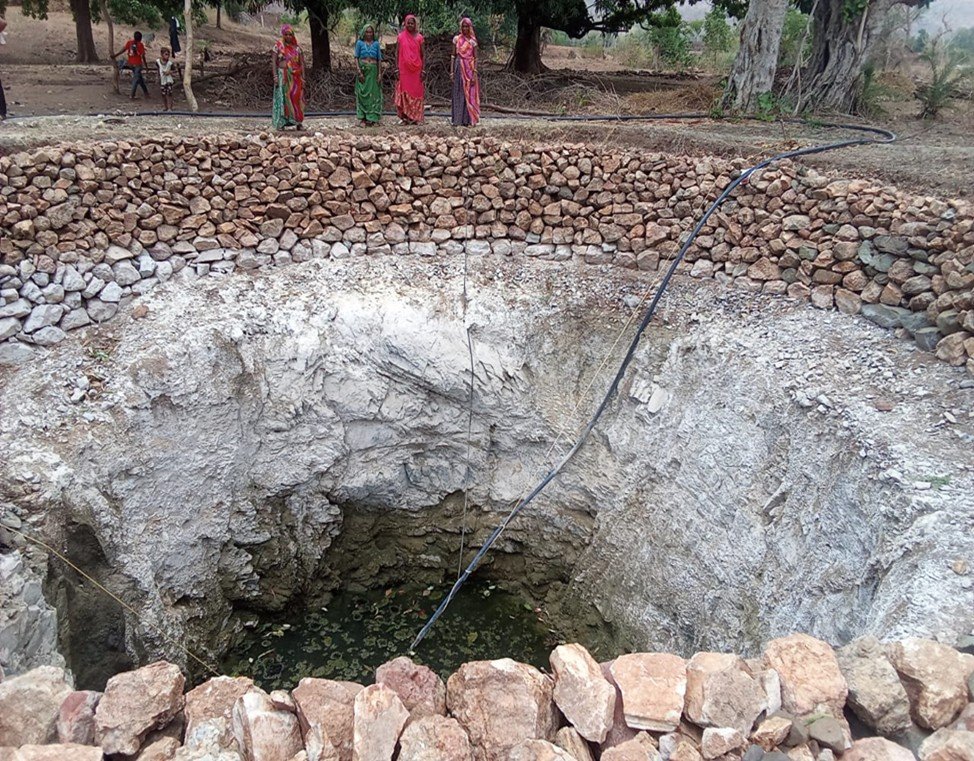
The women of the Saksham Samuh came together to initiate the construction of a community well near their fields. A proposal was prepared and approved under the Mahatma Gandhi National Rural Employment Guarantee Scheme (MGNREGS), with approximately ₹2.5 lakh sanctioned for the project. For the first time, the village was not merely waiting for rain. It was creating its own future.
The completion of the community well marked a turning point in Lamba Ghata’s journey. For the first time, the village possessed something it had always depended upon but never truly controlled—water. With it came the possibility of cultivating crops beyond the monsoon, and with that possibility came a quiet but profound shift in the imagination of the community itself. The arrival of water opened the door to zaid, the summer cropping season, something that had long remained beyond the reach of most farming families in the village. Land that had once remained barren for months after the monsoon suddenly held the promise of continuous cultivation.
The first woman to seize this opportunity was Sapna Devi, a member of the Saksham Samuh. She decided to experiment with vegetables—an idea that, until then, seemed almost impossible in a village where farming depended almost entirely on rainfall. Bottle gourd, round gourd, cucumber, cluster beans, sesame, moong, brinjal and okra gradually began replacing stretches of unused land.
Even today, the memory of that first harvest fills her voice with unmistakable pride. “We always believed this land could survive only on rain. But when water came, we realised the real strength had always been within us. The first time I sold my bottle gourd in the market, that money was mine—earned through my own labour.” Her success soon travelled beyond her own field.
In villages, stories spread faster than announcements. Neighbours observed the changing fields, saw vegetables growing where dry soil had once stretched unbroken, and watched Sapna Devi return from the market carrying both income and confidence. Curiosity slowly turned into conviction. One by one, other women stepped forward.
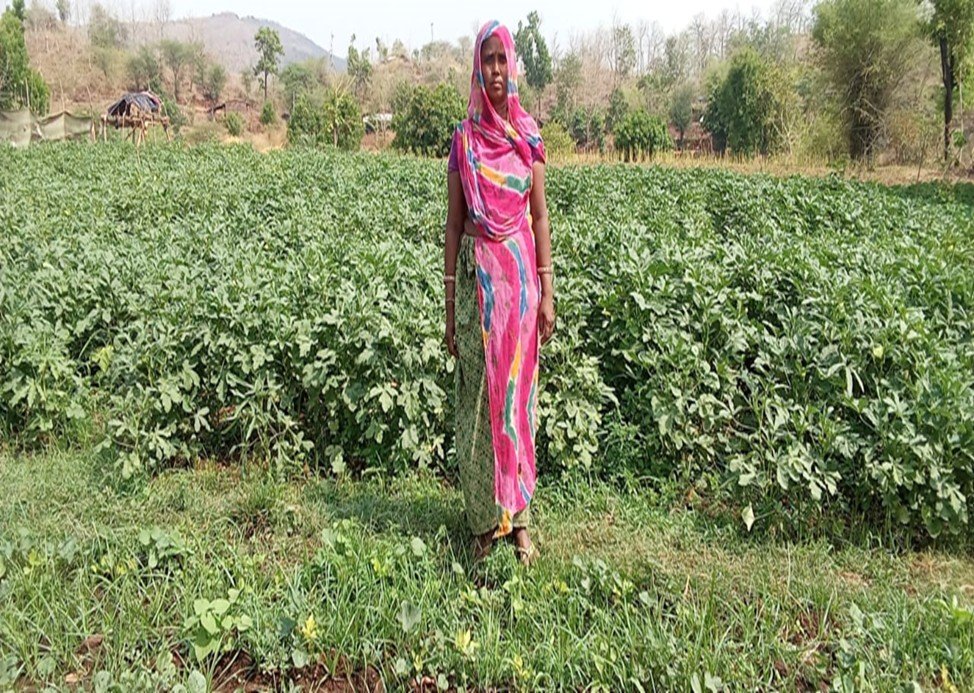
Kala Devi, Pooja Devi, Rama Devi, Suka Devi, Maju Devi, Radha Devi, Jeev Devi, Toli, Meera, Kesar Devi, Jija and Katuri each began cultivating vegetables in their own fields. Okra, cucumber, bottle gourd, ridge gourd, sponge gourd, cluster beans, chilli, brinjal and sesame gradually transformed the agricultural landscape of Lamba Ghata. But the transformation extended well beyond agriculture. It quietly entered everyday conversations.
Earlier, discussions among women while collecting water or waiting outside the village school revolved around ration supplies, remittances from migrant husbands or the uncertainty of the next agricultural season. Today, those conversations sound remarkably different. Pooja Devi describes the change with striking simplicity. “Earlier, when we met at the village well, we spoke about who had received money from her husband or whose house still had ration left. Now we discuss whose okra yielded more, who got a better price in the market and which crop should be planted next. It may sound like a small change, but it has changed the way we think.”
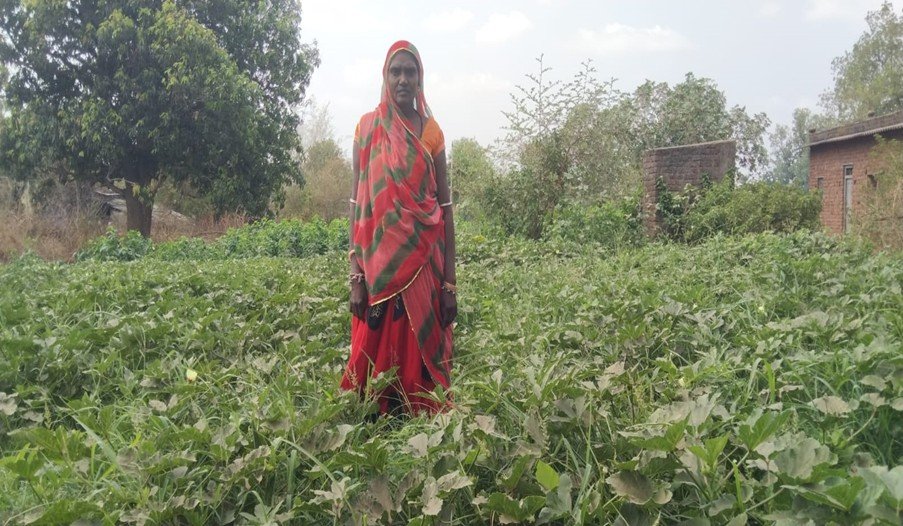
That transformation in thinking is perhaps the most significant achievement of all. The vegetable fields did not merely generate additional income; they created confidence. Women who had once seen themselves primarily as dependents gradually began recognising themselves as producers, cultivators and contributors to their household economy.
This growing confidence soon became visible in another important space—the community meetings. The women who had once attended silently now spoke with increasing clarity and conviction. Kala Devi remembers how dramatically that change unfolded. “Now I no longer hesitate to speak in meetings. Earlier we thought, ‘What can we possibly say?’ Today we think, ‘If we don’t speak, who will place our concerns before others?'” These words may appear ordinary, but they reflect an extraordinary social transformation.
For generations, many women in tribal communities had participated extensively in agricultural labour without enjoying a corresponding voice in community decision-making. The confidence to speak publicly, ask questions and participate in collective decisions represented a profound shift in identity. The success of the first community well encouraged other families to act. With mutual cooperation and growing confidence, more wells and borewells were constructed. Water gradually became available to a larger number of farmers, making agriculture less dependent on uncertain rainfall and more capable of supporting year-round livelihoods.
Farming was no longer viewed merely as a seasonal occupation dictated entirely by the monsoon. It was steadily emerging as a reliable and sustainable source of income. The village’s collective confidence found further expression in 2023, when members of the Gram Swaraj group formally raised the issue of water scarcity during village meetings. Rather than limiting themselves to discussion, they prepared detailed proposals for additional well construction at the panchayat level. The process itself reflected a remarkable evolution in community participation.
Group members documented the village’s water needs, compiled supporting information, presented their case before local authorities and maintained regular dialogue with administrative officials. This was no longer a village waiting for assistance—it had become a community capable of organising, negotiating and advocating for its own development. Their persistence bore fruit. In August 2024, another community well was completed, providing reliable access to drinking water for more than ten surrounding families.
What had begun as a discussion among hesitant women had now evolved into a community-led development initiative with lasting impact. The effects soon became visible across the village.
Today, almost every woman associated with the Saksham Samuh cultivates seasonal vegetables either on her farm or in kitchen gardens adjoining her home. On average, many are earning an additional ₹600–700 per day from vegetable cultivation during the harvesting season. Livestock rearing has also become an important supplementary source of income for numerous families. The economic benefits extend well beyond higher earnings.
Families now have greater access to fresh vegetables for their own consumption. Household nutrition has improved. Children’s educational expenses are being met more regularly. Dependence on informal borrowing has declined, and financial decisions that once depended entirely on seasonal migration are increasingly being shaped by local opportunities. Yet the most meaningful transformation cannot be measured merely in rupees. It lies in the confidence that has begun to reshape everyday life. Yet, the most profound transformation in Lamba Ghata cannot be measured in additional income or higher agricultural production alone. It lies in the changing identity of the women themselves.
For years, economic dependence had quietly shaped every aspect of their daily lives. Even routine household purchases often required permission or financial support from husbands who spent months away as migrant labourers. Their contribution to agriculture was substantial, yet it rarely translated into economic autonomy or decision-making power within the household. That reality has begun to change.
Suka Devi expresses this transformation with remarkable simplicity: “Earlier, if anything had to be bought for the house, I had to ask my husband. Today, I go to the market myself, earn the money myself, and decide what the household needs.” These words may appear ordinary, but they reflect an extraordinary shift in social relationships.
Women who once viewed themselves only as helpers in agriculture now see themselves as farmers, producers and income earners. They maintain records of their earnings, negotiate with traders in local markets and independently manage the sale of vegetables they have cultivated with their own labour. Economic independence has naturally expanded their role in household decisions, giving them a stronger voice in matters that affect their families’ future. The transformation has extended well beyond the fields. Perhaps the most humane outcome has been the remarkable decline in seasonal migration.
For decades, migration had shaped the rhythm of life in Lamba Ghata. Families spent months separated from one another as men travelled to distant cities in search of work. Children frequently changed schools or interrupted their education altogether, while women carried the burden of managing households and uncertain livelihoods in their husbands’ absence. Today, that cycle is steadily weakening.
With agriculture providing year-round opportunities and supplementary income through vegetable cultivation and livestock rearing, many families now find it possible to remain in the village for much longer periods. The home has gradually become not merely a place to return to after migration, but the centre of economic life itself.
The greatest beneficiaries of this transformation may well be the village’s children. Regular schooling, once disrupted by seasonal migration, has become increasingly possible. Families are now better able to purchase books, uniforms and educational materials on time, allowing children to continue their studies without repeated interruptions.
Radha Devi speaks about this change with quiet optimism. “Today my daughter goes to school every day, and her books arrive on time. Earlier, I believed she would spend her life working in the fields just as I did. Now I believe she can become something else—and that hope itself is my greatest earning.”
Few statements capture the meaning of development more powerfully.
The true measure of progress is not merely increased agricultural production or higher household income. It is the ability of parents to imagine a future for their children that extends beyond the hardships they themselves experienced.
At the heart of this transformation stands Indira Devi, the community facilitator whose patient engagement helped nurture confidence long before the first well was dug. Reflecting on the journey, she speaks with characteristic humility. “We did nothing extraordinary. We simply helped every woman believe that she could change her own life. Once that belief took root, everything else followed.” Her words reveal an important truth.
Infrastructure alone rarely transforms communities. Wells, irrigation facilities and development programmes create opportunities, but lasting change occurs only when people develop the confidence to organise collectively, participate in decisions and shape their own future.
Lamba Ghata’s journey illustrates precisely this relationship between physical resources and social transformation. Water brought new possibilities to agriculture. Agriculture created new opportunities for livelihoods. Livelihoods strengthened women’s economic independence. Economic independence fostered confidence. Confidence encouraged participation. Participation strengthened community institutions. And together, these changes began reshaping the future of an entire village.
This is why the story of Lamba Ghata should not be viewed simply as a successful irrigation project or a rural development initiative.
It is a story about dignity.
It is a story about women reclaiming agency over their own lives.
It is a story about how collective action can transform not only fields but also identities.
Above all, it reminds us that sustainable development does not begin with infrastructure alone. It begins when communities discover the confidence to believe in their own capacity for change. The essence of this remarkable journey finds its most beautiful expression in the words of Sapna Devi: “We are the same people, and this is the same land. The only difference is that now there is water. And when there is water, there is hope. And when there is hope, there is everything.”
Those words carry a truth that extends far beyond Lamba Ghata.
Across rural India, countless villages continue to grapple with migration, uncertain livelihoods and the growing challenges of climate change. The experience of Lamba Ghata demonstrates that lasting transformation is rarely the result of a single intervention. It emerges when natural resources, community institutions, women’s leadership and local knowledge come together with a shared purpose.
Water may have changed the fields of Lamba Ghata.
But it was the determination, resilience and collective leadership of its women that changed the village.


