

When nearly 1,400 tribal women gathered across villages in Rajasthan, Madhya Pradesh and Gujarat to prepare pulses on traditional stone grinders, they were doing far more than reviving an old culinary practice. They were reclaiming food sovereignty, preserving indigenous knowledge, strengthening household nutrition and reaffirming women’s central role in tribal agriculture.
For generations, farming in the tribal regions of Rajasthan, Madhya Pradesh and Gujarat was never merely about cultivating crops. It represented an integrated way of life in which forests, water, land, livestock, seeds, labour and food formed an interconnected ecosystem. Pulses such as moong (green gram), chana (chickpea) and urad (black gram) occupied a central place in this system. Their first destination was the family’s kitchen rather than the marketplace, ensuring that the nutritional needs of the household came before commercial considerations.
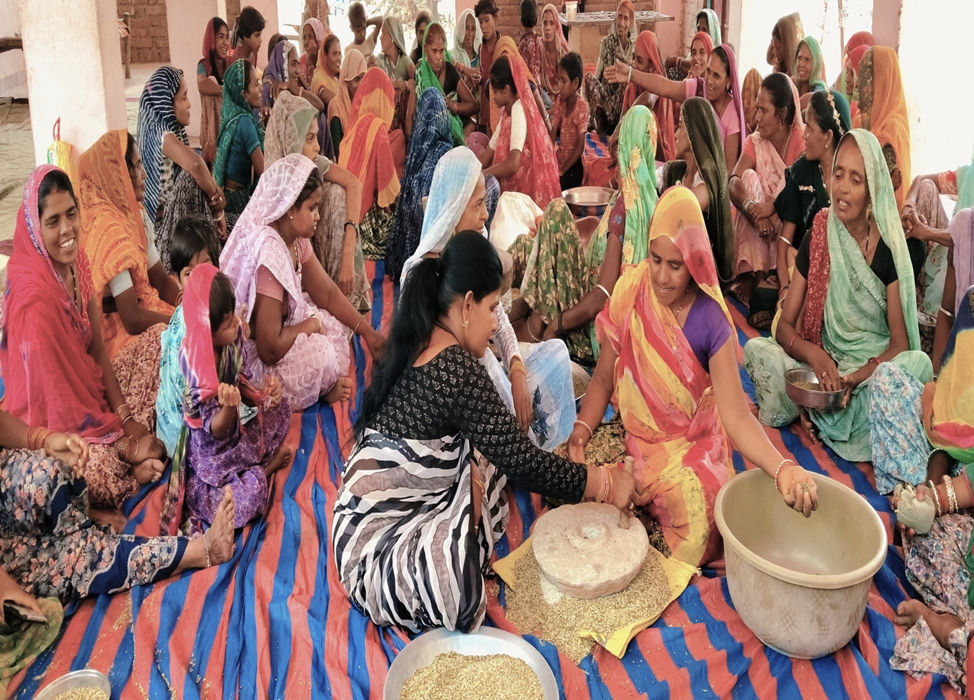
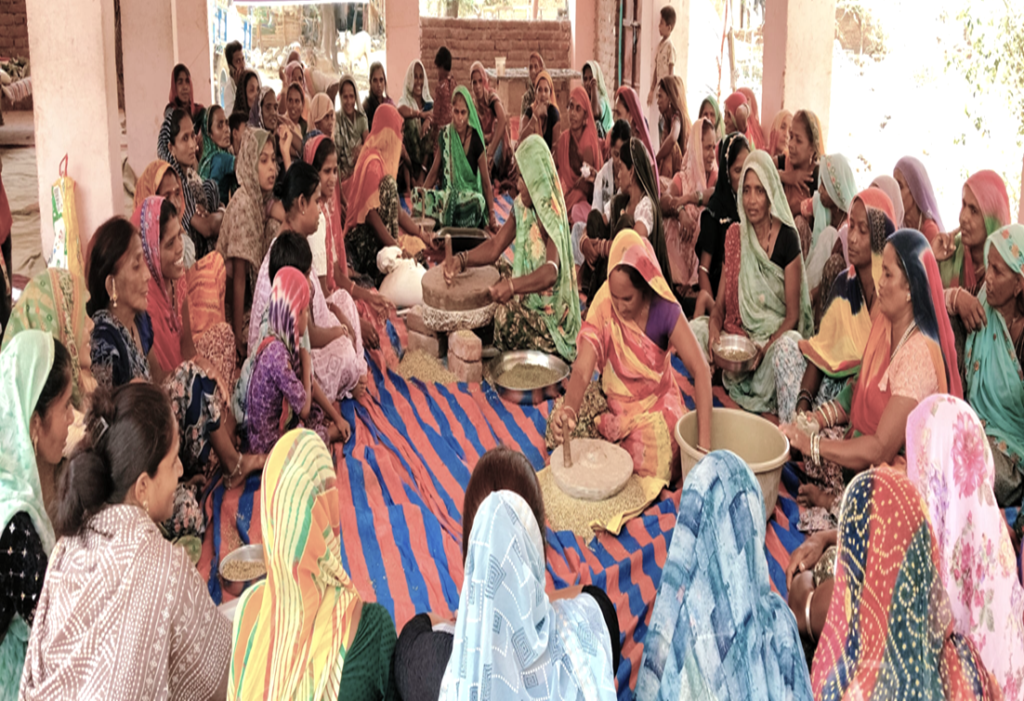
Women stood at the heart of this tradition. After harvest, they processed the pulses on a hand-operated stone grinder, locally known as the ghatti. More than a simple household tool, the ghatti symbolised generations of accumulated knowledge passed from mothers to daughters. Every rotation of the stone reflected a tradition rooted in self-reliance, community wisdom and food sovereignty.
Over time, however, this relationship began to change. Mechanised processing, expanding markets and changing agricultural priorities gradually transformed pulses from a staple of household nutrition into a commercial commodity. Increasingly, the harvest travelled to agricultural markets instead of family kitchens. As this transition gathered pace, women—once central to the journey from field to plate—found their traditional role steadily diminishing.
It is against this backdrop that Vaagdhara, the Krishi evam Adivasi Swaraj Sangathan and the Mahi Mahila Kisan Manch launched an inspiring community initiative: Dal Utsav (Pulses Festival). More than a cultural celebration, the festival sought to revive traditional pulse processing, restore women’s leadership in local food systems and reinforce the principle that the first right over a crop belongs to the family that cultivates it.
At its core, the Dal Utsav carried a simple yet profound message: food grown in the field should nourish the household before it enters the marketplace. This principle lies at the heart of food sovereignty and resonates deeply in communities where women have long carried the responsibility of producing, processing and preparing food.
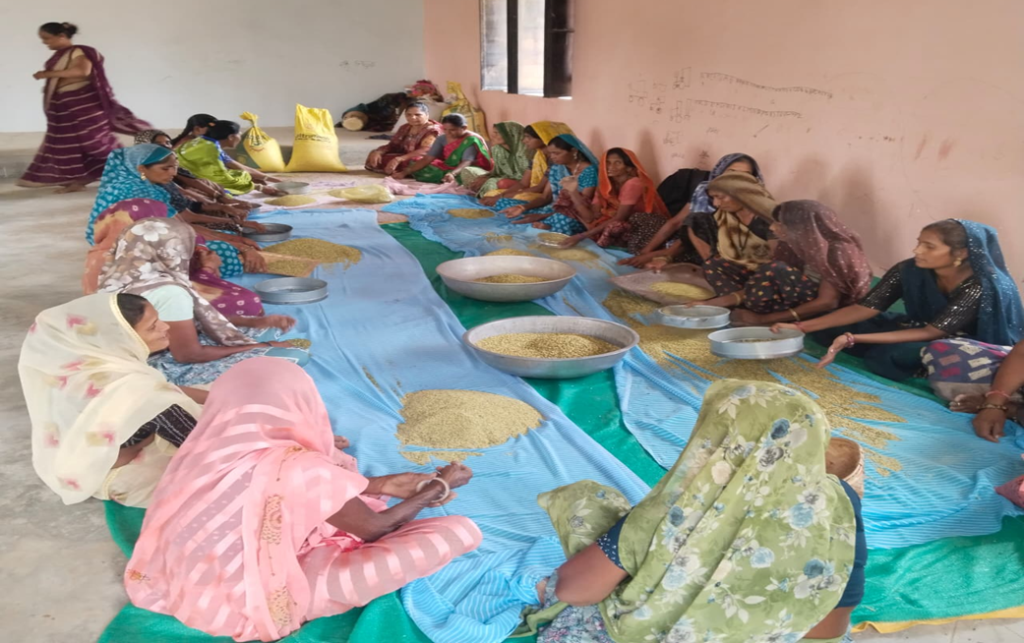
Organised across several tribal blocks, the festival brought together women from villages including Chhoti Badwas, Amlipada, Biluda, Jetpura, Matiya, Tamtiya, Vanda, Ganeshpura, Raipura, Nani Dhadheli, Bijor and Mahapura Rathore. Carrying moong and other pulses grown on their own farms, they assembled not merely to prepare dal but to reconnect with a tradition that had shaped generations before them.
One after another, women took their place beside the ghatti. As the stone grinders began to turn, so too did memories. Elderly women demonstrated techniques they had learned in their youth, younger participants absorbed those skills through observation and practice, and children witnessed a living tradition being passed on before their eyes. In all, 1,398 women actively participated, transforming the festival into a powerful expression of collective memory, cultural pride and community resilience.
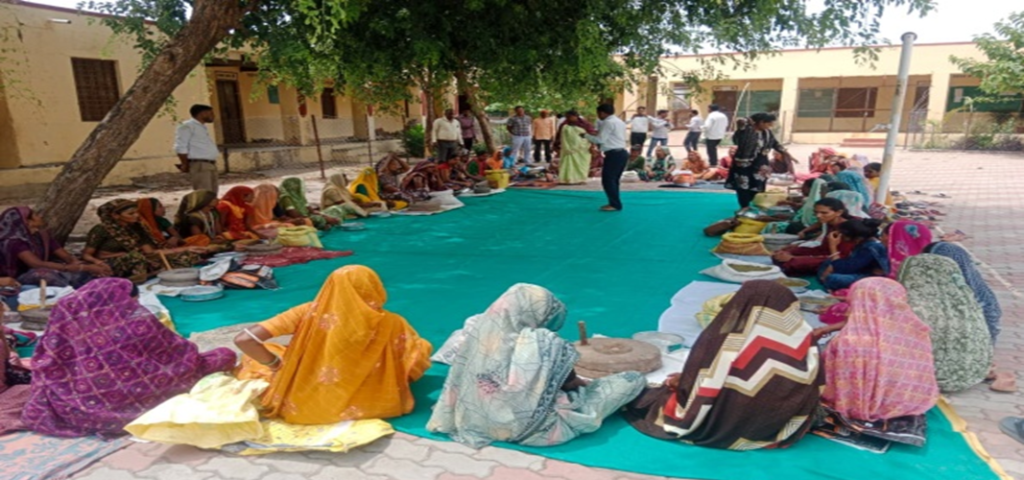
The ghatti became more than a tool—it became a bridge between generations. Conversations flowed as naturally as the work itself, with women exchanging experiences, knowledge and stories while processing pulses together. In that shared space, traditional knowledge was not displayed as heritage preserved in memory alone; it was practised, renewed and handed forward to the next generation.


