

X: @vivekbhavsar
Mumbai: As the Brihanmumbai Municipal Corporation (BMC) elections draw closer, the Bharatiya Janata Party (BJP) faces a complex yet promising political landscape in Mumbai. Once seen as a junior partner in the civic power corridors of India’s financial capital, the BJP now aspires to single-handedly control Asia’s richest municipal body. To realise this ambition, the party is re-evaluating its Mumbai unit’s leadership structure and ground strategy.
At the heart of the discussion is Advocate Ashish Shelar, a seasoned politician who currently holds dual roles as Mumbai BJP President and cabinet minister in the Maharashtra government. Under his stewardship, the BJP has maintained stability and visibility in Mumbai’s intricate political terrain. His organisational acumen and legal expertise have earned him credibility among party workers and adversaries alike.
However, the BJP’s internal policy of “one person, one post” is now triggering a leadership churn. The party is unlikely to allow Shelar to continue in both capacities simultaneously. This opens the door for a new Mumbai BJP President—one who is expected to belong to the Marathi-speaking community, signalling a clear shift in BJP’s urban outreach strategy.

This move also aligns with the party’s broader demographic targeting: Marathi voters as the “bhumiputra” base and Hindi-speaking migrants from Uttar Pradesh and Bihar as the second-largest electoral group in Mumbai. The optics of appointing a Marathi face at the helm aims to counter the traditional Shiv Sena narrative of being the ‘true sons of the soil’ while retaining BJP’s pan-Indian appeal.
Despite Shelar’s formidable leadership, the sheer scale and intensity of the BMC elections demand focused, on-ground management. The proposal gaining traction within BJP circles is the appointment of a Working President for Mumbai. This is not a demotion of Shelar, but a strategic reinforcement—mirroring the state-level BJP structure, where the President is supported by a Working President for administrative execution.
The rationale is straightforward. With Shelar’s ministerial duties requiring his attention at the state level, a Working President can drive grassroots campaigning, coordinate with ward-level leaders, respond swiftly to crises, and maintain campaign momentum. Such a role becomes especially crucial given Mumbai’s 227 municipal wards and the fragmented political ecosystem created by the split in the Shiv Sena and NCP.
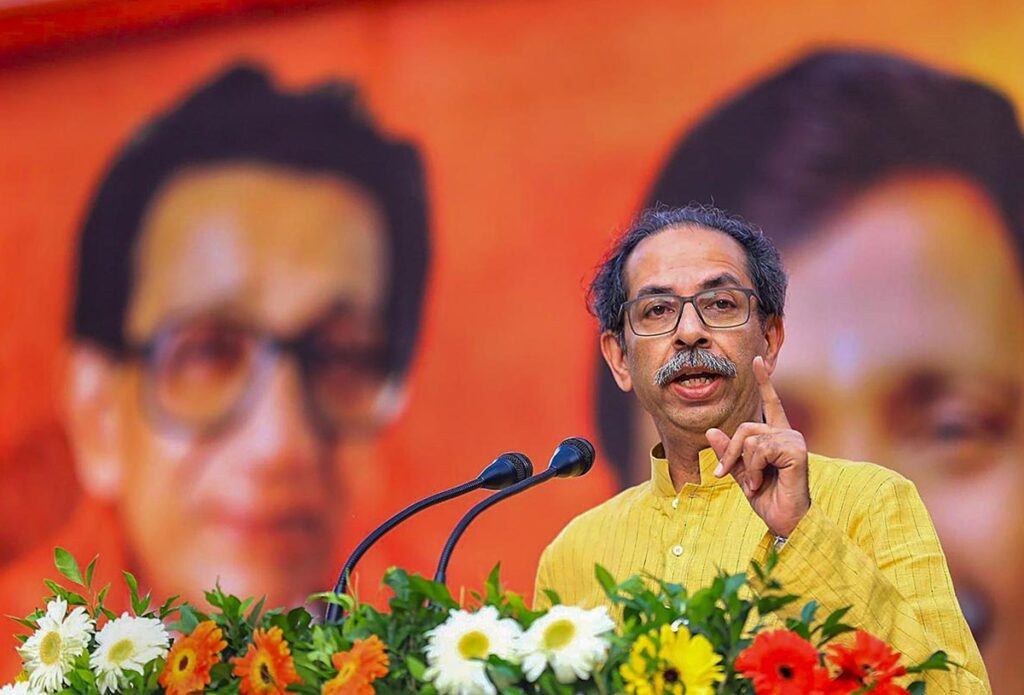
The 2017 BMC elections were a turning point. Shiv Sena (then undivided) won 84 seats, BJP followed closely with 82, and MNS secured 7 seats. BJP, despite being a strong contender, chose not to join the power structure in the BMC, acting instead as a watchdog.
Within days of the BMC election results being announced, 6 of the 7 MNS coporator’s defected to the then undivided Shiv Sena led by Uddhav Thackeray, bolstering the latter’s numerical strength in the civic body.
Political grapevine has been that the eyebrow raising mysterious defection of the almost entire lot of MNS coporator’s to the Shiv Sena was aimed at saving the Shiv Sena and helping it to retain its firm grip on power in the BMC.

The BJP leadership cannot ignore the recent reports of possible talks on rapprochement or merger between the two political parties. Although the political scars of the bitter 2005 split that led to creation of the MNS will be hard to overcome. Both the MNS and Sena UBT faction still have their pockets of influence in the metropolis.
However, the 2017 tacit defection of MNS coporator’s to the Shiv Sena is an enough indication that when it comes to crunch political situations, family ties between the two warring Thackeray siblings take precedence. Both the Sena UBT faction and the MNS need each other’s support in order to survive politically and retain their hold on power not just on the BMC, but stay politically relevant in Mumbai and Maharashtra.
Since then, Maharashtra’s political tectonics have shifted dramatically. Shiv Sena has split into factions led by Eknath Shinde and Uddhav Thackeray. Similarly, the NCP is now divided between Ajit Pawar and Sharad Pawar. BJP has formed ruling alliances with both Shinde’s Shiv Sena and Ajit Pawar’s NCP faction. However, these alliances are strategic; when it comes to the BMC, BJP’s goal is clear—to win an outright majority and govern without dependence.
In this context, the 2025 BMC polls are not merely a civic election. They are a referendum on political realignments in the state, a test of BJP’s solo strength in Mumbai, and a preview of its urban strategy for the 2029 general elections.
Despite its growing influence, BJP faces significant hurdles in achieving a majority in the BMC. With 227 seats, the halfway mark is 114. In 2017, BJP secured 82 seats—a strong showing, but still 32 short of majority. Gaining those extra seats will require a combination of Hyper-local candidate selection, Booth-level mobilisation, Bilingual and inclusive campaign messaging and Sensitive navigation of Marathi vs. non-Marathi identity politics.
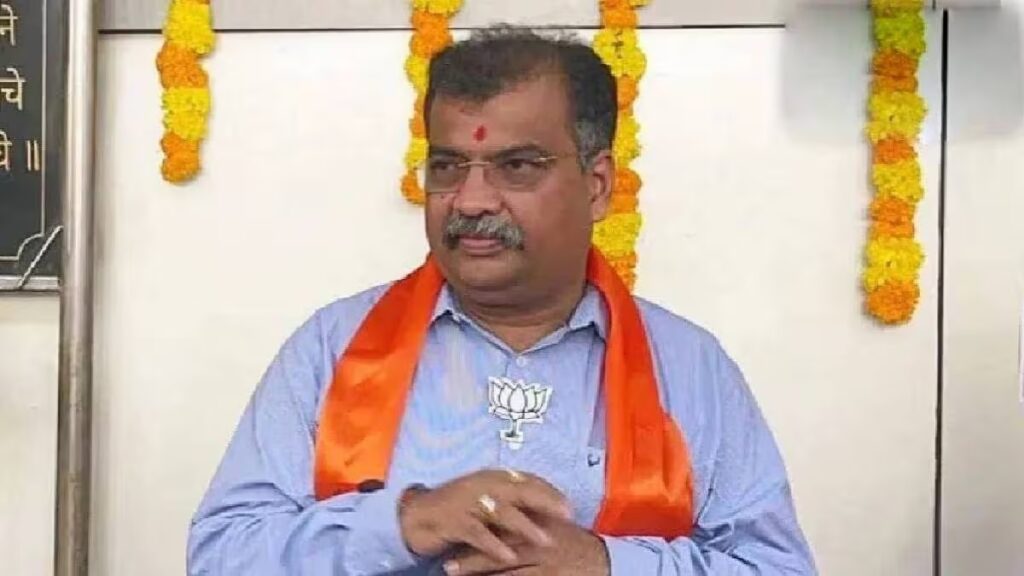
A Working President with strong grassroots connect—especially in Marathi-dominated wards—can play a critical role here. The BJP’s state leadership seems to have recognised this necessity. With Ravindra Chavan likely to be announced as the next Maharashtra BJP President, the Mumbai unit could soon follow with a similar dual-leadership model.
To win the BMC, BJP must present a unified yet flexible front. The proposed structure—retaining Ashish Shelar’s strategic leadership while inducting a dedicated Working President for on-ground execution—is not just about sharing responsibilities; it’s about maximising strengths. Equally important will be BJP’s linguistic and cultural messaging.
A bilingual campaign—speaking in Marathi to connect with native voters and Hindi to mobilise migrant support—can create a coalition of interests that no single rival party can match.
Moreover, the party must emphasise governance—showcasing its track record in infrastructure, digitalisation, sanitation, and public services—while ensuring its campaign avoids alienating any key demographic.
The BJP’s BMC game plan hinges on a delicate balance of continuity and expansion.
Keeping Ashish Shelar as the face of Mumbai BJP while appointing a Working President for operational thrust could be the winning formula. With Mumbai’s political demography evolving and alliances in flux, BJP’s success will depend on how well it adapts—structurally, strategically, and socially.
The next few weeks will be crucial as the party finalises leadership roles and fine-tunes its campaign narrative. But if it gets the mix right, BJP may well script a historic solo victory in the heart of Maharashtra’s political theatre.


