

In the tribal belt of Rajasthan’s Banswara district, the pressures of rising fuel costs and shrinking natural resources have long shaped daily life. For families in villages such as Palibada, Sasawadla, Loharia, Maskamohdi, and Bijalpura, cooking was not just a routine task — it was a daily struggle.
As LPG prices rose and firewood became increasingly scarce due to shrinking forest cover, households were forced to depend on uncertain and costly fuel sources. Women often walked several kilometres each day to collect firewood, spending hours in smoke-filled kitchens that affected both their health and productivity.
In this setting, a simple intervention has begun to change multiple aspects of rural life — the adoption of biogas.
A Local Solution to a Structural Problem
Most families in this region depend on agriculture and livestock. Crops like maize, soybean, and cotton dominate, but limited rainfall and arid conditions make year-round farming difficult. Cash flows are irregular, making recurring expenses like LPG refills a burden.
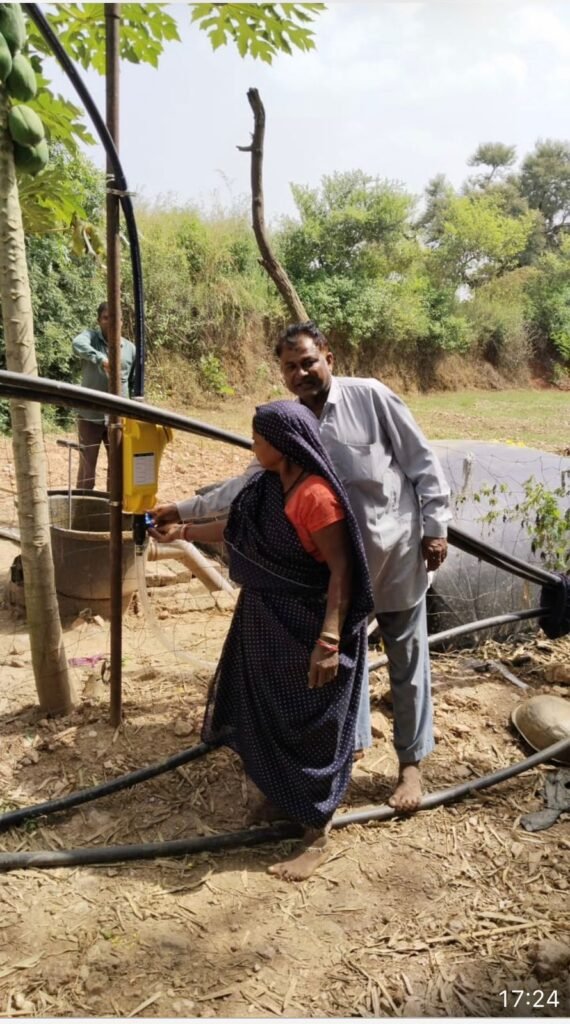
Recognising this challenge, Vaagdhara, working with local communities, supported the installation of biogas plants across several villages. By 2025, around 280 units had been installed in the region, including 40 new plants in these villages alone.
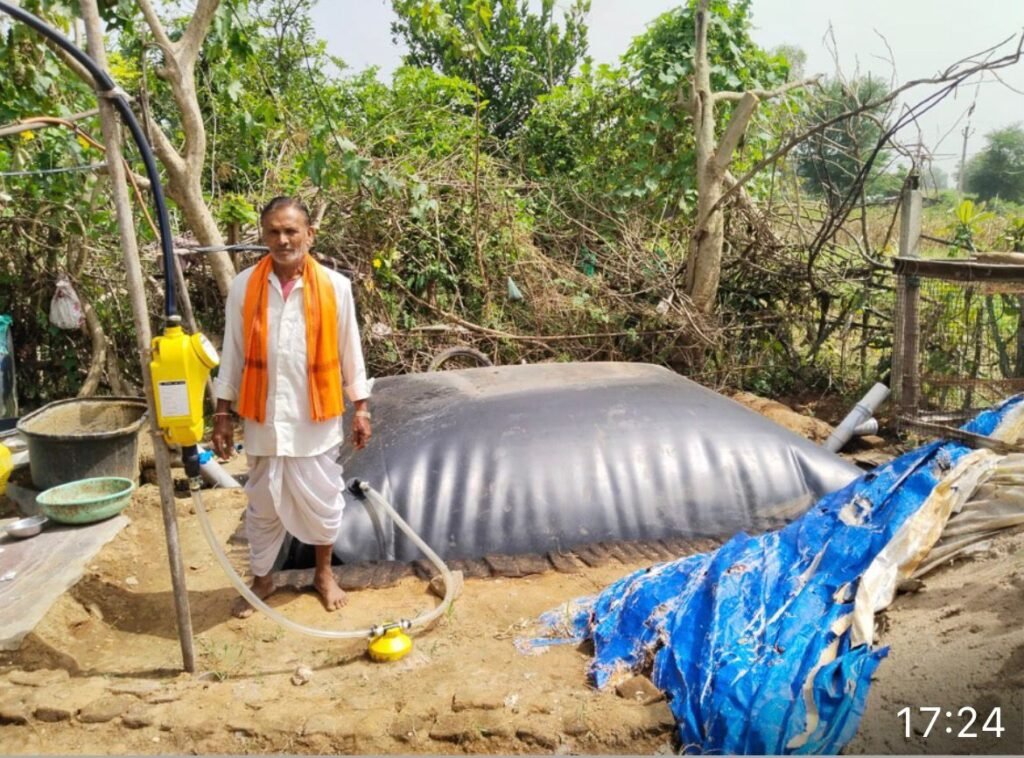
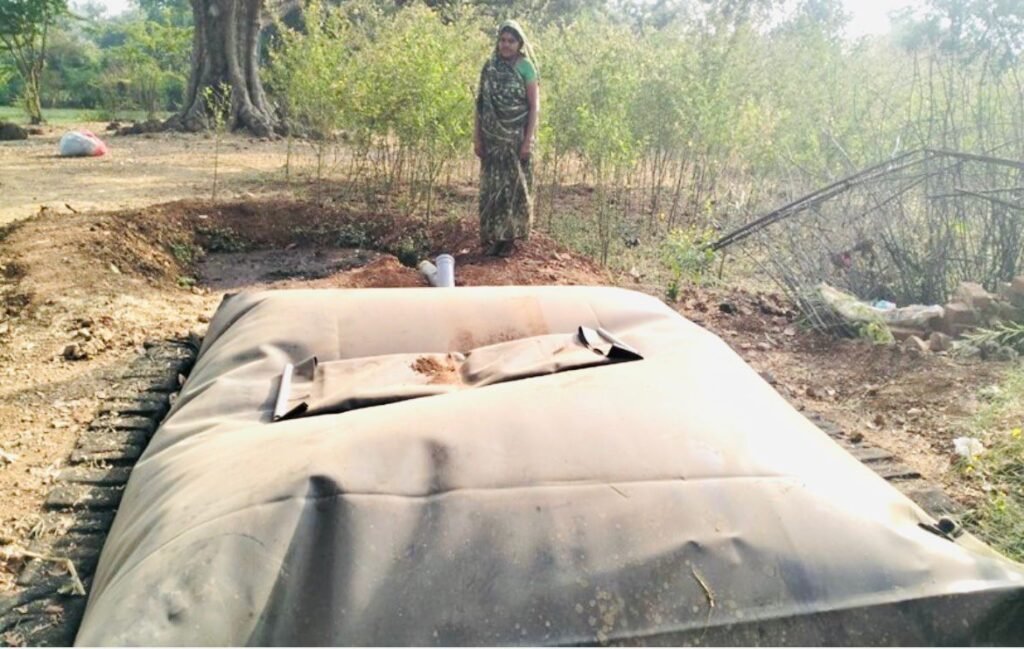
The technology itself is simple. A mixture of cattle dung and water is fed into a chamber, where gas is generated and supplied directly to kitchen stoves. What appears basic in design has proved transformative in practice.
Immediate Economic Relief
For families, the shift has brought immediate financial benefits.
Sarita Rakesh Damor from Maskamohdi village uses about fifteen kilograms of dung and ten litres of water daily, generating enough gas for her household’s cooking needs. This has eliminated the need for regular LPG refills.
Similarly, families report savings of around ₹5,000 annually — from reduced LPG use and lower spending on chemical fertilisers. Across hundreds of households, this translates into substantial local savings that remain within the village economy instead of flowing outward.
From Waste to Resource
The impact extends beyond energy.
Biogas plants produce slurry — a residue that functions as an effective organic fertiliser. Farmers using this slurry have observed improvements in soil quality and crop output, along with reduced dependence on chemical inputs.
This creates a direct link between energy and agriculture, where one system supports the other.
Changing the Everyday Reality for Women
The most visible change is in the lives of women.
Earlier, cooking meant long hours in smoke-filled spaces, leading to respiratory issues, eye irritation, and fatigue. Collecting firewood required significant time and physical effort.
With biogas, kitchens are now largely smoke-free. Cooking is faster, and the time spent gathering fuel has reduced drastically. That time is now being redirected towards farm work, childcare, and other productive activities.
The health benefits, though not formally documented, are widely acknowledged within the community.
Environmental Impact
The environmental gains are equally significant.
Reduced dependence on firewood eases pressure on forests. At the same time, controlled use of dung in biogas plants helps manage methane emissions that would otherwise be released into the atmosphere.
In the context of climate change, such decentralised solutions offer practical and scalable models for rural sustainability.
A Community-Led Transition
What stands out in this initiative is not just the technology, but the way it has been adopted.
The shift was not imposed from outside. It was driven by local participation, supported by training and facilitation. Women played a central role in adoption, and households integrated the system into daily life with relative ease.
Vaagdhara acted as a facilitator, but the ownership of the change remained with the community.
A Model Beyond One Region
The experience of these villages points to a broader lesson.
Energy, agriculture, health, and environment are interconnected in rural economies. Solutions that address these together — even through small, local interventions — can have lasting impact.
In Banswara, a resource as ordinary as cattle dung has become the basis of a more stable and self-reliant system.
Author Bio
Vikas Parsaram Meshram writes on rural development, agriculture, and public policy, focusing on grassroots realities and practical solutions across rural India.


