

ATHWAJAN, SRINAGAR: Along the southern highway leading into Srinagar, the towering stone cliffs of Athwajan and Pantha Chowk stand quiet under the morning sun. For decades, these hills formed the backbone of Kashmir’s building trade, echoing with dynamite blasts, pneumatic drills and the rumble of heavy tipper trucks hauling raw stone across the Valley. Contemporary reporting described Athwajan as a major source of construction material for Srinagar and its surrounding areas.
Today, rusted compressor tanks, split hydraulic hoses and heavy trucks resting on cracked tyres line the roadside yards.
On November 24, 2016, the Jammu and Kashmir Industries and Commerce Department issued Government Order No. 202-IND of 2016, ordering an immediate and total ban on stone quarrying across the Athwajan and Pantha Chowk hills. The official justification cited safety and environmental concerns. Later court proceedings also examined the failed relocation of quarry holders.
A February 2020 report by Brighter Kashmir, citing a delegation of stone quarry owners, said around 180 working quarries were affected and that between 700 and 900 quarry-holding families had lost their previous source of livelihood. Thousands of others who depended on the quarry economy were also affected.
Nearly a decade later, the hills remain silent, but the financial wreckage in the surrounding hamlets remains unresolved.
“I Sold My Land to Pay the Bank”
In a narrow dirt lane behind the Pantha Chowk bypass, 54-year-old vehicle owner Muzaffar Khan sat on the rusted running board of his tipper truck. The vehicle has not moved from its concrete blocks in years.
“In March 2016, eight months before the ban, I took an ₹8.5 lakh commercial vehicle loan from Jammu & Kashmir Bank to buy this truck second-hand,” he said, wiping dust from the cracked dashboard. “We were working twelve hours a day, supplying stone to private house builders across Srinagar and Budgam. When the government shut the gates in November, the income stopped instantly. But the bank’s monthly EMI did not stop.”
He explained how the debt quickly spiralled out of control.
“For the first year, I borrowed money from relatives to keep up with the installments, believing the government would reopen the sites,” he said. “By 2019, the bank started sending recovery notices to my house, threatening to seize our residential property. I had no choice. I sold three kanals of our family’s ancestral apple orchard in Pulwama. Almost all of that money went directly to the bank to clear the loan account. Today, I have no orchard, my truck is scrap metal, and I drive a rented autorickshaw to earn ₹350 a day.”
“My Machine Rusted While My Debt Doubled”
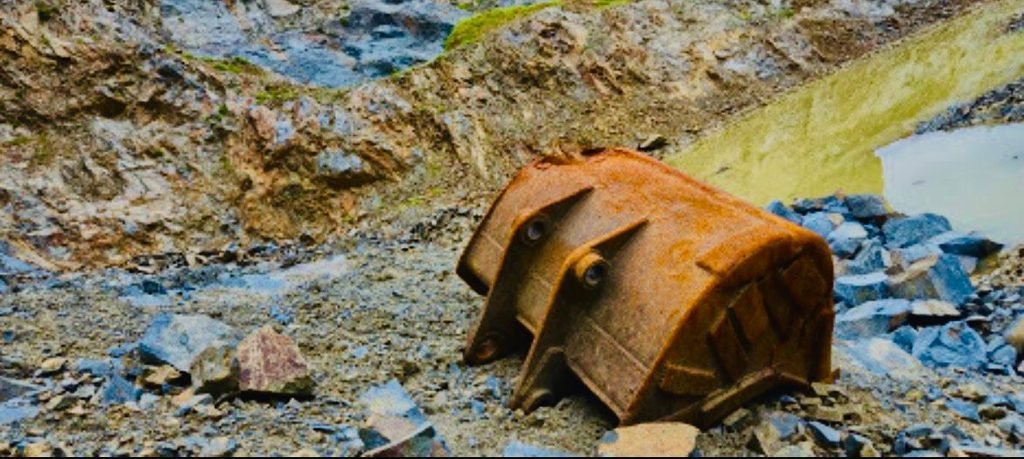
A few kilometres away, a 48-year-old quarry operator who owned rock-cutting machinery described a similar spiral into commercial debt.
“In 2015, three of us partners pooled our savings and took a joint machinery loan of ₹15 lakh to purchase a diesel-powered air compressor and two heavy pneumatic rock-drilling units,” he said, pointing to a shed where the yellow compressor sits covered in plastic tarps. “We were servicing five quarry pits, earning enough to pay our installments and support three households.”
When the November 2016 order came down, their equipment was left unused.
“The machines sat out in the rain and snow for three years,” he said. “The engine seized, the hoses rotted, and the metal corroded. Meanwhile, the unpaid loan balance climbed above lakhs with penalties. We had to surrender our equipment to private scrap buyers for barely ₹1.5 lakh just to pay off private moneylenders.”
“At my age, no one hires me for skilled work. I stand at the labor chowk in Batamaloo every morning at 7:00 AM hoping someone will pick me up to carry cement bags or dig trenches.”
His experience was not unique. A 2021 report from Daily Excelsior quoted quarry holders in Athwajan and Pantha Chowk describing rusting tippers, unpaid bank loans and the loss of their businesses after the ban.
The Vanishing Chisel Craft: “Our Hands Are Useless Now”
While machinery owners faced legal recovery and commercial debt, traditional stone carvers lost access to the raw material they depended on for their trade.
For generations, the stone quarried in Athwajan, used in construction and traditional masonry across Kashmir, was the material that gave these workers their livelihood.
In an open courtyard in Athwajan, a 60-year-old stone carver held up a flat-edged steel chisel and a worn wooden mallet.
“I learned this work from my father when I was fourteen years old,” he said. “I spent forty-five years cutting raw stone blocks into finished foundation pieces. It is heavy, precise work that requires knowing exactly where to strike the rock so it does not shatter. When the government banned the quarries, our raw stone stopped coming.”
He described the impact on his household during the Valley’s long winters.
“You cannot take a lifetime of stone carving and suddenly become an electrician or a computer operator,” he said. “My brother and I try to find general manual labor during the summer on road-widening projects. But during the four months of winter, when all construction across Kashmir halts, our income drops to absolute zero. Last winter, we had to take rice, tea, and cooking oil on credit from the neighborhood grocer. Our grocery debt is sitting at ₹40,000.”
The Household Ledger: Living on Credit
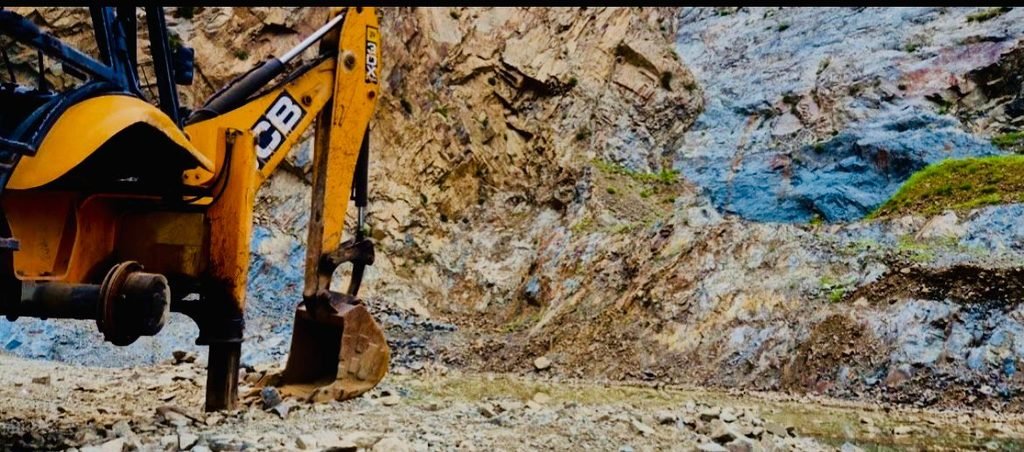
In a single-storey brick house near the base of the Pantha Chowk hills, a 65-year-old widow spoke about the daily struggle to run her household without regular income.
“My husband died twelve years ago, and my two sons were working as manual loaders at the quarry pits,” she said, seated on a plain floor mat. “They were paid ₹500 each day for breaking and cutting smaller pieces of stone by hand. It was hard physical labor, but it put food on the table, paid our electricity bills, and bought medicine for my arthritis.”
The 2016 shutdown ended that stability.
“After the quarries closed, my sons could only find casual daily labor once or twice a week,” she explained. “Some weeks they make ₹1,000, some weeks nothing at all. When my grandson fell ill last autumn, we had to borrow ₹15,000 from a neighbor just to pay for private diagnostic tests and hospital fees. Every single month is a struggle over whether we buy food or pay the electricity meter. We are surviving entirely on debt.”
The Paper Trail of the Aripora Relocation
To calm the public protests that followed the November 2016 ban, the state administration announced a relocation plan.
Under administrative directions, the Department of Geology and Mining identified 16.40 hectares of state land at Aripora in nearby Zewan as an alternative site. The government also prepared a mining plan for the proposed site, while quarry owners said an access road costing approximately ₹40 lakh was constructed.
The plan aimed to shift displaced leaseholders and workers away from the national highway into an interior area.
The government did not ultimately make the Aripora site operational.
A 58-year-old former quarry leaseholder who participated in dozens of official delegations between 2017 and 2022 described how the relocation fell apart in government offices.
“We went to every office from the Mining Department to the Civil Secretariat,” he said. “First, the Forest Department objected to the land and said it came under the Khanmoh Conservation Reserve. The area was later fenced. Then the BSF also raised objections because the site was close to its quarters. Every meeting ended with officials telling us the paperwork would be cleared next month. Years have passed. The ₹40 lakh road they built is now covered in wild shrubs, and not a single worker was ever given a square foot of rock to cut.”
The dispute later reached the Jammu and Kashmir High Court. In its judgment, the court recorded that the proposed Aripora site could not be handed over and that the site was subject to a dispute over its status and availability.
The Reality Today: Single-Trip Royalty Passes
The struggle facing local miners worsened with the enforcement of the Jammu and Kashmir Minor Mineral Concession, Storage, Transportation of Minerals and Prevention of Illegal Mining Rules, 2016. The rules introduced requirements including approved mining plans and environmental clearances for mining operations.
But the rules did not themselves reopen Athwajan.
According to the government’s subsequent position before the J&K Legislative Assembly, the mining restrictions continued to affect the Athwajan, Zewan, Pantha Chowk and Khanmoh quarry belts.
To prevent a complete breakdown in the supply of construction material and to provide some livelihood support to affected quarry holders, the government has allowed Short-Term Disposal Permits for the removal of slided loose material from the affected quarry belts, subject to royalty and other applicable charges.
A 42-year-old tipper driver waiting near a checkpoint in Pantha Chowk explained how the system works in practice.
“Today, we operate entirely on royalty slips,” he said, holding up a stamped paper receipt. “The department issues a permit for carrying loose aggregate, and we have to pay royalty for the material we transport. A single trip earns us around ₹1,500. After deducting ₹1000 for diesel, toll fees, and basic maintenance, we are left with ₹400 or ₹500 for a full day’s work. It is barely enough to buy bread and tea.”
An Unfinished Transition
To address the prolonged crisis, the Jammu and Kashmir administration has continued to pursue rehabilitation of the affected quarry holders.
In March 2025, Deputy Chief Minister Surinder Kumar Choudhary told the J&K Legislative Assembly that the government had identified Shalguf and Zewan as alternative sites for the rehabilitation of 178 affected quarry holders.
Blocks at Shalguf and Zewan had been designated as quarry clusters, but the holders still had to obtain an approved mining plan, environmental clearance, consent to operate and other NoCs before licences could be granted.
The government also said residents of Shalguf and Zewan had objected to the proposed quarrying because of concerns about dust and noise pollution.
TheNews21 attempted to seek a response from the Department of Geology and Mining on the status of rehabilitation, but could not establish contact before publication.
While administrative plans continue, the workforce remains caught in limbo.
The cliffs of Athwajan have grown silent, but the cost of the abrupt transition continues to be carried by the workers, drivers and carvers who spent their lives working those hills.
The government had a reason to shut the quarries. The harder question is what happened to the people who were supposed to be moved on.
Nearly a decade after the ban, their trucks remain parked, their machinery has rusted, their skills have lost their market, and the promised transition from Athwajan to somewhere else remains unfinished.
The identities of some interviewees have been withheld at their request due to privacy concerns. Their identities have been verified by TheNews21.


