

For the first fifty minutes of A Child of My Own, you could almost forget you are watching a documentary.
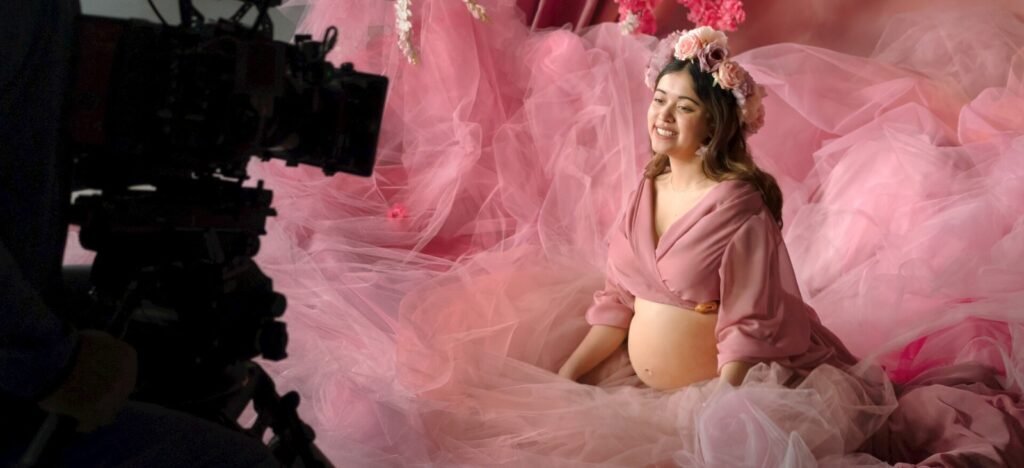
Professional actors play out a woman’s pregnancy — the ultrasounds, the baby shower, the anxious wait for labour — all shot and staged like a full-blown drama.
Then, without much warning, the film pulls back the curtain.
The actors disappear. In their place sits the real woman whose story you have just watched dramatised, answering directly to camera for what she actually did.
That woman is Eleonor Alejandra Marín Mendoza, known in the film simply as Ale. In 2009, she kidnapped a newborn baby from the Mexico City hospital where she worked after spending months convincing those around her, including her husband, that she was pregnant.
Ale would eventually serve more than 13 years in prison.
Netflix’s new documentary, released on August 13, does not simply retell that story. It effectively stages it twice, from two very different vantage points, and the gap between those versions is really what the film is about.
What the Case Record Actually Shows
Strip away the dramatisation, and the facts are stark.
After suffering three miscarriages, Ale continued to present herself as pregnant to her family and husband. She gained weight and altered medical records to sustain the deception.
Her version of events was that she had arranged to take another woman’s baby and present it as her own.
On the day of the kidnapping, Ale approached Mayra Navarro after she had given birth at Hospital General de México. Mayra says Ale presented herself as hospital staff and asked her questions before she briefly left the room. When she returned, her newborn daughter was gone.
Security footage later showed Ale leaving the hospital carrying the baby inside a large bag. Police located Ale, her husband Arturo Calderón Gamiño and the newborn at a nearby hotel only hours later.
Gamiño spent roughly two-and-a-half years in prison before being acquitted after the court found insufficient evidence that he knew about the kidnapping. Ale was convicted and sentenced to more than 13 years.
Two Different Accounts of Consent
This is where the documentary becomes most interesting.
Ale continues to maintain that she and Mayra had reached an agreement before the birth — that Mayra did not want to raise the child and had agreed to give the baby to her.
The dramatised first half presents that version from Ale’s perspective.
But the documentary then dismantles it.
Mayra says there was never any such arrangement and that she met Ale only on the day her daughter was born. The film also introduces records and testimony that challenge Ale’s account of how and when the two women supposedly met.
“There was never a deal,” Mayra says in the film.
That contradiction becomes the documentary’s central device: first allowing viewers to inhabit Ale’s version of reality, then confronting them with the evidence that does not support it.
The Pressure Behind the Deception
None of this excuses what happened, and the documentary does not ask you to excuse it.
What it does spend considerable time examining is why Ale constructed such an elaborate false pregnancy in the first place.
After repeated miscarriages, she describes feeling intense pressure to become a mother — from within her marriage, her family and the wider social expectation that motherhood was something she was supposed to fulfil. Director Maite Alberdi has said that this question — why someone would feel compelled to fake a pregnancy for months — was central to what drew her to the story.
That is arguably the more interesting question the film asks.
Ale’s case is extreme, but Alberdi uses it to examine a far more ordinary pressure: the idea that becoming a mother is not merely desired, but expected.
The documentary does not present that pressure as an explanation that erases responsibility. Instead, it asks what can happen when private grief, deception and social expectation begin feeding into one another.
Where the Documentary Draws Its Own Line
What makes Alberdi’s approach work is that empathy and accountability are kept separate.
The film asks viewers to understand the circumstances around Ale’s actions without forgetting what happened to Mayra and her newborn daughter.
The second half returns methodically to records, security footage, testimony and competing accounts, repeatedly pulling the story away from Ale’s subjective version and back towards the evidence. Netflix itself describes this structural shift as the point where Ale’s “imagined reality” gives way to an investigation of what actually happened.
That is also what prevents A Child of My Own from becoming simply another sensational true-crime retelling.
The real achievement of the film is not that it asks viewers to choose between seeing Ale as a victim or a villain. It refuses that easy choice altogether.
The Takeaway
A Child of My Own is less interested in asking whether Ale deserves sympathy than in examining how grief, expectation and self-deception can combine until reality itself becomes difficult to separate from the story someone has constructed.
But the documentary never allows that psychological or social context to obscure the central fact: a newborn child was taken from her mother.
That balance — between trying to understand an extraordinary act and refusing to excuse it — is what makes A Child of My Own more unsettling than the average true-crime documentary.
The film is now streaming on Netflix.


