

Redevelopment blueprint links river rejuvenation with parks, stormwater management and compensatory plantation across MMR
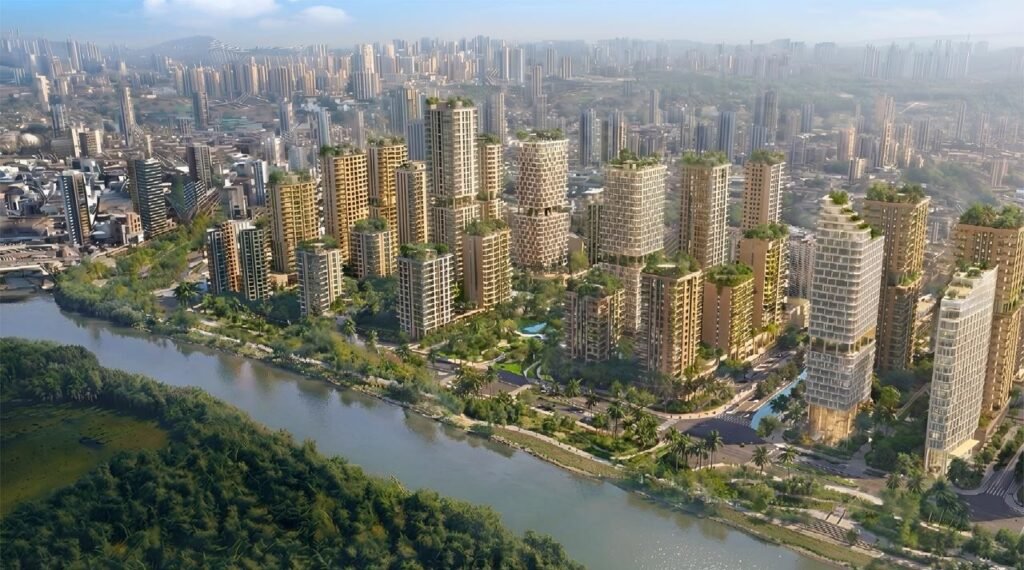
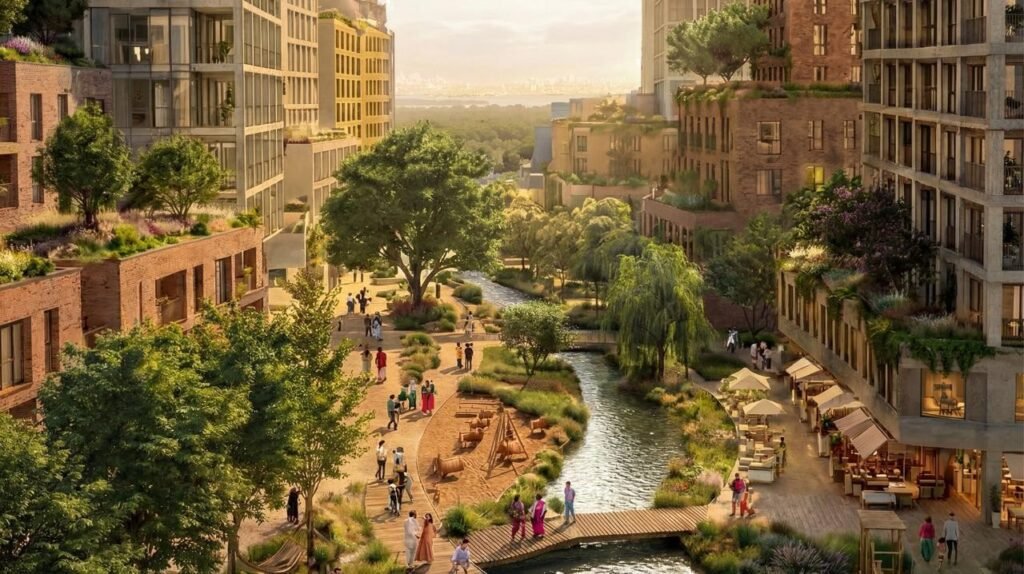
Mumbai : The Dharavi Redevelopment Project has proposed a 3.3-km public riverfront along the Mithi River and a network of parks and green corridors as part of its environmental planning for the redevelopment area. The proposed promenade will extend from the Matunga culvert to the Mithi riverfront and will be accessible to the public. The plan includes viewing decks, cafés and cultural spaces, along with native trees and vegetation intended to support the river’s ecological character.
Permeable paving and bioswales have also been proposed to improve stormwater management and groundwater recharge. The riverfront is expected to connect with a 15-metre-wide pedestrian and cycling corridor, a central park and neighbourhood-level open spaces across Dharavi. The proposal seeks to treat the Mithi River as part of an integrated “green-blue” urban network rather than as a standalone beautification project. Such an approach links river restoration with drainage, public open spaces, biodiversity, temperature reduction and pedestrian connectivity.
However, the media release announcing the plan does not specify the estimated cost of the river rejuvenation component, its implementation schedule or the agencies responsible for different stages of execution. It also does not provide measurable targets for river-water quality, sewage interception, waste removal, flood management or ecological restoration. These details will be necessary to assess whether the project delivers environmental improvement beyond the construction of a public promenade.
Around 40,000 trees proposed within Dharavi
The redevelopment authorities have proposed planting or rejuvenating around 40,000 trees within Dharavi in phases. According to project officials, this would be nearly five times the number of trees proposed to be removed for redevelopment work. Nearly two lakh compensatory trees are also proposed to be planted across the Mumbai Metropolitan Region. Of these, around 30,000 trees have reportedly been planted at Chahade village in Palghar tehsil because adequate land was not available within Brihanmumbai Municipal Corporation limits. The project has set a target of planting nearly 75,000 trees during the current monsoon.
The decision to carry out a substantial portion of compensatory plantation outside Mumbai raises an important urban-policy question: whether plantations located far from the redevelopment area can fully compensate Dharavi residents for the loss of mature local tree cover and its immediate environmental benefits. Trees planted outside the city may contribute to regional afforestation, but they cannot automatically replace local shade, air-quality benefits, biodiversity and heat mitigation within the affected neighbourhood.
Five-year maintenance and survival reporting
Environmental consultancy Terracon has been appointed to undertake the plantation and maintain the trees for five years. Its responsibilities will include planting, irrigation, protection and maintenance. The agency is also expected to submit tree-survival reports every six months. The plantation and maintenance costs will be borne by Adani Navbharat Developers Private Limited, the special-purpose vehicle implementing the Dharavi Redevelopment Project. The survival-reporting mechanism could provide an important accountability tool, provided the reports are placed in the public domain and independently verified.
Tree plantation programmes are generally assessed not merely by the number of saplings planted but by their survival, species diversity, location, canopy development and long-term maintenance. The redevelopment authorities have not yet disclosed whether the six-monthly reports will be made available to residents, the municipal administration or independent environmental experts.
The effectiveness of the proposed environmental network will ultimately depend on detailed execution plans, statutory approvals, transparent monitoring and coordination with civic and environmental agencies. Public disclosure of project timelines, tree-cutting permissions, compensatory plantation locations, survival data and river-restoration indicators would allow residents and authorities to evaluate whether the commitments translate into measurable environmental outcomes.


