

Sandeep Tamgadge says stigma discourages testing; FDA Commissioner Tukaram Mundhe urges students to develop critical thinking in the AI era
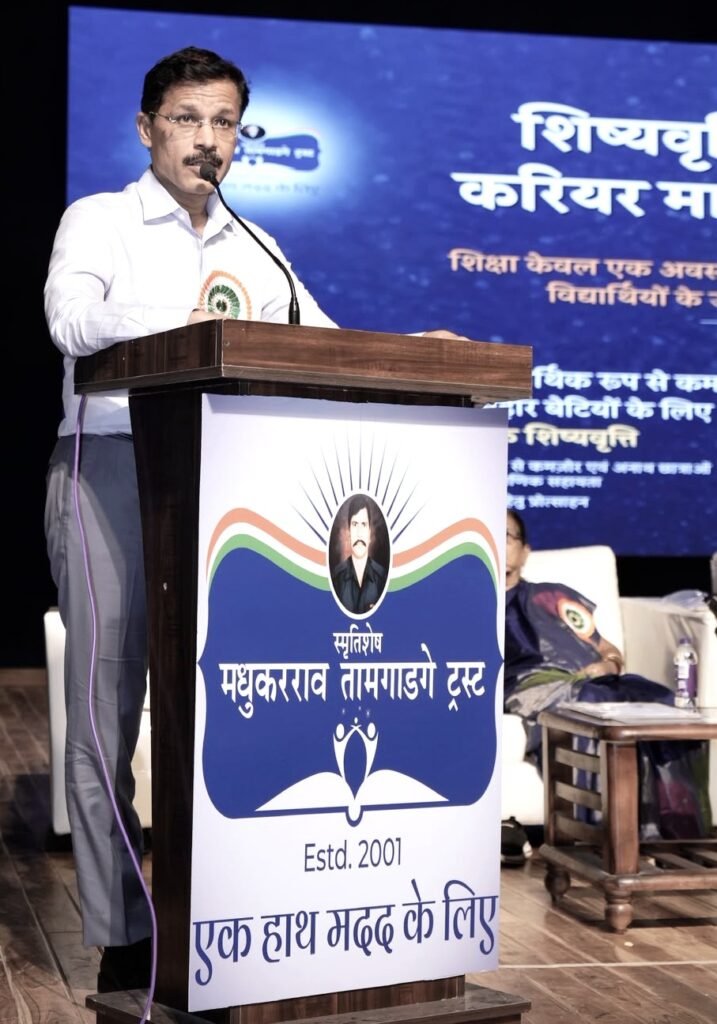
Nagpur : A serving Additional Director General of Police (ADGP) on Sunday publicly disclosed that he is a sickle cell carrier and urged families to make premarital screening a routine part of marriage-related decisions to help prevent the transmission of the inherited blood disorder. Sandeep Tamgadge, IPS, Additional Director General of Police, Nagaland, made the remarks while presiding over a scholarship distribution, sickle cell awareness and career guidance programme organised by the Smrutishesh Madhukarrao Tamgadge Charitable Trust at Dr Vasantrao Deshpande Hall in Civil Lines, Nagpur.
“Unless we speak openly about sickle cell disease, people will not understand its seriousness. I am myself a sickle cell carrier. I am a senior officer and I lead a normal life, but I do not feel any embarrassment in speaking about my carrier status,” Tamgadge said. He said he chose to speak publicly about his carrier status to encourage greater awareness and reduce the stigma surrounding screening.
Calls for Premarital Screening
Tamgadge urged families to include blood testing among the factors considered before marriage. “Families consider several factors before marriage, but blood testing is often neglected. Premarital screening, appropriate medical counselling and informed decision-making must become part of public awareness,” he said.
He added that screening programmes should be accompanied by counselling and accurate information rather than fear, stigma or discrimination.
‘A Social Issue, Not Just a Medical Condition’
Tamgadge said sickle cell disease should not be viewed solely as an individual’s medical problem, noting that it affects families and communities, particularly in areas where diagnosis, treatment and blood transfusion services remain limited. “Sickle cell anaemia cannot be viewed only as an individual medical problem or the responsibility of one family. It is a social issue that requires the participation of the government, healthcare institutions, civil society organisations and communities,” he said.
Drawing on his experience in Nagaland, Tamgadge said community participation plays an important role in addressing social challenges. He added that the goal of a sickle cell-free India could only be achieved through collective efforts involving government agencies, healthcare institutions, voluntary organisations and the public. He also said the Trust intentionally organises public scholarship distribution programmes so that students can interact with professionals, explore career opportunities and engage with wider social issues.
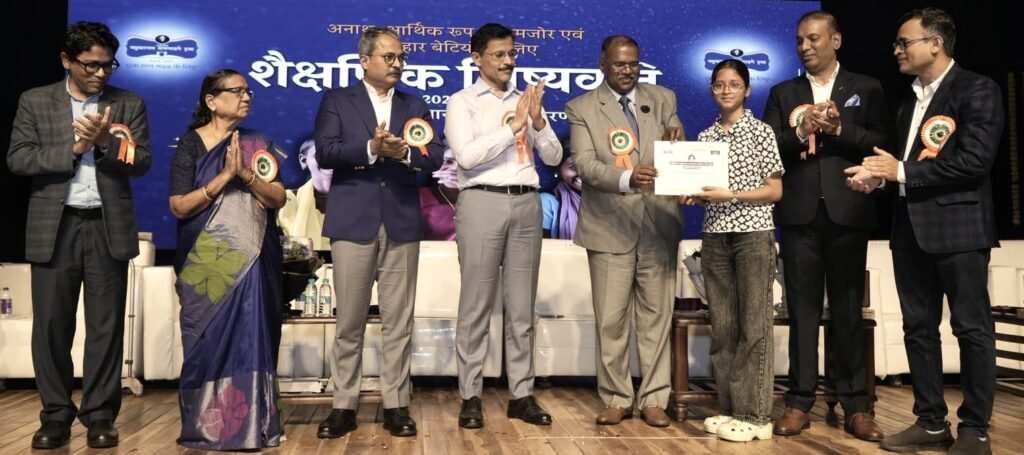
During the programme, scholarships were awarded to meritorious girl students from economically weaker families. The Trust also presented the Atharva Educational Scholarship to students living with sickle cell disease to support their education despite recurring health challenges. The organisation also conducts screening camps, medicine distribution drives, blood donation camps and awareness programmes.
Safe Blood Supply Highlighted
Jayshree Ramteke, President of the Sickle Cell Society of India, stressed the importance of ensuring safe and quality-assured blood for patients requiring regular transfusions. She called for coordinated efforts involving blood banks, hospitals, government departments and voluntary blood donors to maintain uniform standards of care.
Tamgadge also paid tribute to the late Padma Shri Sampat Ramteke, whose work, he said, helped bring greater public and policy attention to sickle cell disease.
Mundhe Urges Students to Develop Critical Thinking in the AI Era
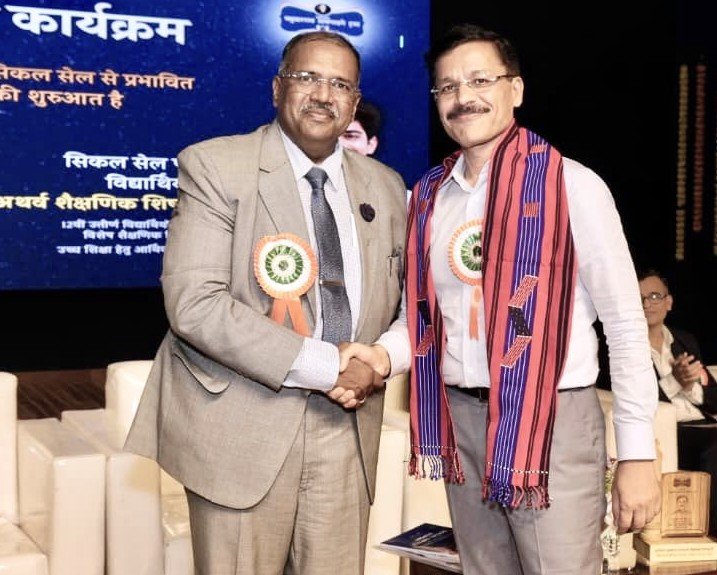
Delivering the keynote address, Maharashtra Food and Drug Administration Commissioner Tukaram Mundhe, IAS, encouraged students to use technology responsibly while developing independent thinking. “Knowledge is now available in everyone’s pocket through the mobile phone. The real challenge is to transform that knowledge into wisdom, distinguish between right and wrong, and continue learning throughout life,” he said.
“The question is not whether we should use a mobile phone. The question is whether we are using the mobile phone or whether the mobile phone is using us.” Mundhe urged students to verify information received through digital platforms rather than accepting it uncritically. “Use artificial intelligence, machine learning and social media, but develop the habit of questioning and verifying what you receive. We need to climb the ladder from knowledge to wisdom,” he said.
He cautioned against allowing loud opinions to replace informed thinking. “When a voice turns into noise, thought gets suppressed. Thinking is not the problem; thoughtlessness is the real problem,” he said, adding that degrees may help secure employment but long-term success depends on skills, judgement and continuous learning.
Career Guidance Beyond Competitive Examinations
IRS officer Unmesh Wagh encouraged students not to view failure in competitive examinations as the end of their careers and advised them to develop alternative skills and career options in sectors such as logistics, ports, railways, aviation and supply-chain management.
IRS officer Dhananjay Wanjari urged students to choose careers based on aptitude and informed judgement rather than social pressure. He also encouraged deeper reading and independent thinking over dependence on forwarded messages and short-form digital content.
Sachin Shende, Regional Director of the Reserve Bank of India, Nagpur, highlighted opportunities in banking, finance, entrepreneurship and start-ups, while Dr Neeraj Bodhi, Head of the Department of Pali and Buddhist Studies at Rashtrasant Tukadoji Maharaj Nagpur University, encouraged students to cultivate reading habits across disciplines and continue engaging with books alongside digital tools.


