Why India’s food system is still feeding calories, not health
By Vijay Shravan Gaikwad | Senior Agriculture Journalist & Policy Analyst
Mumbai: If Part I looked at the scale of India’s nutrition crisis, Part II has to look at the system behind it.
India has built one of the largest food security systems in the world. The Public Distribution System reaches millions. Mid-day meals feed schoolchildren every day. POSHAN Abhiyaan focuses on maternal and child nutrition.
The system, in many ways, works.
But it is still built around one central objective — calories.
And that is where the problem begins.
A System That Has Not Evolved
India’s food policy was shaped in a time when scarcity was the defining concern. The priority was straightforward: produce enough, distribute enough, and ensure that people had access to basic food.
Rice and wheat became central to this model because they were easier to produce at scale, store, and distribute through a nationwide system.
That approach solved hunger.
But the system did not evolve when the nature of the problem changed.
Today, India is not dealing with widespread starvation. It is dealing with a growing imbalance in what people eat. Yet the policy framework continues to operate as if hunger is still the only issue.
The outcome is visible — people are eating enough, but not necessarily eating right.
The PDS Design Gap
The Public Distribution System sits at the heart of this issue.
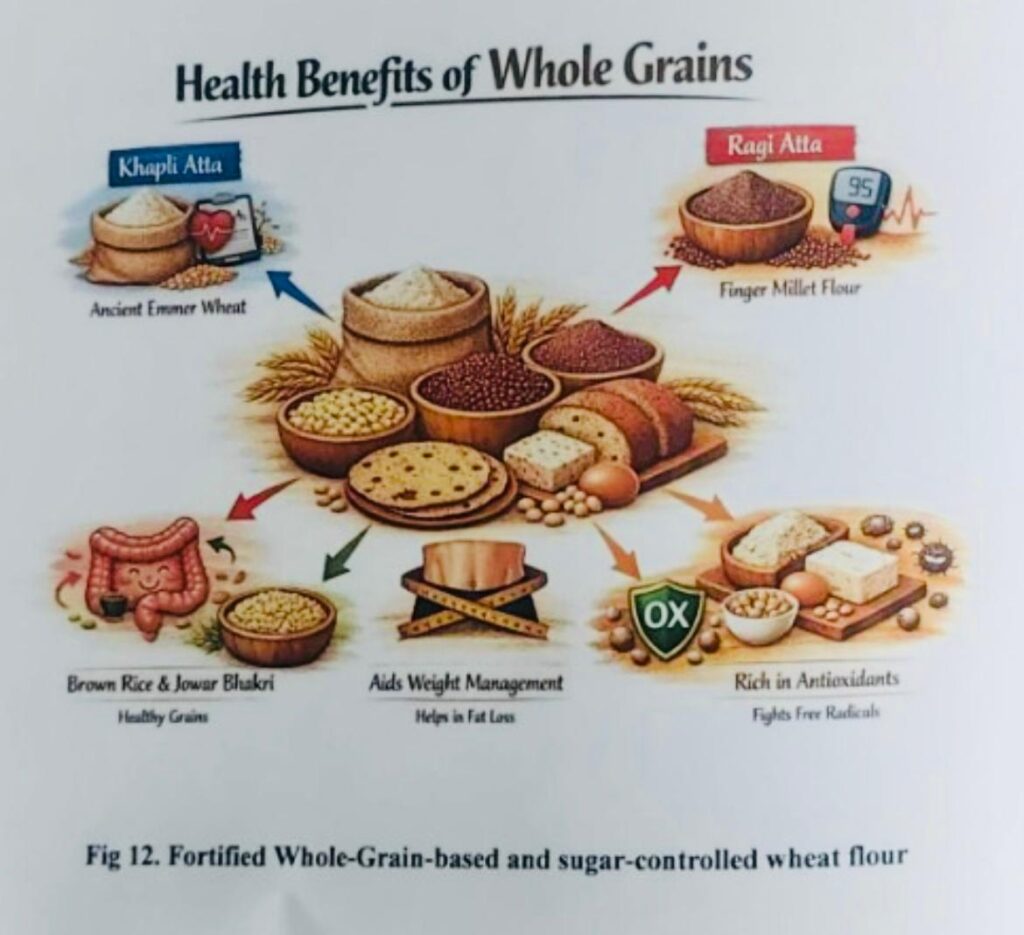
It ensures food access, but the basket is still dominated by rice and wheat. These grains provide energy, but they do not offer the fibre and micronutrients that whole grains naturally contain.
Millets and coarse grains are available in the country. States like Maharashtra produce them in large quantities.
But they are not part of the mainstream distribution system.
This is not just about availability. It is about design.
A system that prioritises ease of distribution over nutritional value will eventually create imbalance.
When Policy Shapes Health Outcomes
A 2026 white paper by PFNDAI, ITC and the Institute for Global Development makes an important point — India may be supporting its own rising disease burden through the way food is supplied.
When diets are built around refined grains and lack diversity, the long-term effects begin to show up in public health.
The shift is already visible.
Lifestyle diseases are rising steadily — diabetes, heart conditions, obesity. These are often seen as individual health issues, but they are closely linked to dietary patterns.
And dietary patterns, in turn, are influenced by the food system.
In that sense, the cost of the current model is not just economic.
It is structural.
Beyond Access: The Quality Question
Programmes like mid-day meals and POSHAN Abhiyaan have expanded access, and that is significant.
But access alone is not enough anymore.
The composition of what is being served matters just as much.
If the system continues to rely heavily on rice and wheat, the nutritional gap remains. Whole grains, dietary fibre and diversity still do not get the same attention.
This is where the shift has to happen — from quantity to quality.
Markets, Behaviour and Awareness
The issue is not limited to policy.
There is also a market dimension.
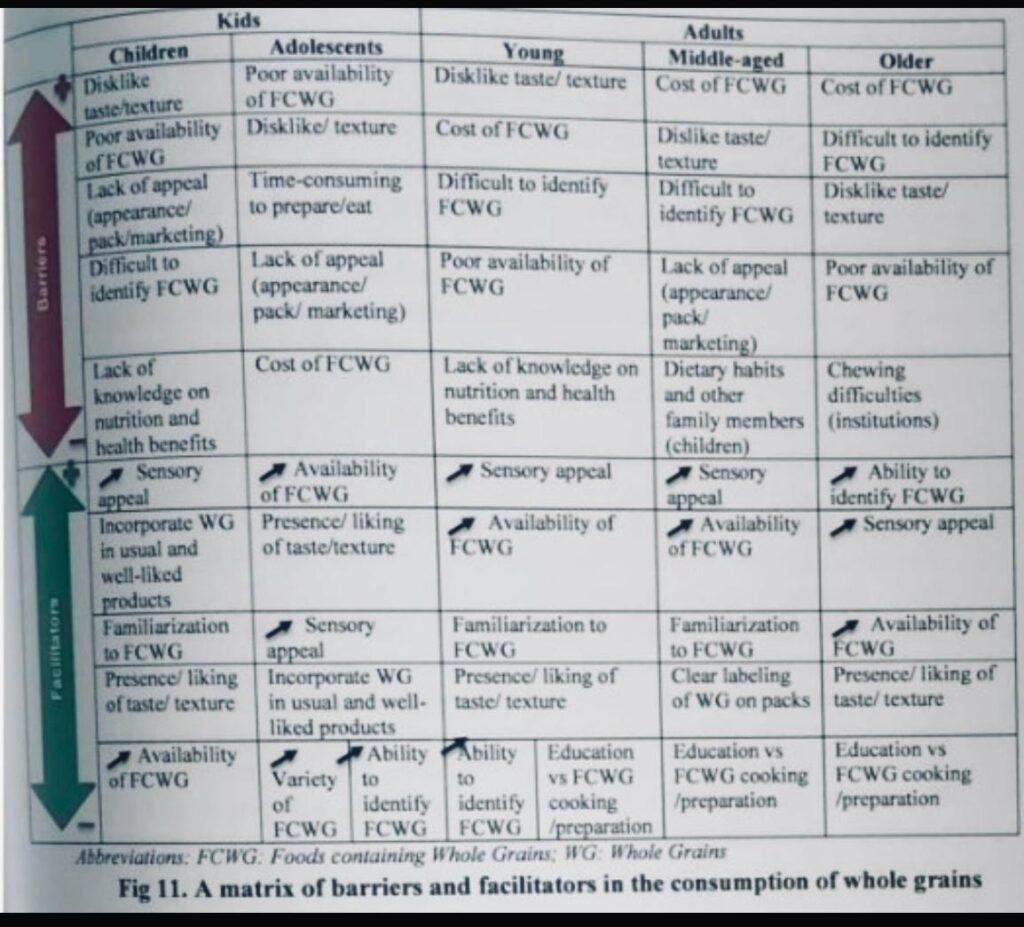
Whole grains are not as visible in urban retail. Processed food is easier, quicker, and more aggressively marketed. Many consumers are not fully aware of what constitutes a whole grain, and labelling often adds to the confusion.
But markets respond to signals.
If policy does not create demand or direction, markets are unlikely to fill that gap on their own.
Millets: Potential Without Scale
India has recognised the importance of millets at the policy level, including promoting them globally.
But that recognition has not fully translated into everyday consumption.
Supply chains remain uneven. Pricing is inconsistent. Availability outside niche segments is limited.
The potential is clear.
What is missing is integration into the mainstream food system.
What Needs to Change
The issue is not about adding new schemes.
It is about rethinking existing ones.
If India wants to move towards nutrition security, the design of food distribution has to reflect that shift. Whole grains need to be part of public systems. School meals need greater diversity. Labelling standards need to be clearer.
Most importantly, policy has to acknowledge that the problem has changed.
Hunger was the first challenge.
Nutrition is the next.
The Larger Question
This ultimately comes down to how India adapts.
Can the system respond to new realities?
Or will it continue to operate within an old framework that no longer addresses the full extent of the problem?
The consequences of that choice will not be immediate.
But they will be long-term.
India solved hunger.
But it is now facing a different kind of challenge.
A system that was designed to fill plates must now learn to nourish people.
Because the next phase of policy is not just about feeding more.
It is about feeding better.