

Banswara, Rajasthan: In Chikli Badra village of Rajasthan’s Banswara district, the land slopes away, rainfall is uncertain, and tradition has long dictated who decides and who follows. Women worked in the fields every day, but their voices rarely travelled beyond them.
That changed when four women — Kalpana Pargi, Santosh Pargi, Manjula Pargi, and Lalidevi Pargi — chose to do something different.
On just two bighas of land, they experimented with community farming. They cultivated American maize, worked collectively, and earned nearly one lakh rupees. But what they created was far more than income. They changed how farming decisions are made — and who makes them.
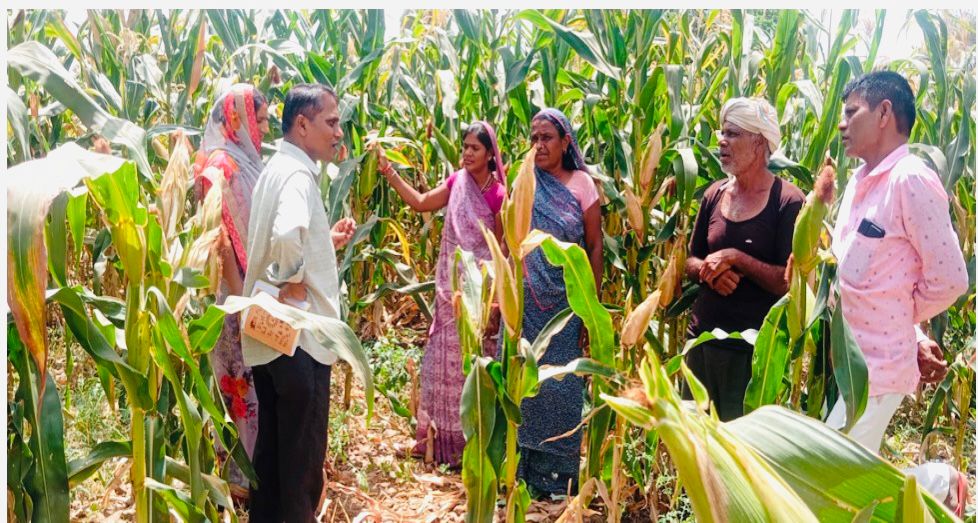
A Life Without a Voice
For years, life followed a fixed routine. Women worked from sunrise to sunset, handling both agricultural labour and household responsibilities. Yet, every critical decision — what to sow, where to buy seeds, how to sell produce — was taken by men.
Kalpana Pargi puts it simply:
“We worked in the fields all day, but decisions were not ours. Income was low, expenses were high, and sometimes we had to take loans.”
The geography added to their struggle. Sloping land meant water would not stay. Either the rains were too little or too much — and both meant loss.
Santosh Pargi recalls:
“If the rains failed, the crop failed. Many times we had to do wage labour just to survive.”
The Idea That Changed Everything
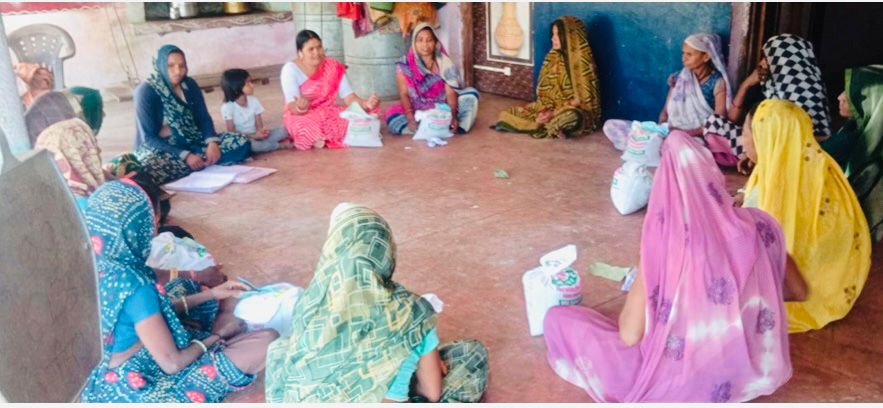
The turning point came when Lalita Makwana, a community facilitator from Vaagdhara, began engaging with the women of the village.
Through meetings, they were introduced to government schemes, group management, and new livelihood possibilities. Most importantly, they were introduced to a simple but powerful idea — community farming.
Instead of working individually on small plots with limited resources, they could come together, share land, share costs, share labour and share profits.
For the women of Chikli Badra, this was a completely new way of thinking.
Taking the Risk
Around this time, the idea of cultivating American maize was suggested — a crop with better yield and strong market demand.
But it was not an easy decision. There were doubts: a new crop, no prior experience, fear of financial loss and resistance from family members.
Lalidevi Pargi remembers:
“People at home said this is risky. But we explained, and slowly they agreed.”
What helped them move forward was not certainty — but collective courage.
Learning, Working, Growing — Together
The challenges were real: lack of resources, no technical knowledge, and uncertainty about outcomes.
This is where Vaagdhara’s role became crucial. The organisation provided hands-on training when to sow, how to use organic fertilisers, water management and pest control.
Armed with this knowledge, the four women prepared a joint field of two bighas.
Every task — from tilling the soil to sowing seeds — was done together. There was no division, no hierarchy. Responsibility and effort were shared equally. Day by day, the crop grew and so did their confidence.
The First Harvest, The First Breakthrough
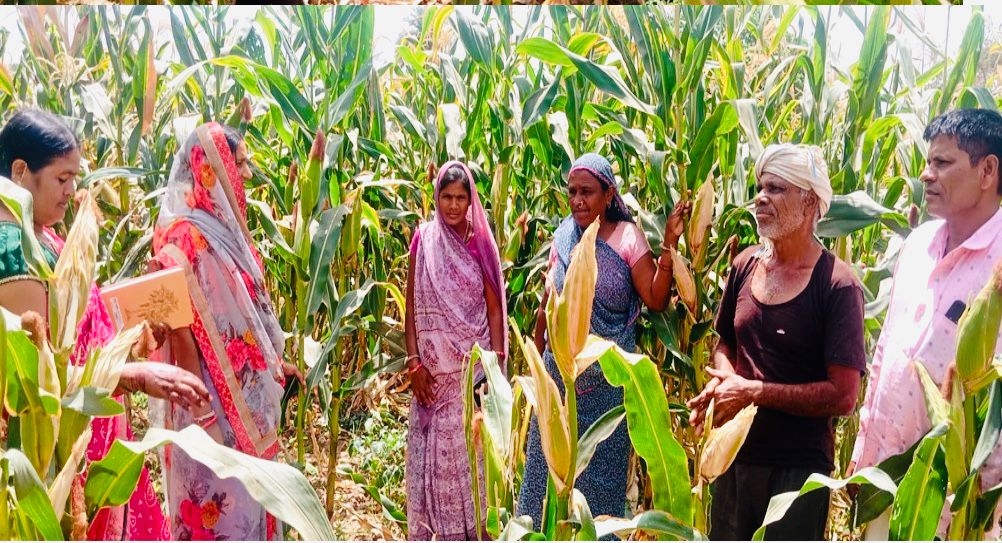
When the crop was ready, they reached out directly to traders in Udaipur and Banswara.
They sold their produce — and together earned nearly one lakh rupees.
For many, it may sound like a modest sum. For these women, it was a turning point.
It meant schooling for their children, stability in household expenses and relief from debt.
But more importantly, it meant recognition. For the first time, they were not just labourers in the field. They were farmers.
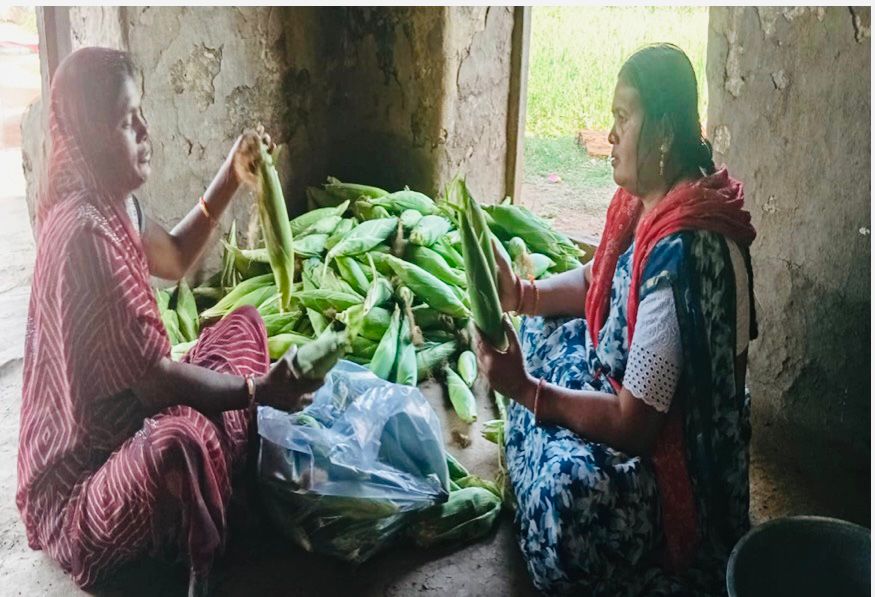
More Than Income — A Shift in Identity
The real transformation was not financial — it was social and psychological.
These women began to speak in village meetings, participate in decisions and guide other women. Their success created a ripple effect.
Kalpana, Santosh, Manjula, and Lalidevi are now not just beneficiaries — they are catalysts of change.
A Small Beginning, A Larger Message
Two bighas of land.
Four women.
One lakh rupees.
The numbers are small. The impact is not.
Their story proves a simple truth — even in difficult terrain, change is possible when people come together witha purpose.
In Chikli Badra, farming is no longer just about survival.
It is now about dignity, confidence, and choice.
And this is only the beginning.
Author Profile
Vikas Parsaram Meshram works in the field of rural development, livelihood promotion, and community empowerment. He regularly writes development-focused articles, case studies, and grassroots feature stories to bring real-world experiences to a wider audience.


