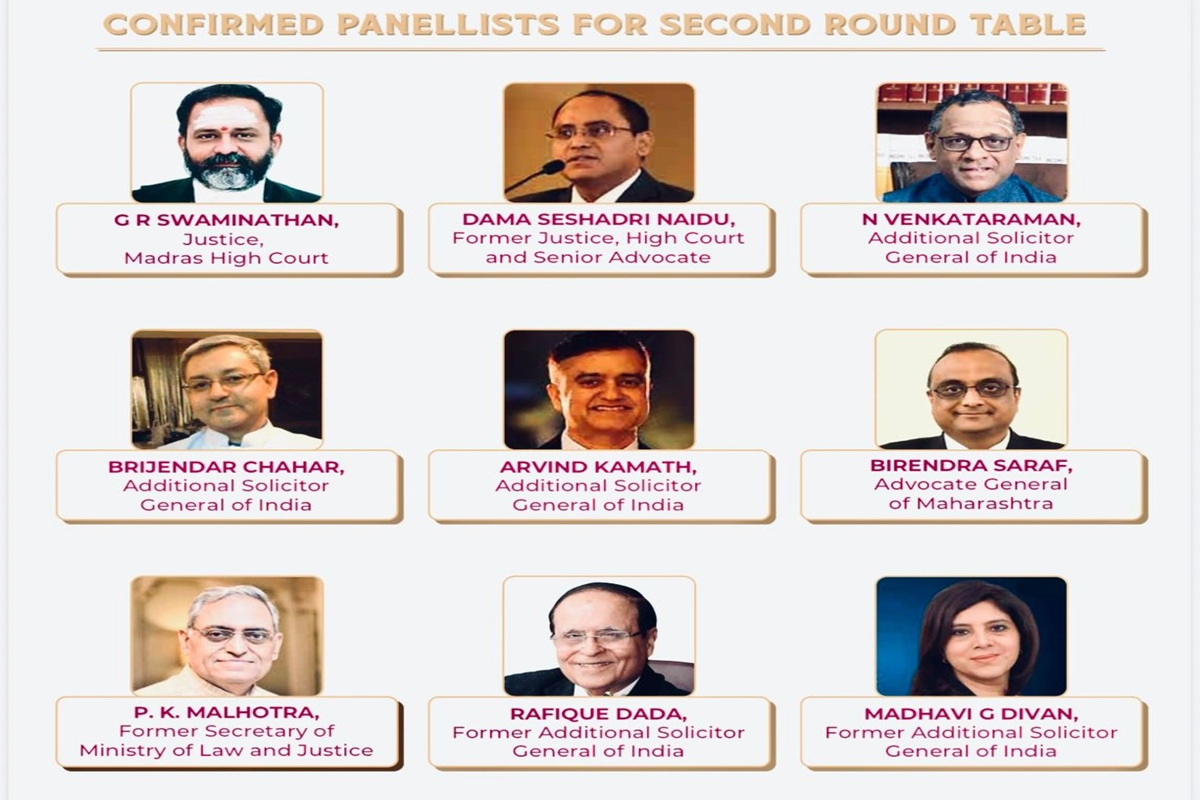
Mumbai: In a major intellectual gathering aimed at deepening the discourse on India’s constitutional philosophy, Jyot!, in association with Gitarth Ganga, is organising a two-day Round Table Deliberation on “The Constitution and the Basic Structure Doctrine” on November 1–2, 2025.
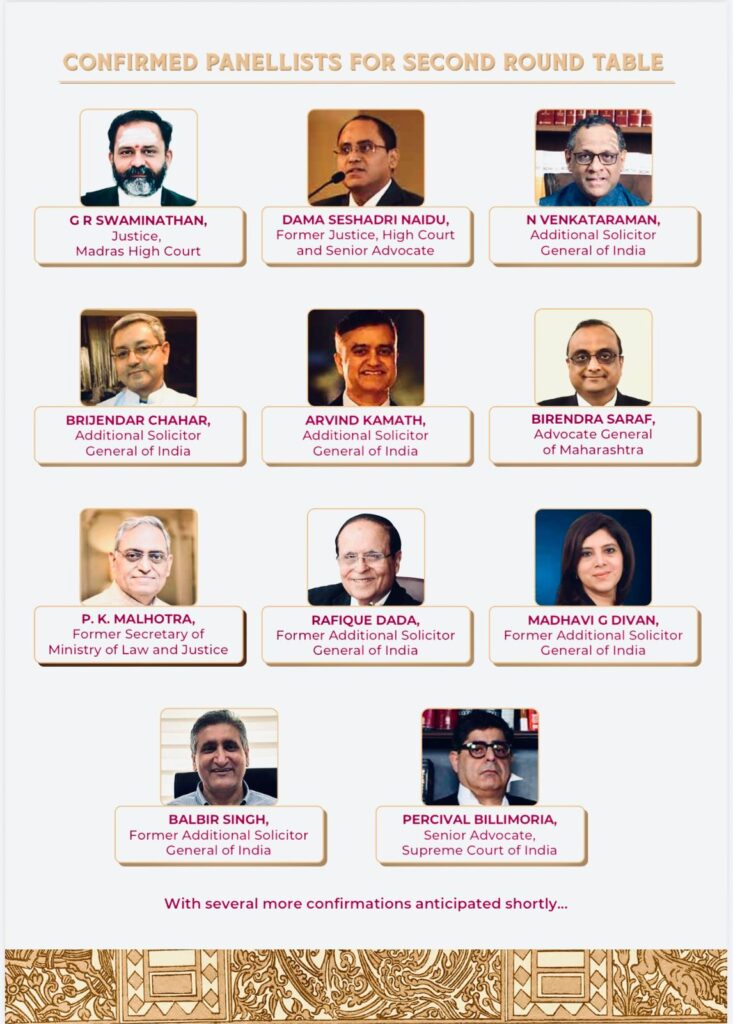
The conclave is set to bring together eminent jurists, constitutional experts, scholars, and thought leaders for high-level discussions on some of the most significant questions defining India’s democratic and legal framework today.
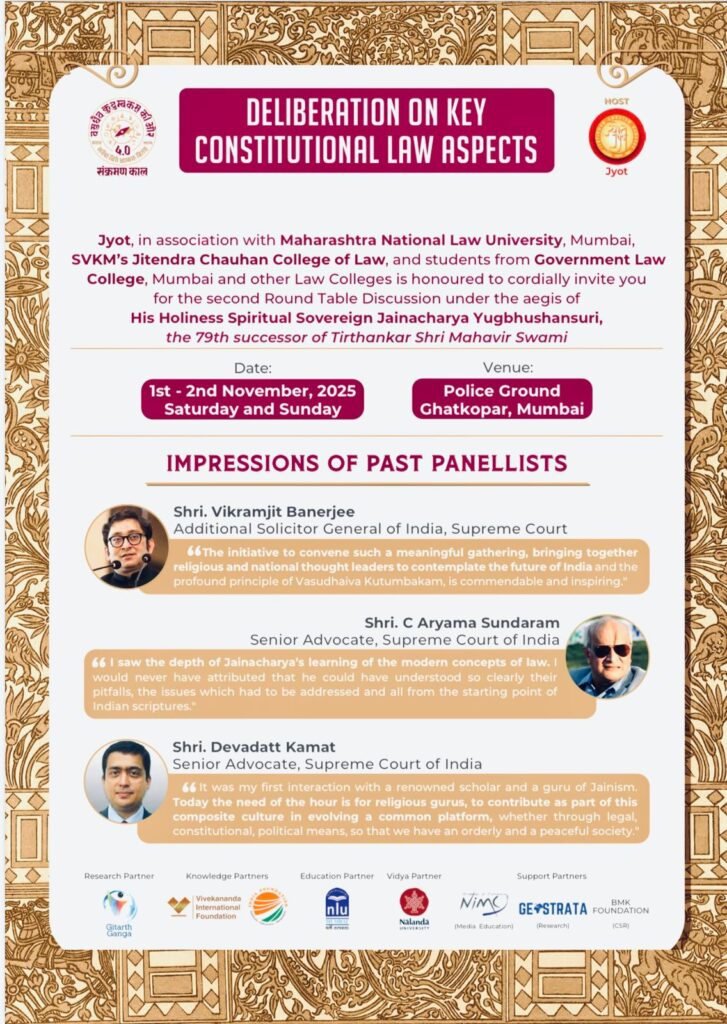
The deliberations will focus on the continuing relevance and evolving interpretations of the Basic Structure Doctrine — the landmark judicial principle that safeguards the core features of the Constitution from legislative overreach.
According to organisers, the event aims to “bridge the worlds of legal scholarship, constitutional interpretation, and democratic values” through rigorous debate and reflection on how the doctrine continues to shape India’s governance and rule of law.
The Round Table will explore key constitutional dilemmas including:
• The interplay between Articles 14, 19, and 31C post-I.R. Coelho verdict — and whether the constitutional balance between equality, liberty, and directive principles stands redefined.
• The philosophical distinction between fundamental rights and human rights, and the extent of the state’s power to curtail them.
• Whether Parliament’s power to amend under Article 368 can ever extend to making the Constitution itself unamendable — or whether referendums could be introduced as a democratic tool for constitutional change.
• Comparative scrutiny of laws protected under Articles 31B and 31C, and whether such protections remain compatible with the Basic Structure Doctrine in the present era.
• The principle of secularism and the constitutional source of the State’s power to regulate or intervene in matters of religion.
• The long-debated question: can the Basic Structure Doctrine sustain solely on judicial interpretation without explicit mention in the Constitution, and what institutional measures could reinforce it?
With the Basic Structure Doctrine continuing to define the limits of parliamentary power, organisers believe the conclave will generate fresh perspectives on how India’s constitutional democracy can remain both flexible and firmly rooted in its foundational principles.
“The event seeks to provoke reflection, not just among jurists and academics, but also among citizens concerned with the evolving nature of constitutionalism in India,” said Kesha Doshi of Team Jyot!, the organiser of the event.
The two-day dialogue is expected to yield valuable insights for students, researchers, and practitioners of law, while also contributing to public understanding of how the Constitution continues to adapt to new social and political realities.