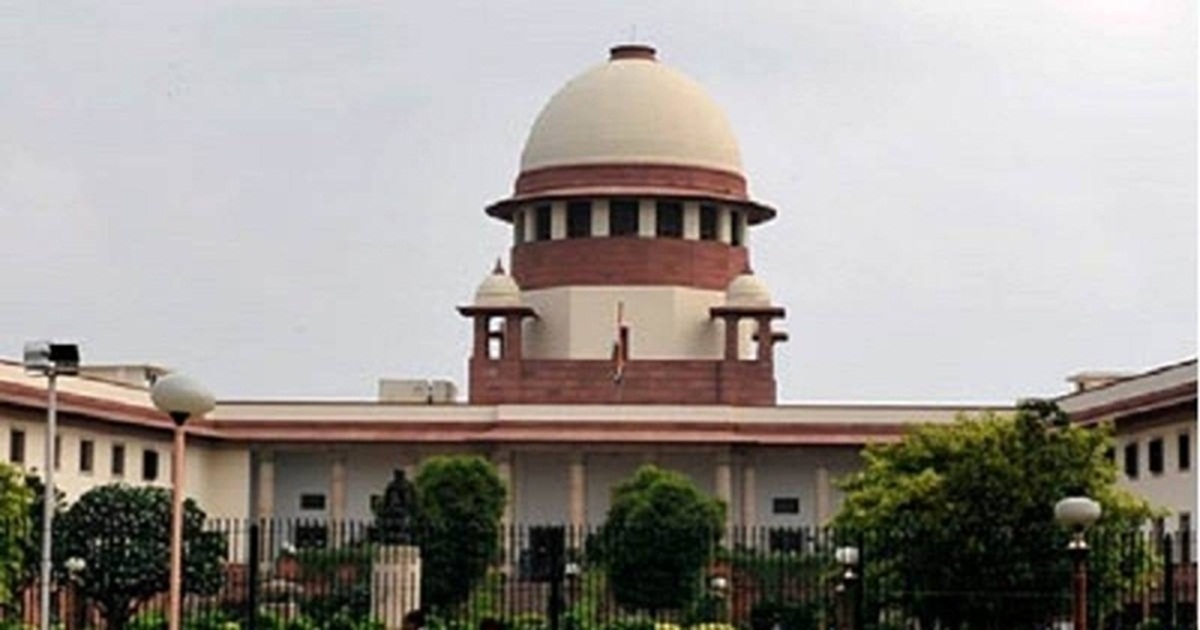
New Delhi: In a landmark move toward enhancing transparency within the judiciary, the Supreme Court of India has made public the asset declarations of its judges. The detailed disclosures, which include information about both immovable and movable assets, were uploaded on the official website of the Supreme Court following a full-court resolution passed on April 1, 2025. This initiative aims to further strengthen public trust in the judiciary and ensure that the highest levels of accountability are maintained within the judicial system.
As per the new guidelines, 21 out of the 33 judges of the Supreme Court, including Chief Justice of India (CJI) Sanjiv Khanna, have voluntarily shared their asset details, marking a significant move toward transparency. The disclosure includes not only details of their properties but also investments, liabilities, and even their spouses’ financial portfolios.
Chief Justice of India (CJI) Sanjiv Khanna Leads by Example
CJI Sanjiv Khanna, one of the foremost figures in India’s judiciary, has disclosed his substantial asset holdings, which include a mix of real estate, fixed deposits, provident funds, and insurance policies. Justice Khanna owns a three-bedroom flat in South Delhi, co-owned with his brother, which was converted into a freehold property in 2000. Additionally, he owns a four-bedroom apartment in the Commonwealth Games Village, New Delhi, acquired in 2019 using the proceeds from the sale of an inherited property. The CJI also has a significant share in a property in Gurugram, which he co-owns with his daughter.
Justice Khanna’s financial investments include ₹55.75 lakh in fixed deposits, ₹1.06 crore in a Public Provident Fund (PPF), and approximately ₹1.77 crore in a General Provident Fund (GPF). He also has a life insurance policy with an annual premium of ₹29,625 and shares worth ₹14,000.
This public asset disclosure aligns with a Supreme Court resolution requiring judges to declare their assets upon taking office and report any significant acquisitions thereafter. The intention behind this initiative is to build greater transparency in the judiciary, dispelling any doubts regarding potential conflicts of interest.
Justice BR Gavai and Justice Surya Kant Follow Suit
Justice Bhushan Ramakrishna Gavai, who serves as a sitting judge of the Supreme Court, has also disclosed his assets. Among his immovable holdings are properties in Amravati, Maharashtra, as well as self-acquired apartments in Mumbai and New Delhi. Justice Gavai also owns agricultural land in Amravati and Kedapur, Nagpur, which he inherited from his father. His financial assets include ₹31,315 in investments, a Public Provident Fund (PPF) balance of ₹6.59 lakh, and a General Provident Fund (GPF) worth ₹35.86 lakh.
Justice Surya Kant, another sitting judge, disclosed his substantial holdings, including residential properties in Chandigarh, New Delhi, and Gurugram, as well as agricultural land in Hisar. His financial portfolio consists of 16 Fixed Deposit Receipts (FDRs) worth ₹1.05 crore, a General Provident Fund (GPF) of ₹1.15 crore, and a Public Provident Fund (PPF) balance of ₹12.5 lakh. He also holds life insurance policies with the Life Insurance Corporation (LIC) totaling ₹50 lakh.
Justice Abhay S Oka’s Wealth Disclosure
Justice Abhay S Oka, another key member of the Supreme Court, has revealed his immovable assets, including a residential flat in Thane, Maharashtra, and an agricultural land holding in Ambernath, Maharashtra. His financial assets include ₹92.35 lakh in a Public Provident Fund (PPF), ₹21.76 lakh in Fixed Deposits, and ₹9.1 lakh in bank savings. His spouse has also disclosed a significant financial portfolio, including ₹8.73 lakh in PPF, ₹16.85 lakh in Fixed Deposits, and ₹2.25 lakh in bank savings.
Justice Vikram Nath’s Asset Disclosure
Justice Vikram Nath, in his asset declaration, has disclosed investments totaling approximately ₹1.5 crore in various financial instruments, including shares, mutual funds, bonds, and provident funds. His spouse holds investments worth ₹3.25 crore in similar assets. Interestingly, Justice Nath has no movable assets under his name, while his spouse possesses substantial gold and silver, as well as a 2016-17 Volkswagen Polo car.
A Step Toward Judicial Accountability
The full disclosure of assets by the judges marks a significant step in the ongoing effort to enhance the transparency of the judiciary in India. The Supreme Court’s decision to make these declarations public is in line with its broader commitment to openness and accountability. The resolution passed earlier this year also mandates that all judges make their asset declarations available for public access, encouraging scrutiny and helping to build greater trust in the judicial system.
This transparency initiative follows the larger trend of promoting accountability within the public service. By voluntarily disclosing their assets, the judiciary has set a powerful example for other branches of government, showing that accountability and transparency are integral to maintaining the rule of law in a democratic society.
In a statement regarding the full-court resolution, a senior Supreme Court official noted, “This is a significant milestone for India’s judiciary. By publicly declaring their assets, our judges are reaffirming their commitment to the highest standards of ethical conduct. This step will help foster public confidence in the fairness and integrity of our judicial system.”