

Banswara, located at the southernmost tip of Rajasthan, is home to Ghаtol block’s Delwara Lokiya gram panchayat. In the village of Mahuwal, which falls under this panchayat, lives Baksu Bhai an ordinary farmer. His family of six includes himself, his wife, and their children. For their livelihood, they have four bighas of agricultural land and a small grocery shop in the village. Together, these two sources of income could barely meet the family’s basic needs. The farming depended on the seasons and the rains, and the shop was constrained by the village’s limited purchasing power.
Yet amid this ordinary life, something extraordinary was also present a five-kilowatt solar system installed on his farm. It had been set up under some government scheme or community programme, and there must have been a time when the family had pinned some hopes to it. But slowly, that solar panel became a forgotten fixture on the farm. A lack of information and an absence of technical understanding together kept that solar system dormant for nearly five years.
Then Mukesh Barod, an entrepreneurship facilitator from Vaagdhara, turned his attention to this village. Vaagdhara has long been working in Banswara and the surrounding tribal regions sometimes improving farming practices, sometimes empowering women to stand on their own feet, and sometimes showing youth and farmers new pathways to livelihood.
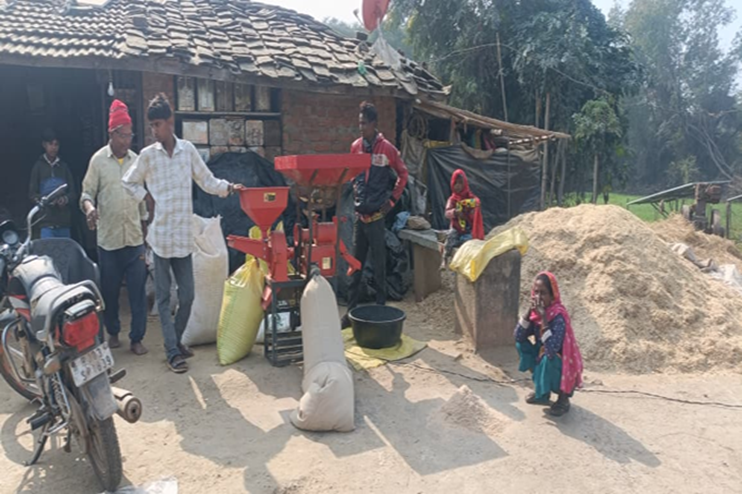
After several attempts by Mukesh Barod, a conversation finally began — and once it did, it kept opening up. Mukesh explained solar energy to Baksu Bhai not in technical language, but in the language of his own daily life. He asked: “How much is your electricity bill every month?” He asked: “How far do you have to go to get rice milled?” He asked: “Would you like your children to be able to earn something while staying in the village?” Baksu Bhai himself had the answers to these questions — and within those answers lay the outline of a solution. Mukesh gradually made him understand that the solar system that had been lying dormant on his farm for five years needed to be awakened.
Baksu Bhai was also made to understand that the importance of solar energy extends well beyond saving on electricity bills. Conventional power plants run on coal and fuel, producing carbon emissions and worsening air pollution. Solar energy is free of all this it emits no smoke, spreads no poison, consumes no natural resource. For as long as the sun shines, this energy is free and clean. In a village where electricity supply is still irregular, solar energy protects not just the environment, but livelihoods too.
One more thing left a deep impression on Baksu Bhai’s mind during these conversations the potential of solar-powered equipment. Mukesh explained that solar energy does not merely light up homes; it can also run machines like a rice mill, a spice grinder, and a flour mill. And these machines, right there in the village, can become a steady and regular source of income. In a village where people had to travel ten kilometres to the market to get their rice milled, having a rice mill within the village itself is not just a business — it is a major relief for the entire community.
Vaagdhara’s assurance of ongoing technical support was also a great comfort to Baksu Bhai — knowing he would not be walking this path alone. And so, Baksu Bhai made his decision. The solar system that had lain dormant for five years was reactivated. By investing approximately thirty-six thousand rupees, he purchased a rice mill and a spice grinding machine. Vaagdhara’s technical team helped connect the machines to the solar system. And before long, one corner of Baksu Bhai’s home transformed into a small, clean, and energetic enterprise.
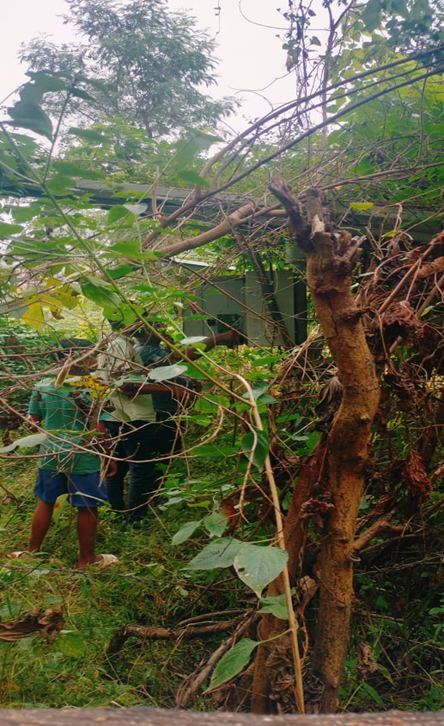
Today, the picture is entirely different. Every morning, Baksu Bhai’s work begins. Villagers come carrying paddy from their homes, bring spices to be ground. From this work, Baksu Bhai now earns an additional four hundred to five hundred rupees a day. Over a month, this amounts to twelve to fifteen thousand rupees which, combined with the income from his farming and shop, gives his family a strong economic foundation.
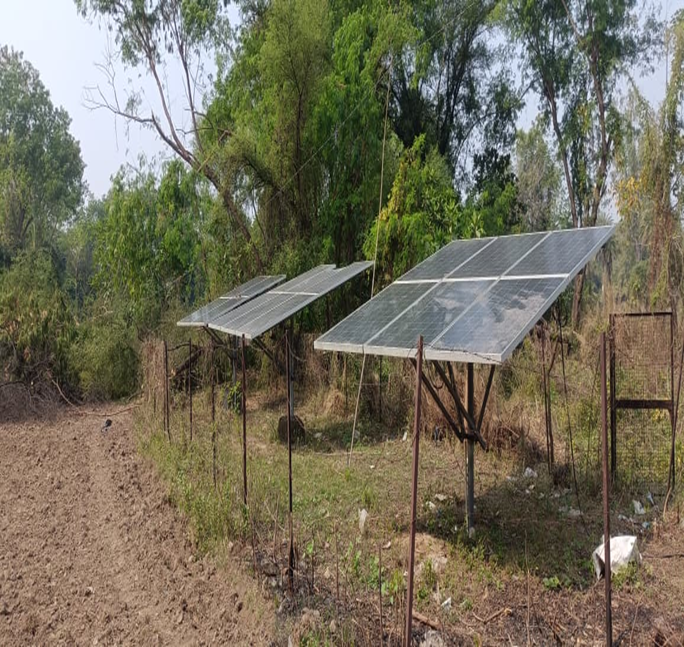
It is also worth noting that Baksu Bhai’s rice mill and spice machine run not on grid electricity, but on sunlight. This means that all production is carbon-neutral — no fossil fuel, no smoke, no pollution. If this model, demonstrated in one small village, were adopted on a wider scale, it could become a significant step toward energy transition.
Baksu Bhai does not wish to stop here. He is now planning to provide solar-based services lighting, mixers, machines, all powered by clean energy at weddings and community gatherings at the panchayat level. This will not only open new avenues of income for him, but will also give villagers relief from diesel generators and expensive electricity. Additionally, he wants to visit neighbouring villages and talk to people about the benefits of solar energy just as Mukesh Barod once came and spoke with him.
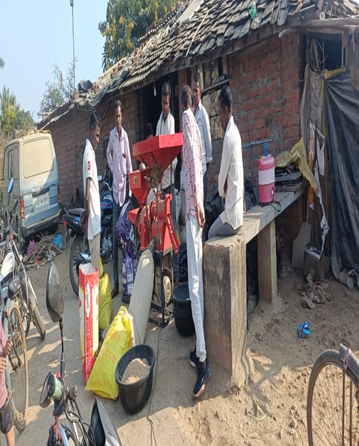
Baksu Bhai’s story, in fact, holds up a great truth: that our villages do not lack resources — what they lack is the knowledge to recognize those resources and put them to use. A five-kilowatt solar system lay unused on a farm for five years, while the family kept paying electricity bills, travelling far to get rice milled, and getting by on limited income. One right conversation, a little guidance, and one courageous decision turned the whole picture around.
Whenever sustainable development is spoken about, it is often in the context of big cities, big policies, and big budgets. But real sustainable development happens where a family stays rooted to its land and yet prospers. Where the protection of the environment and the search for a livelihood walk together on the same road. Baksu Bhai is living proof of this. It is only when livelihood and environmental conservation go hand in hand that development becomes truly sustainable — and Baksu Bhai has demonstrated this through his own life.
Author Bio: Vikas Parashram Meshram is a writer and social development practitioner with long-standing field engagement among tribal and rural communities in Rajasthan and Madhya Pradesh. His work focuses on natural resource management, sustainable agriculture, women’s empowerment and rural livelihoods. His documentation gives voice to the lived experiences of farmers, women and Adivasi households navigating the challenges and possibilities of rural India.
Vikas Parashram Meshram-vikasmeshram04@gmail.com


