

In Sajjangarh block of Rajasthan’s Banswara district, life has long been shaped by uncertainty. Scattered across hills and hamlets, most families here depend on rain-fed agriculture and daily wage labour. When rains fail, crops collapse. When crops fail, migration becomes inevitable. Entire families move to cities like Ahmedabad for construction work, often for more than half the year. The cost of this migration is not just economic. It affects women’s health, disrupts children’s education, and weakens the social fabric of families.
In the village of Bijalpura, this was the reality for Dayabai Motilal Dodiyar. At 46, she lives with her family of five and owns eight bighas of land. Yet, because farming depended entirely on rainfall, only one crop could be grown each year. For the rest of the year, migration was unavoidable.
Not far from her field stood a check dam built in 2013 by the Gram Panchayat of Godawada Narang. Over time, it had filled with silt and become non-functional. It remained visible, but it no longer held water. For Dayabai and several other farmers whose lands bordered the structure, it had become a silent reminder of a missed opportunity.
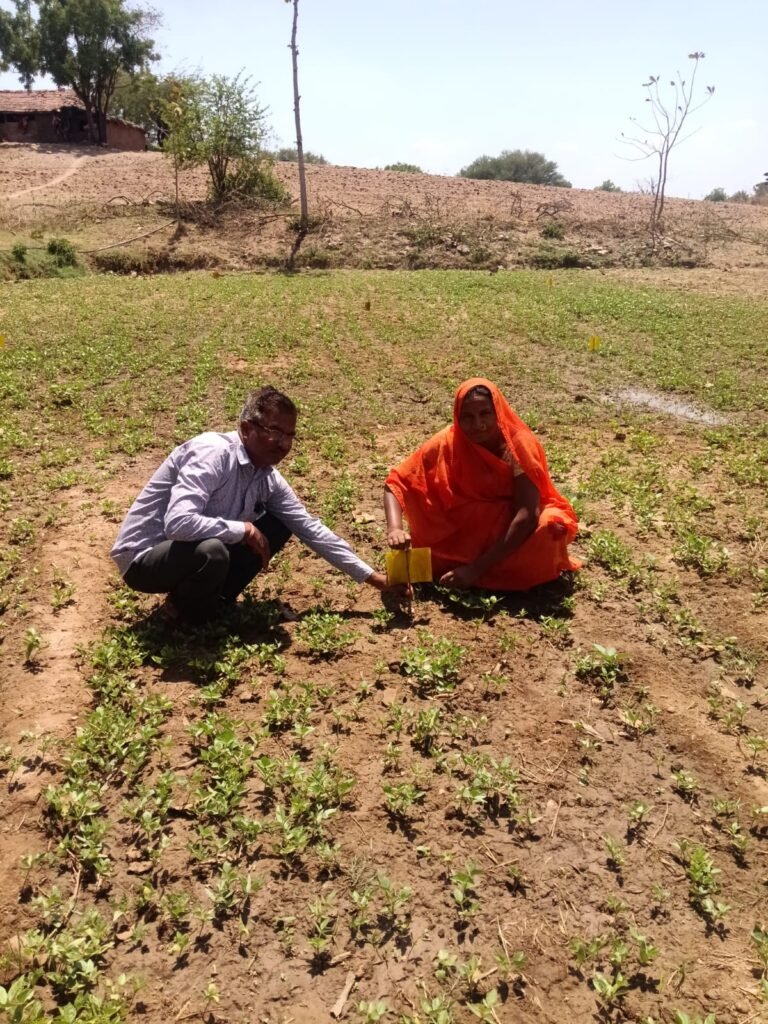
Around this time, Vaagdhara, in collaboration with the Hindustan Unilever Foundation, was working in the region on sustainable agriculture and water management. Through Gram Swaraj and Saksham groups, regular meetings and training sessions were organised, focusing on self-reliance in water, land, forests, livestock, and seeds.
It was during one such meeting that the idea took shape.
As discussions turned to water conservation, Dayabai recalled the abandoned check dam. She realised that if it could be restored and deepened, it could benefit not just her field but the entire surrounding area.
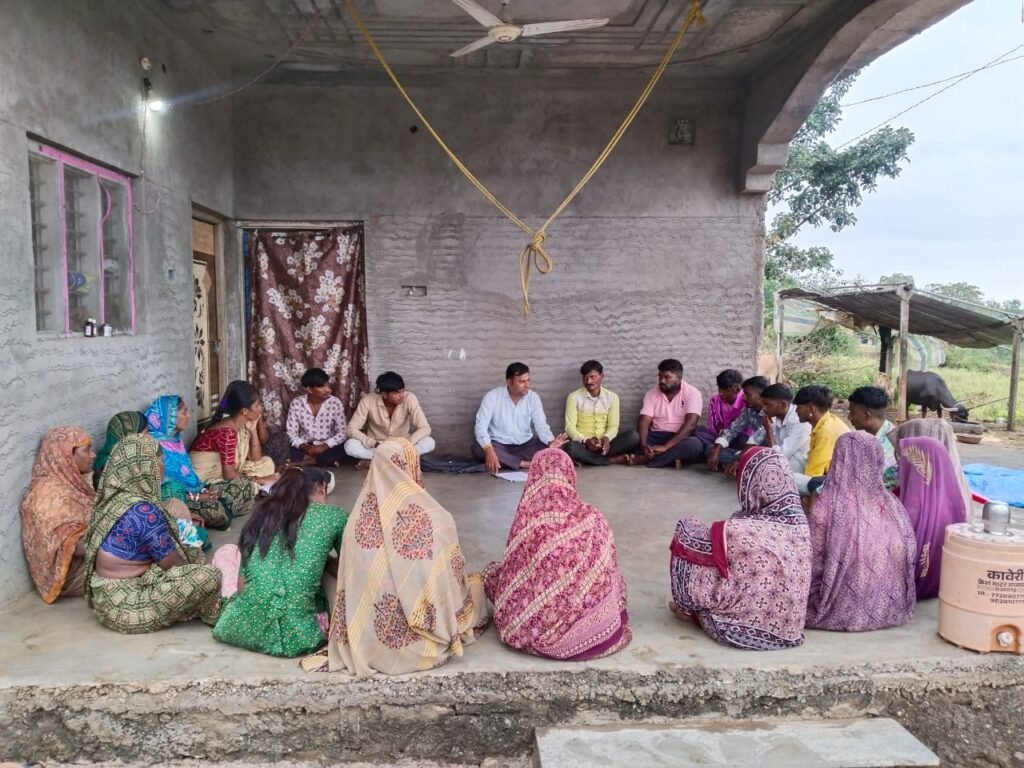
She first shared the idea with members of her Saksham group — Binubai, Hira, Radhika, and Meera. The idea quickly gained support. Together, they presented it at a Gram Swaraj group meeting. After discussion, the proposal was formally submitted to the Gram Panchayat through the Gram Sabha.
The proposal was accepted.
The work of deepening the check dam was sanctioned under the Mahatma Gandhi National Rural Employment Guarantee Scheme. Once work began, around seventy families from nearby areas joined in. For two months, the community worked together.
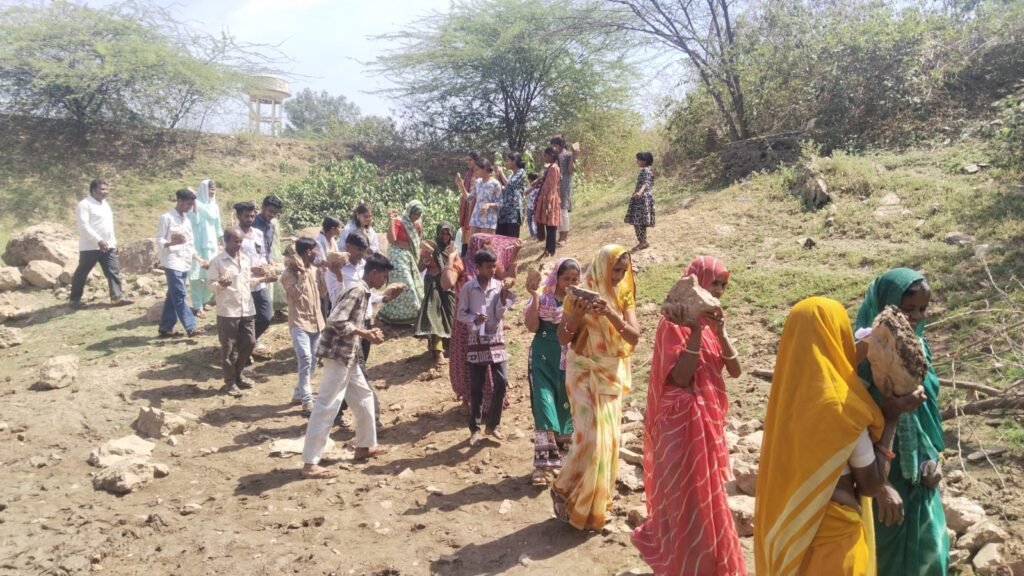
The effort was not limited to labour alone. Women like Dayabai and her companions took active roles — organising, supporting workers, and participating in the work itself. The entire process was guided by the traditional tribal practice of Halma, where the community comes together voluntarily for a common purpose.
An old tradition found new relevance.
When the work was completed and the rains arrived, the check dam filled with water. For the first time in years, water stayed.
With that water came a decision.
This time, there would be no migration.
Across nearly sixty-two bighas of farmland connected to the check dam, fourteen farmers began cultivating Rabi crops. Chickpeas, wheat, maize, and pigeon peas were sown. For families that had depended on uncertain wage labour, this was a shift towards stability.
The impact extended beyond fields. Groundwater levels in nearby wells and hand pumps improved. Livestock had easier access to water. The area under irrigation increased. During the construction phase itself, the project generated around 2,200 person-days of employment, providing immediate income to local families.
More importantly, it changed confidence.
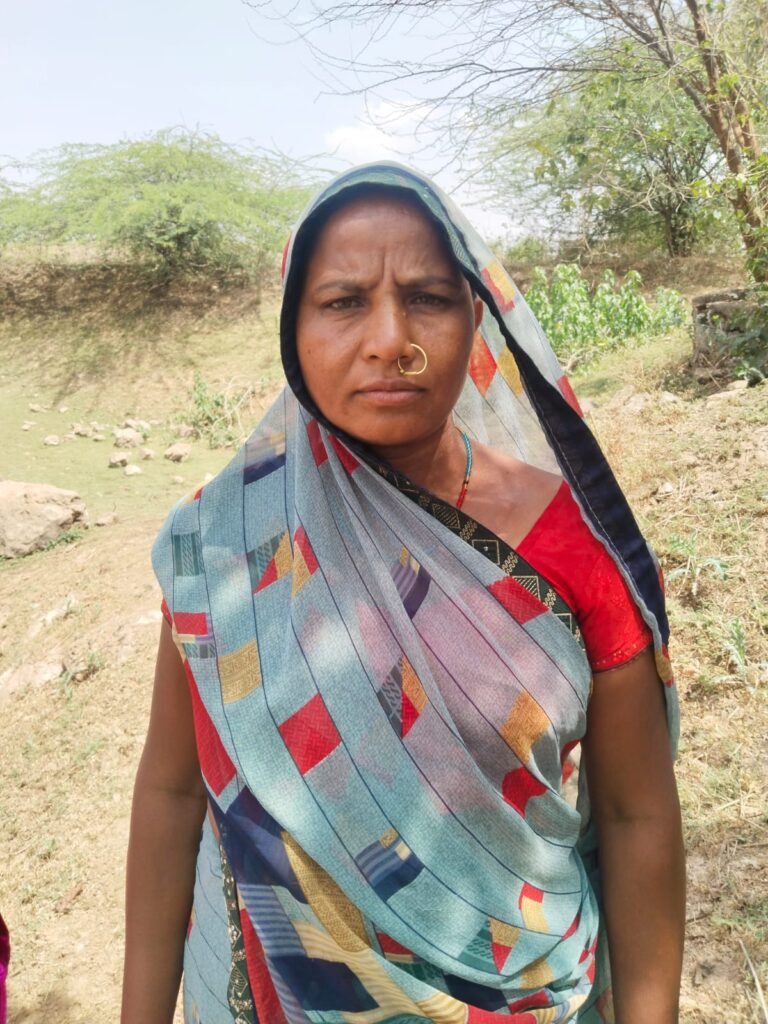
Dayabai, once confined to her home and fields, now actively engages with other women, encouraging them to participate in community initiatives. She speaks about water conservation, sustainable agriculture, and the importance of collective action.
Her family, which once spent months migrating for work, now stays together and farms its own land.
The story of Bijalpura is not about a large project or heavy investment. It is about a simple intervention — restoring a neglected water structure — and the collective will to make it work.
It shows that when communities take ownership, when traditional practices align with modern schemes, and when women step into leadership roles, even small changes can create lasting impact.
In a region defined by uncertainty, water has brought stability.
Author Bio
Vikas Parsaram Meshram writes on rural development, agriculture, and livelihood issues, focusing on grassroots realities and policy-linked solutions across rural India.


