

Maharashtra task force chief pitches bamboo as an energy and rural-economy crop; green-energy industry representatives defend ethanol blending as India looks beyond E20
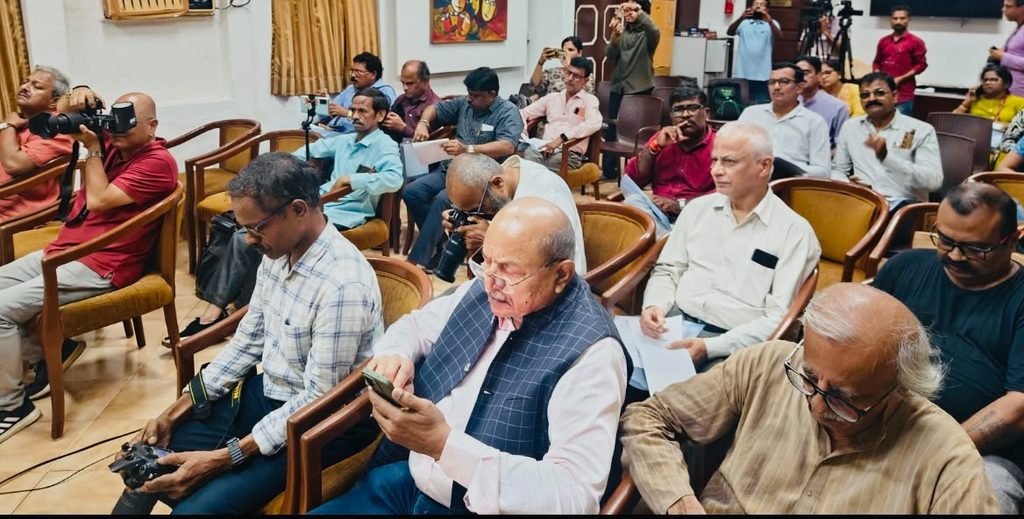
Mumbai ; India should progressively move away from fossil fuels and expand the use of biofuels produced from agricultural and renewable feedstocks, including bamboo, Pasha Patel, executive chairman of Maharashtra’s Chief Minister’s Environment and Sustainable Development Task Force and chairman of the Maharashtra State Agricultural Price Commission, said on Wednesday. “If we want to live, if human existence is to survive, we will have to stop burning fossil fuel and burn biofuel,” Patel told reporters at the Mumbai Press Club.
Drawing on Prime Minister Narendra Modi’s description of farmers evolving from annadata — providers of food — to urjadata, or providers of energy, Patel argued that India’s future energy requirements should increasingly be met from renewable resources grown above the ground rather than fossil fuels extracted from beneath it. His remarks came ahead of two industry conferences in Mumbai that will examine the bamboo economy and the next phase of India’s biofuel transition.
Bamboo at the Centre of the Argument
Patel placed bamboo at the centre of his case, arguing that India has yet to exploit the crop’s economic potential despite possessing a substantial bamboo-growing area. According to figures cited by Patel, China has around five million hectares under bamboo and generates turnover of approximately ₹3.2 lakh crore from the sector, while India has around 10 million hectares but generates about ₹18,000 crore.
“We are 40 years behind them,” he said, attributing the difference to China’s emphasis on value addition, processing and commercial utilisation of bamboo. Patel also cited bamboo’s potential as a feedstock for biofuels. According to him, a tonne of bamboo can produce around 500 litres of methanol or other biofuel, while a tonne of sugarcane produces around 80 litres of ethanol.
He further claimed that bamboo cultivation requires considerably less water than sugarcane and has significant carbon-sequestration potential. The figures were presented by Patel as part of his case for expanding India’s bamboo economy.
Maharashtra Looks to Build a Bamboo Economy
Patel said Maharashtra is seeking to develop bamboo not merely as a plantation crop but as the foundation of a wider industrial ecosystem involving farmers, processors, energy producers and manufacturers. According to him, state assistance of up to ₹7.5 lakh per hectare is available for eligible bamboo plantations.
He said the Maharashtra Bamboo Industry Policy 2025 envisages attracting ₹50,000 crore in investment, generating more than five lakh employment opportunities and developing 15 bamboo-based industrial clusters. Patel also said ₹4,300 crore had been secured from the Asian Development Bank and that bamboo procurement centres were proposed to provide growers with an organised market. The larger challenge, he argued, was to ensure that bamboo grown by farmers is connected to processing industries capable of converting it into fuel, construction material, textiles and other value-added products.
Ethanol Industry Defends E20 Transition
The discussion also focused on India’s ethanol-blending programme and concerns among motorists about the use of ethanol-blended petrol. Dr Atul Kharate, chief operating officer of IndianOil Adani Ventures Ltd and chairperson of the Western Region Council of the Indian Federation of Green Energy (IFGE), said ethanol blending had reduced India’s expenditure on imported fuel while directing money into the rural economy.
“Ethanol has saved more than ₹1.9 lakh crore, and over 70 per cent of that money has gone into the rural economy, creating new job opportunities,” Kharate said. Patel separately put the reduction in petrol-import expenditure at around ₹2 lakh crore and said approximately ₹1.5 lakh crore had reached farmers.
Kharate also rejected claims that ethanol-blended petrol necessarily damages vehicle engines. He said the impact on mileage was around 2 to 2.5 per cent and attributed it to ethanol’s characteristics, while describing widespread claims of engine damage as unfounded. He also referred to a viral video purportedly showing ants in ethanol, saying an investigation had found it to be fabricated. These assertions were made by industry representatives during the media briefing.
Also Read: RINAC, Gonvarri Form Joint Venture for Warehouse and Cold-Chain Solutions in India
Beyond E20
India reached 20 per cent ethanol blending in petrol in 2025, ahead of the original 2030 target. Kharate said India’s automobile and fuel ecosystem was now preparing for discussions around blending levels beyond E20, including possible movement towards 25 per cent ethanol and greater adoption of flex-fuel vehicles.
Dilip Shivdas Patil, regional director (West) of IFGE, also challenged claims about the amount of fresh water required in ethanol production. He said claims that producing a litre of ethanol requires 10,000 litres of water fail to account for recycling within modern plants. “The factory reuses the condensate water, and only three litres of raw water is needed,” Patil said.
He added that bamboo processing could yield industrial products including furfural, acetic acid and lignin, with lignin having potential applications in bio-bitumen.
Biofuels and the Farm Economy
The arguments advanced at the briefing reflect a broader policy question confronting India’s energy transition: whether biofuel expansion can simultaneously reduce dependence on imported fossil fuels and create additional markets for agricultural produce. Patel’s case is that farmers should increasingly become suppliers not only of food but also of energy feedstocks.
Such a transition, however, would depend on the economics of cultivation, assured procurement, processing capacity, water use, competing demands for agricultural land and the ability of emerging biofuel technologies to operate commercially at scale. These issues are expected to form part of discussions at the upcoming industry forums.
Mumbai Carbon Bank Proposal Enters Discussion
A separate environmental proposal presented during the briefing seeks to put an economic value on carbon stored or absorbed by ecosystems in the Mumbai Metropolitan Region. It B. N. Kumar, founder-director of NatConnect Foundation, outlined the proposed Mumbai Carbon Bank, which seeks to account for the carbon value of bamboo, mangroves, wetlands, urban forests and other ecosystems.
The proposal also seeks to recognise ecosystem services such as flood mitigation, biodiversity protection and climate resilience. According to NatConnect, Patel has taken up the Green-Blue Carbon concept with Maharashtra Chief Minister Devendra Fadnavis, who has agreed to study the proposal.
The concept forms part of NatConnect’s broader Flamingo Blue Carbon Urban Complex framework and is being examined through an academic research project co-authored by Kumar. It remains a proposal and has not been presented as an adopted state government programme.
Mumbai to Host Bamboo and Ethanol Forums
The policy debate will continue at the Bamboo Economy and Sustainability Summit 2026 in Mumbai on September 27, followed by the Bharat Ethanol Forum 2026 on September 28 and 29 at The Westin Mumbai Powai Lake. The bamboo summit, themed “The Future is Bamboo: Climate, Construction, Commerce, Communities,” is expected to examine bamboo-based construction, biomass energy, carbon markets, farm incomes and rural employment.
The Bharat Ethanol Forum, themed “Fuelling Bharat. Powering Growth,” will focus on the next stage of India’s biofuel economy, including feedstock availability, grain-based and second-generation ethanol, flex-fuel vehicles and the economics of blending beyond E20. Sustainable aviation fuel, bio-methanol and compressed biogas are also expected to figure in the discussions. For Patel, however, the central argument is broader than either conference.
India’s transition away from fossil fuels, he said, should create an economic opportunity for agriculture — turning crops such as bamboo into industrial and energy feedstocks while giving farmers access to new sources of income.


