X: @vivekbhavsar
Part 3 – Case Studies
Behind Maharashtra’s ballooning debt to the World Bank lie projects that were launched with fanfare and lofty promises. On paper, they looked transformative. In reality, they have morphed into decades-long fiscal liabilities, draining the state treasury year after year.
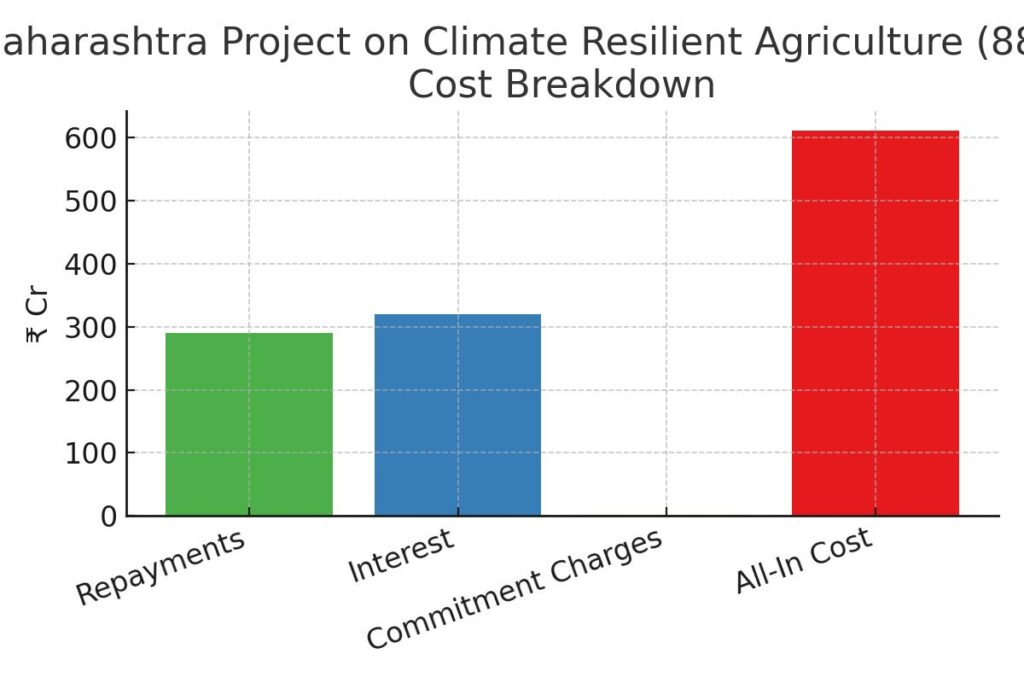
1. Climate Resilient Agriculture Project (2018)
Sanctioned in 2018 at ₹2,930 crore, this was promoted as a visionary scheme to help farmers adapt to climate change. Yet, in just a few years, it has turned into Maharashtra’s costliest World Bank loan.
- Repayments: Only recently begun, but will drag on well into the 2030s.
- Interest: A staggering ₹226 crore in 2024–25 alone — enough to fund multiple state-level schemes.
- Commitment Charges: ₹7.42 crore in 2020–21, paid merely because funds weren’t drawn on schedule.
A project meant to shield farmers from shocks has instead become a fiscal shock for the state. The all-in cost is likely to overshoot the original sanction by 40–50%, raising the question: could domestic borrowing have achieved the same objectives at far lower cost?
Also Read: Maharashtra’s World Bank Loan Trap: Hidden Costs Bleeding the State
Mini Case Study 1 – Climate Resilient Agriculture (8829-IN)
- Sanctioned Loan: ₹2,930 crore (2018)
- Repayments so far: ~₹1,200 crore
- Interest Paid: ₹226 crore in 2024–25 alone
- All-In Cost: On track to exceed sanction by 40–50%
2. Mumbai Urban Transport Project – MUTP 2A (2010)
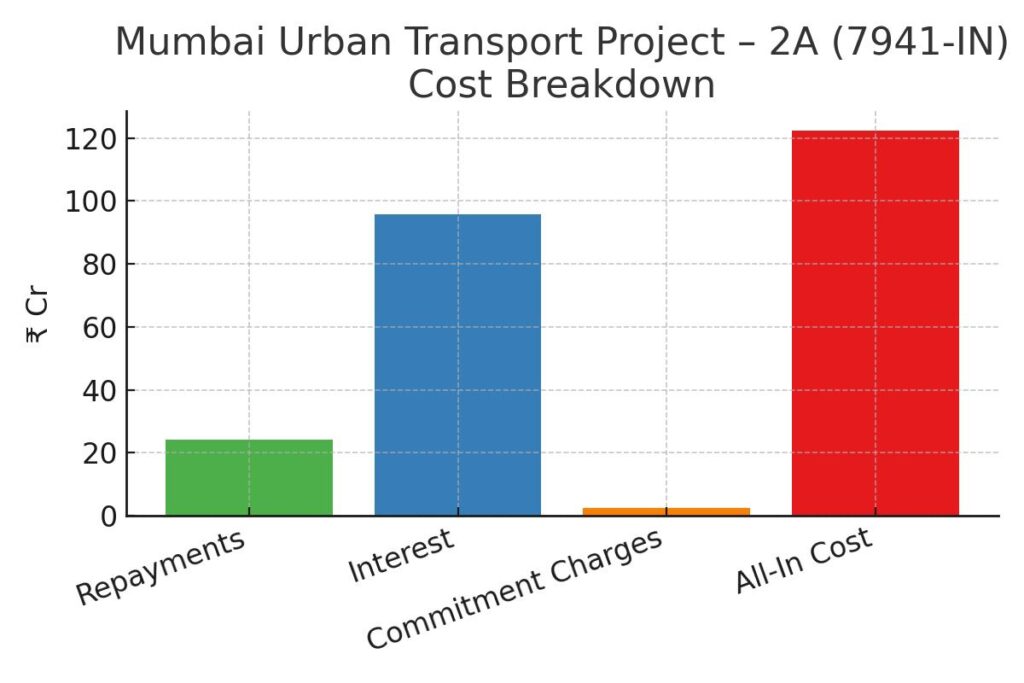
Billed as a flagship upgrade for Mumbai’s overloaded suburban rail system, this ₹638 crore loan sanctioned in 2010 was meant to ease commuter woes. Fifteen years later, it is a classic debt sinkhole.
- Repayments: Peaked at over ₹40 crore annually in the late 2010s.
- Interest: Relentlessly climbed, touching ₹49 crore in 2024–25.
- Total Burden: Repayments plus interest have already pushed the real cost beyond ₹1,000 crore.
Despite this crushing bill, Mumbai’s trains remain crowded, delayed, and dangerous. For commuters, little has changed — except that taxpayers now carry a debt burden that far outstripped the sanctioned figure.
Mini Case Study 2 – Mumbai Urban Transport Project 2A (7941-IN)
- Sanctioned Loan: ₹1,800 crore (2010)
- Repayments so far: ~₹850 crore
- Interest Paid: Nearly ₹49 crore in 2024–25 alone
- All-In Cost: Already above ₹1,000 crore and still rising
3. Maharashtra Water Sector Improvement Project (2005)
Launched with a ₹1,438 crore sanction in 2005, this project was supposed to modernise irrigation and water use efficiency. Instead, it locked Maharashtra into a repayment treadmill that continues two decades later.
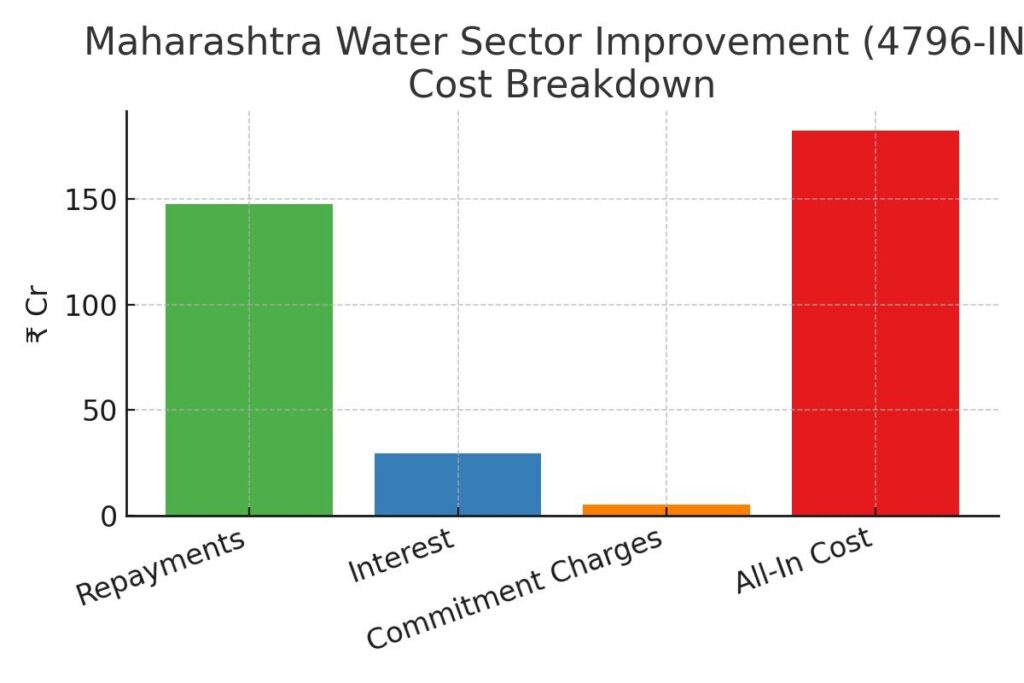
- Repayments: Rising steadily, nearing ₹150 crore per year by 2019–20.
- Interest: Adding another ₹30 crore annually.
- Commitment Charges: Persistent, further inflating the bill.
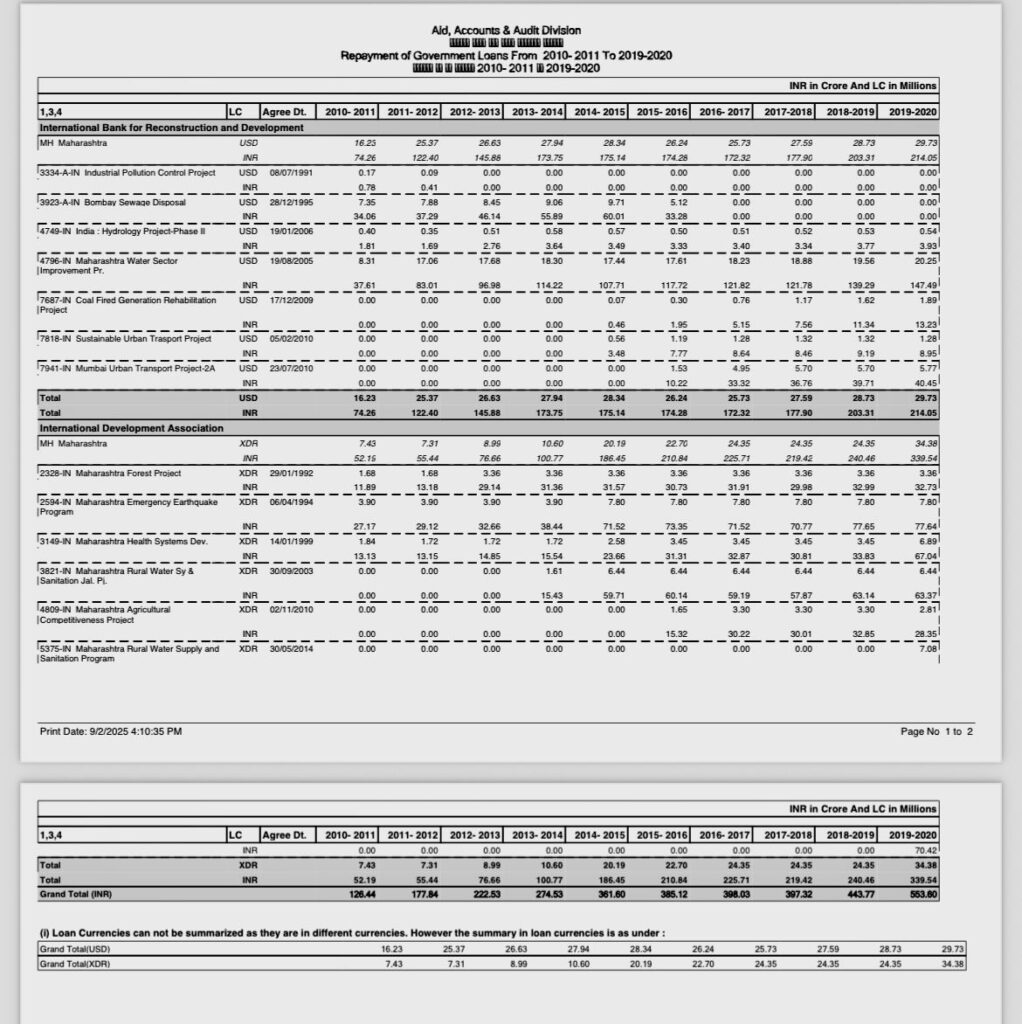
(Disclaimer: All figures are taken directly from official repayment schedules obtained under RTI from the Aid, Accounts & Audit Division, Ministry of Finance, Government of India. Calculations and conversions from billion to crore have been cross-verified)
Yet, farmers in drought-prone districts like Marathwada still struggle for reliable irrigation. For them, the only thing flowing consistently is repayment money to the World Bank.
Mini Case Study 3 – Water Sector Improvement Project (4796-IN)
- Sanctioned Loan: ~₹1,400 crore (2005)
- Repayments so far: ~₹700 crore
- Interest Paid: ₹20–25 crore annually in peak years
- All-In Cost: Projected 30–40% above sanction
4. Legacy Burdens: The Ghost of Old Loans
Even “emergency” and “one-time” loans have haunted the state’s balance sheet for decades.
- Earthquake Emergency Program (1994): Meant for post-Latur quake relief, it still demanded repayments and interest long after the victims had moved on with life.
- Jalswarajya Rural Water Supply Project (2003): Designed to deliver clean drinking water, it dragged Maharashtra into costly repayments well into the late 2010s, with costs ballooning instead of tapering.
These “ghost loans” expose how temporary assistance routinely morphs into decades of financial bondage.
Also Read: Maharashtra’s World Bank Loan Trap: The True Cost of Borrowing
Case Study Takeaway
Every case tells the same story: while repayments look predictable on paper, it is the interest and commitment charges that silently multiply the burden. By the time citizens judge whether these projects delivered on their promises, the financial costs are already locked in for a generation.
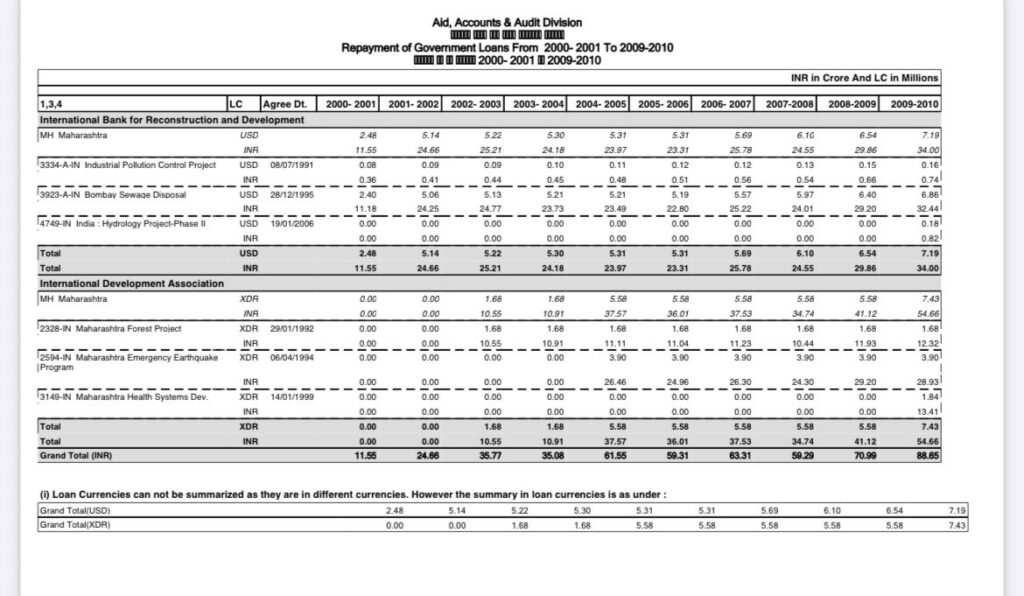
(Disclaimer: All figures are taken directly from official repayment schedules obtained under RTI from the Aid, Accounts & Audit Division, Ministry of Finance, Government of India. Calculations and conversions from billion to crore have been cross-verified)
 Coming up in Part 4: A decade-wise breakdown of Maharashtra’s rising World Bank costs, exposing how interest and hidden fees quietly double the burden.