X: @the_news_21
Thiruvananthapuram: The long-standing image of Kerala’s ruling Left Democratic Front (LDF) as a well-knit coalition tightly controlled by the CPI(M) has taken a beating, with the CPI red-flagging the plan to implement the PM SHRI Schools project in the state.
CPI’s Kerala leadership has often displayed a penchant for punching above its political weight. However, whenever the party flexed its muscles at its big brother, the CPI(M), the bout mostly ended with the weaker ally getting a bloody nose.

This time, however, the situation has turned murkier, with the junior partner going to the extent of threatening to pull out its nominees from the ministry. As a first step, the four CPI ministers are set to stay away from this week’s cabinet meeting.
Even so, its leaders have clarified that the CPI will not walk out of the LDF, suggesting that the present turmoil may pass as yet another storm in the coalition’s teacup.
Nevertheless, if the row drags on, it could inflict some political damage on the LDF, especially with local body elections around the corner. The civic polls are viewed as a precursor to the assembly elections due in March–April 2026.
The current turmoil within the LDF began when CPI’s ideologically rigid state secretary, Binoy Viswam, slammed the General Education Department (GED) for signing an agreement with the Centre to implement the PM SHRI Schools programme.
The General Education portfolio is held by V. Sivankutty of the CPI(M), who rose through the ranks as an activist of the Students’ Federation of India (SFI).
The PM SHRI Schools scheme is a centrally sponsored programme that brings significant financial support to the states and Union Territories that implement it.

Interestingly, both the CPI(M) and CPI have consistently voiced strong reservations about the BJP government’s education initiatives under the National Education Policy (NEP), terming them politically slanted, regressive, and aligned with the broader Hindutva agenda of the RSS.
In a complete reversal, driven by pragmatic considerations, the GED signed an agreement with the Centre to implement the PM SHRI Schools in Kerala — reportedly with an eye on the substantial funds attached to the scheme. The department proceeded without consulting other front partners, disregarding coalition etiquette and political sensitivities.
The CPI contends that coalition partners should have been consulted on such a significant policy decision. Its leaders also pointed out that the central leadership of both the CPI(M) and CPI had publicly opposed the NEP and its imposition on states. As education falls under the Concurrent List, they argue that states retain the freedom to decide their curriculum.
Both Left parties have also objected to the NCERT’s revised history textbooks, which they claim downplay the Mughal period and exaggerate India’s ancient scientific and cultural achievements.
Also Read: Congress Hesitant to Defend Dark Spots in Indira Gandhi’s Legacy
CPI leaders argue that when the country’s only remaining Left government makes a U-turn on the issue, it sends a wrong message to the entire left-liberal ecosystem.
The CPI’s national leadership has now stepped in, pledging full support to the state unit’s stance.
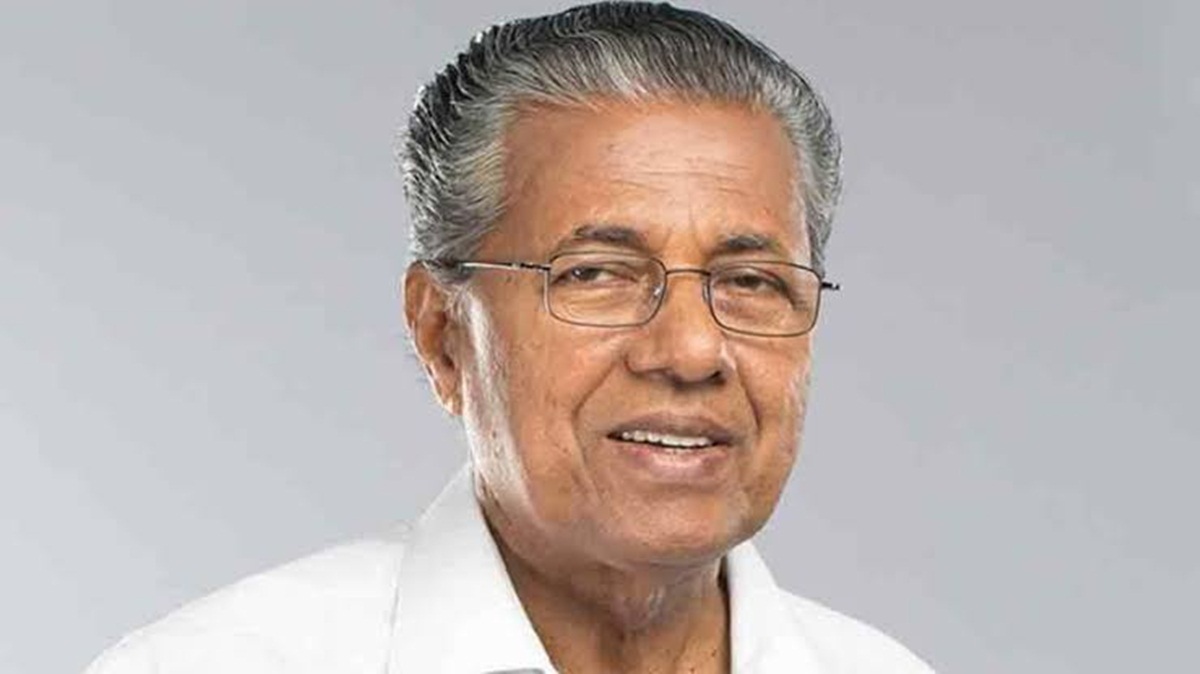
Conciliation talks held by none other than Chief Minister Pinarayi Vijayan with Binoy Viswam failed to yield results. After the meeting, Viswam told the media that the issues raised by his party remained unresolved and that it would be forced to take “hard decisions” if the agreement with the Centre was not scrapped.
The CPI(M) state leadership, however, insists that signing an agreement with the Centre does not mean Kerala will adopt the centrally prescribed syllabus. They point out that the state has already rejected the revised NCERT textbooks.
Though the CPI stands firm, political observers note that its options are limited. The party cannot abruptly cross over to the Congress-led United Democratic Front (UDF), abandoning a political platform built over decades on the foundation of Left unity.
The UDF, for its part, has taunted the CPI, asking how long it will continue in the LDF while enduring repeated humiliation at the hands of the CPI(M).
Even if the CPI were to make the unlikely choice of joining the UDF, it would have to settle for the third slot in the alliance — below the Indian Union Muslim League (IUML).