X: @vivekbhavsar
Investigative Report
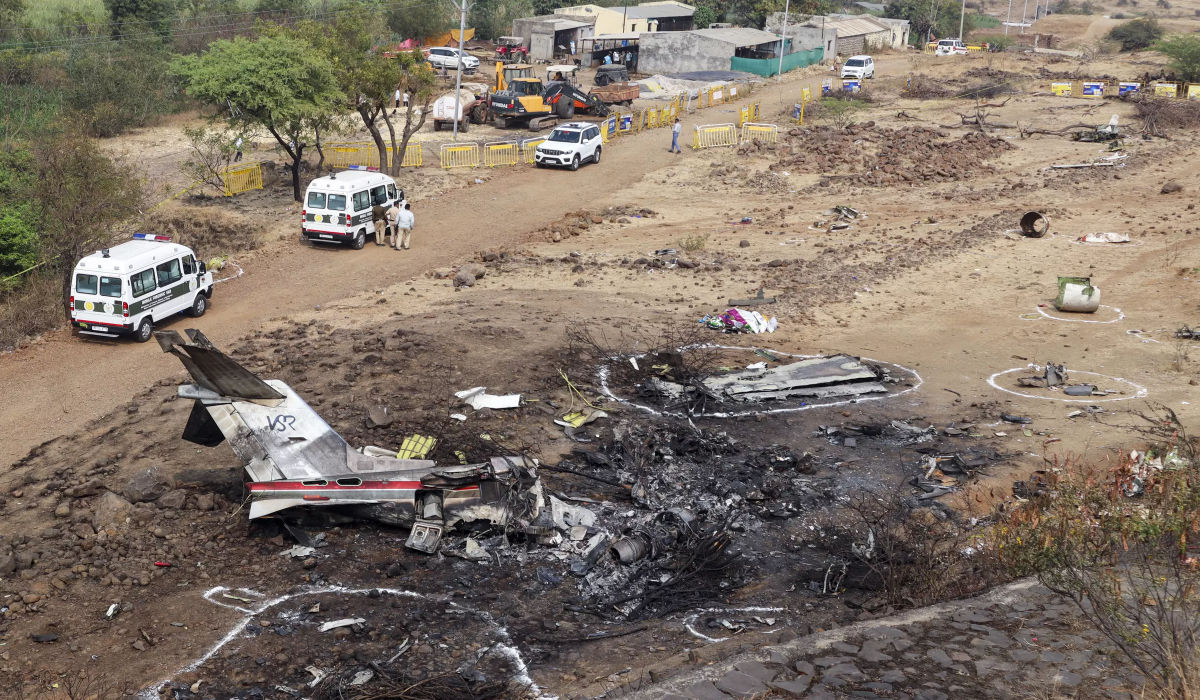
Mumbai: The chartered aircraft crash near Baramati that killed all five persons on board — including Maharashtra Deputy Chief Minister Ajit Pawar — was not merely an aviation tragedy. It has now exposed serious and unresolved questions about how Z-Plus security protocols were followed, diluted, or ignored in the final hours before the fatal flight.
TheNews21 has examined official aviation documents, including the General Aviation (GA) terminal passenger manifest, and spoken to security officials familiar with protection procedures. What emerges is a disturbing picture of last-minute decisions, procedural shortcuts, and a security architecture that appears to have failed the very people it was meant to protect.
This report does not examine the technical cause of the crash, which is under investigation. It examines what happened before the aircraft took off.
Five deaths — and a security failure that cannot be brushed aside
The aircraft was carrying Ajit Pawar, Deputy Chief Minister of Maharashtra (Z-Plus protectee), a police constable attached to his security, Pinky Mali and two pilots. All five died in the crash.
When a Z-Plus protectee is involved, every aspect of movement — route, aircraft, co-passengers — is governed by strict protocol. That protocol exists precisely to prevent catastrophic outcomes. The documents accessed by TheNews21 suggest that those safeguards may not have been fully applied in this case.
What the official passenger manifest reveals
Significantly, the Directorate General of Civil Aviation (DGCA), in its first official communication issued immediately after the crash, stated that the aircraft was carrying Ajit Pawar along with two personnel — one personal security officer (PSO) and one attendant — and two crew members (pilot-in-command and first officer). The DGCA statement did not describe the attendant as a crew member, a classification that aligns with the official passenger manifest accessed by TheNews21, which lists Pinky Mali as a passenger rather than crew.
The most critical document is the official GA terminal passenger manifest for the flight.
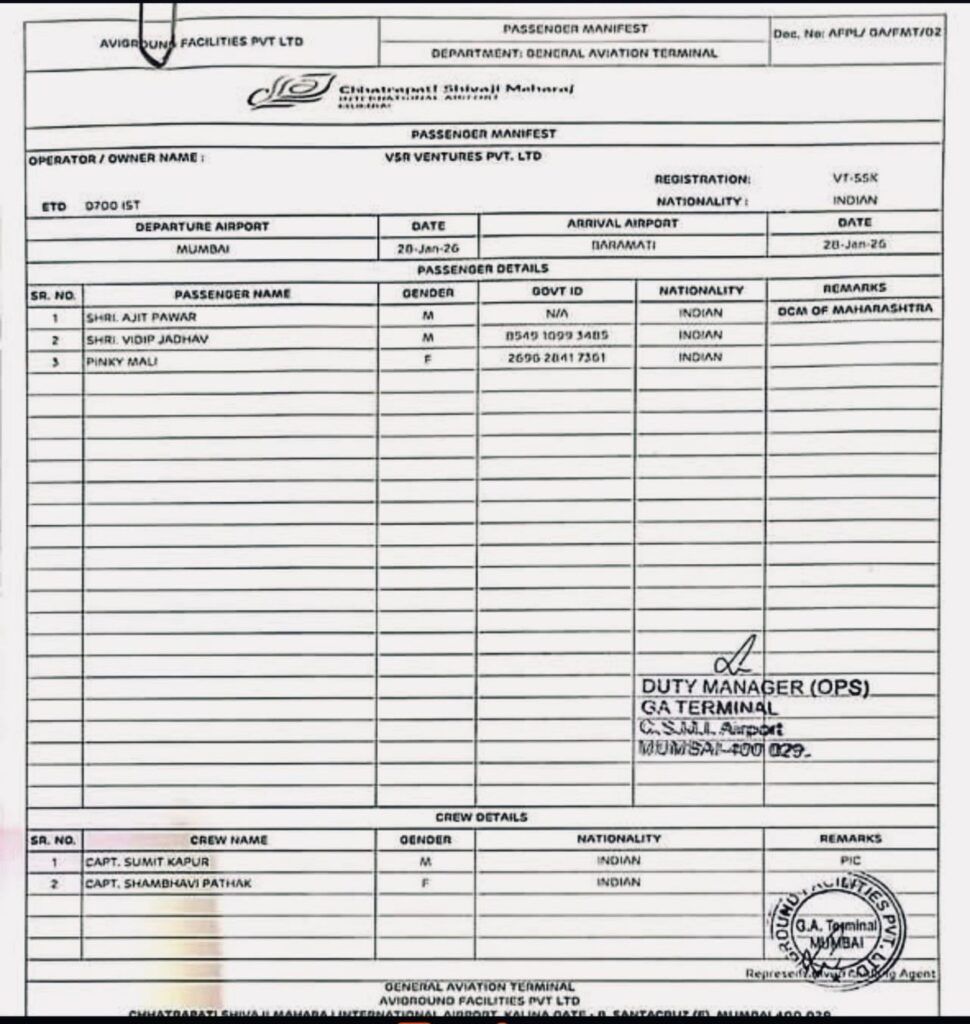
It shows Pinky Mali listed under “Passenger Details”, and only the two pilots listed under “Crew Details.”
In aviation and security procedure, the manifest is not a formality — it is the final operational record. (As per initial confirmation issued by the Directorate General of Civil Aviation following the crash.) It establishes that Pinky Mali was not travelling as crew, but as a civilian passenger on a flight carrying a Z-Plus protectee.
This directly contradicts public claims that she was part of the flight crew.
Also Read: Celebration Without a Document: Parliament Kept in the Dark on India–US Trade Deal
Z-Plus security: what is mandatory, not optional
Ajit Pawar was under Z-Plus security protection, the highest category of state security, administered through the Special Protection Unit (SPU). This is confirmed by public records and corroborated by senior security officials.
Z-Plus protocol requires Advance approval of travel plans, Mandatory background verification of every co-passenger, No routine civilian co-passengers, and Fresh clearance if there is any last-minute change in itinerary or asset.
Security officials point out that a Z-Plus protectee cannot travel “by convenience.” Protocol is designed around threat management, not personal preference.
Last-minute change and aircraft reassignment
Sources familiar with the Deputy Chief Minister’s schedule told TheNews21 that air travel was not part of the original plan. He was expected to travel by road, with the Baramati visit scheduled for the following morning.
The decision to use a chartered aircraft was taken at the eleventh hour. Compounding this, the aircraft itself had originally been booked for a different private route and was reassigned for this journey.
Under Z-Plus norms, such changes are permitted only after fresh security clearance and documentation. No such approval has been made public so far.
GA terminal access and the security grey zone
Mumbai’s General Aviation terminal operates under a privatised framework, with ground-handling and access facilitation managed by private operators following airport privatisation involving the Adani Group ecosystem. While CISF controls perimeter security, entry into GA terminals is facilitated through movement passes issued by ground-handling agencies.
Aviation and security insiders say, GA passes are often issued on the basis of basic ID verification, they may be sufficient for routine charter movements. But they are inadequate for movements involving Z-Plus protectees, which require independent SPU-level clearance, not reliance on routine GA access systems.
Whether such independent clearance was obtained in this case remains unanswered.
The core question the system must answer
This investigation is not about hindsight or speculation. It is about procedure.
How did a Z-Plus protected Deputy Chief Minister board a last-minute chartered flight with a civilian passenger listed on the manifest, without publicly documented clearance — a journey that ended in the death of everyone on board?
That question goes to the heart of institutional responsibility.
Silence where answers are owed
So far, there has been no detailed explanation from:
- The Home Department,
- The Special Protection Unit (SPU),
- Or GA terminal authorities,
on passenger clearance, aircraft reassignment, or the security approvals for this flight.
TheNews21 has based this report strictly on official documents and verified security inputs and will continue to seek formal responses from all concerned authorities.
Why this story matters
This is not a political story. It is a systems story — about how security protocols exist on paper, and what happens when they fail in practice.
When those failures end in five deaths, silence is not an option.