

Mumbai: The FIFA World Cup is still just a few days old, but the tournament has already served up a reminder of why football’s biggest stage continues to be the best. Germany arrived in Houston with expectations and departed with a warning to the rest of the field. The four-time world champions tore apart World Cup debutants Curaçao 7-1 in a sparkling attacking display, delivering a performance that instantly puts them among the early favourites for the title. Elsewhere, Brazil was held to a draw by an inspired Morocco, the Ivory Coast needed late drama to see off Ecuador, and the Netherlands had to work hard to beat a tricky Japan side. As the 48-team World Cup across the United States, Canada and Mexico begins to find its rhythm, the opening round has already offered potential contenders, emerging stories and tactical themes that are likely to define the coming weeks.
Germany’s Seven-Goal Statement
The scoreline was emphatic. The performance could have been better still. Germany entered the tournament with a desire to shake off recent global disappointments. Their first task against Curaçao, who were playing in their first-ever World Cup, looked simple enough. But big tournaments often produce a few surprises. Germany made certain there would be none. Felix Nmecha put the hosts ahead in just six minutes, sprung through by the creative genius of Florian Wirtz. The early goal seemed to settle German nerves and establish immediate control. Suddenly the evening took a short, unexpected turn. Curaçao celebrated a moment that will always hold a place in the sporting history of the nation when Livano Comenencia struck in the 21st minute. It was not only an equaliser but also Curaçao’s first goal in a FIFA World Cup. For a few minutes the underdogs had the gall to dream.
Germany soon re-established reality. Nico Schlotterbeck headed home from a corner before the break to restore the lead. Nmecha was felled in the box, and Kai Havertz converted from the spot shortly after. The contest was pretty much over at 3-1. It was a second-half exhibition. Jamal Musiala showed intelligence and composure to make it 4-0. Nathaniel Brown was then on the scoresheet after excellent work from Deniz Undav. The substitute then scored one of his own before Havertz wrapped up his brace late on.
Seven goals. Seven different phases of offensive dominance. Their scoring range was perhaps most encouraging for Germany. They scored from open play, from set pieces, from combination football, from transitions and from penalties. It was an attack that could hurt opponents in many ways. Curaçao’s defence was repeatedly stretched by Wirtz, Musiala, Kimmich and Havertz, while the midfield controlled possession almost at will. Crucially, Germany won their opening World Cup match for the first time since their victorious 2014 campaign in Brazil. History offers no guarantees, but the symbolism was impossible to ignore.
Havertz Leads New Generation of Germans
Of the standouts, Havertz was particularly sharp. The Arsenal forward combined clever movement with clinical finishing, netting twice and linking up well with the fluid Germany attack. But the story was greater than any one player’s performance. Musiala showed once again why he is considered one of football’s brightest young stars. Wirtz set the attacking tempo. Nmecha scored one and won the penalty. Even the substitutes arrived and made an immediate impact on the proceedings. Germany looked balanced, aggressive and tactically mature. They look like a team capable of mounting a serious title challenge after years of looking for consistency at major tournaments.
Brazil and Morocco Share the Limelight

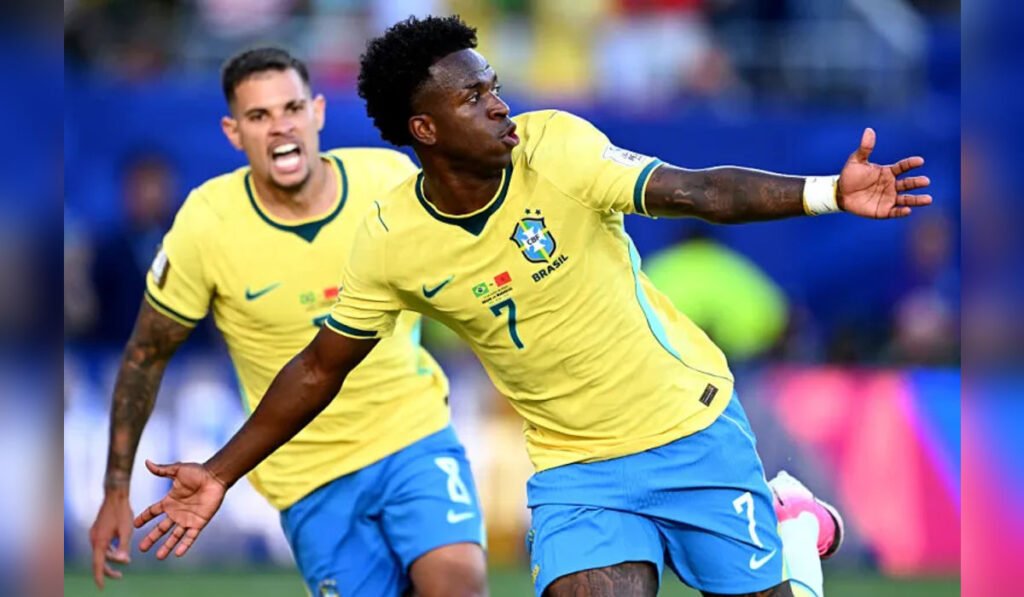
Germany’s win may have been all about domination, but Brazil’s bout with Morocco was all about equal parts tension and quality. The match finished 1-1, but the scoreline only told part of the story. Ismael Saibari opened the scoring for Morocco in the 21st minute. Vinícius Júnior equalised for Brazil just eleven minutes later to salvage a point for the Selecao. The result highlighted the rising stature of Morocco on the world stage. They haven’t rested on their historic World Cup achievements recently; they continue to challenge elite nations with tactical discipline, athleticism and technical quality. The draw wasn’t ideal for Brazil, but it wasn’t alarming either. There were chances for the South Americans, long spells of possession and enough attacking threat to suggest better displays are on the horizon. The clash also highlighted an emerging trend in the tournament: the growing gap between established powers and ambitious challengers.
Ivory Coast Leave It Late
Elsewhere, Ivory Coast had to show patience, resilience and a moment of quality to secure their opening victory of the campaign. For much of the evening, Ecuador was the more dangerous side. John Yeboah kept troubling the Ivorian defence, while Alan Minda and veteran striker Enner Valencia both came close to scoring. Ecuador were twice denied by the woodwork on a frustrating night. But persistence is often rewarded in other ways in football. Tactical changes in the second half helped the Ivorians to gradually take control.
Yan Diomande was an impressive source of energy and creativity throughout the match, but it was Amad Diallo who made the decisive contribution. The contest was heading for a draw, but the winger scored the winning goal in the bottom corner late on for a 1-0 victory. The goal ended a long wait for an Ivorian World Cup win and put them instantly in a strong position in their group. Championship runs don’t start with blowouts but with close wins. The Ivory Coast won’t care how they got the points.
Japan Refuse to Surrender as Netherlands Let Victory Slip Twice
For long periods, the Netherlands and Japan played a tactical chess match rather than a World Cup contest. The opening half in Arlington produced little attacking spark, with both sides struggling to create meaningful opportunities and neither goalkeeper being seriously tested.
Everything changed after the break. The Dutch finally broke the deadlock through captain Virgil van Dijk, who rose highest to power home a header after Ryan Gravenberch recycled a partially cleared free kick. It was a landmark moment for the veteran defender, marking his first goal at a major international tournament and seemingly putting the Netherlands in complete control.
But Japan had other ideas. The Samurai Blue struck back almost immediately, despite the Netherlands having been in control. Takefusa Kubo’s intelligent run and vision created the opening, and Keito Nakamura did the rest, cutting inside before drilling a low effort into the bottom corner to level the scores. The equaliser injected life into a contest that had previously struggled to find rhythm. The Dutch responded with quality of their own. Crysencio Summerville produced one of the goals of the opening round, gliding across the edge of the Japanese defence before curling a magnificent left-footed strike beyond goalkeeper Zion Suzuki. At 2-1, the Netherlands once again looked destined to collect all three points.
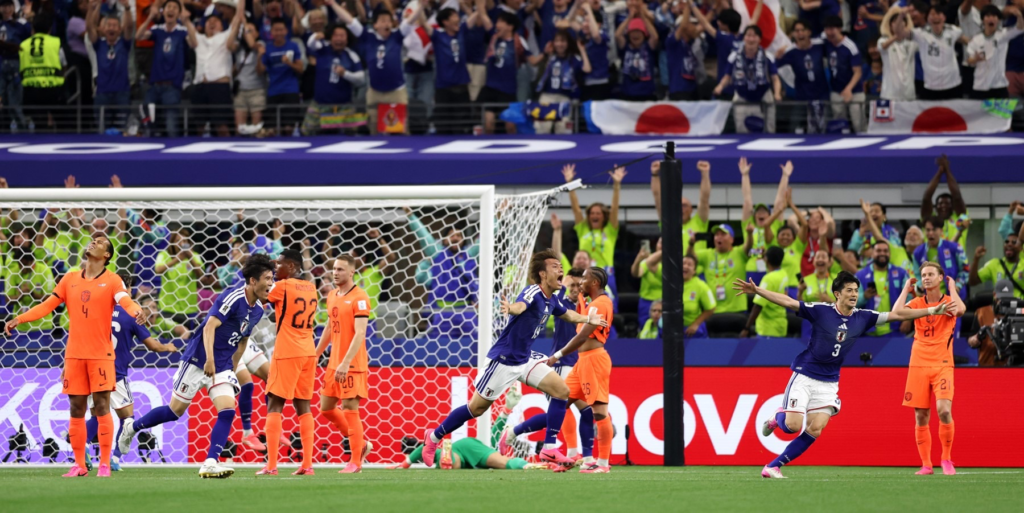
Yet Japan’s greatest strength throughout recent World Cups has been their refusal to panic under pressure. With defeat looming, they mounted one final assault. Their reward arrived in the 89th minute when substitute Koki Ogawa powered home from a corner, silencing the Dutch celebrations and sending the Japanese supporters into raptures. Six minutes of added time and a late wave of Dutch bookings followed, yet the score held. The dramatic 2-2 draw felt like a statement result for Japan in what many considered their toughest Group F fixture. Twice they found themselves behind. Twice they fought back.
For the Netherlands, the result will be viewed as two points dropped. For Japan, it was proof that they had the resilience, organisation and belief to challenge anyone in this tournament. What began as a cautious and forgettable first half ultimately evolved into one of the most compelling matches of the opening round — a reminder that World Cup football can change quickly.
First Lessons From a New Tournament
Some interesting insights from the first round already. Attacking football is on the up. Germany’s seven-goal show, Brazil’s creative spark and the attacking intent of several emerging nations would suggest that fans are in for a high-scoring tournament. At the same time, depth is looking increasingly important. The growth to 48 teams has widened the competitive landscape, but it also raises the importance of depth and tactical flexibility. Germany’s substitutes made the difference. Ivory Coast made changes that won the game. And perhaps most importantly, the smaller football nations are no longer turning up simply to make up the numbers. Curaçao’s historic goal, Morocco’s draw against Brazil and Japan’s spirited display against the Netherlands all spoke of international football’s increasing competitiveness.
Germany Set the Early Pace
Germany has set the standard, although the tournament is still young. That 7-1 win was about more than a win over a raw opponent. It was a show of confidence, tactical clarity and attacking ruthlessness. World Cups do not usually get won in the first week. Momentum can change quickly, and tougher tests are sure to come. But as the tournament moves further into the group stage, Germany has already done one important thing. They have sent a message to the rest of the field. Brazil is still a threat. The Netherlands is still disciplined. Ivory Coast looks set to give problems. Morocco is climbing up. But after the first round of matches, there was one message that reverberated louder than the rest. Germany is back in business. The road to the FIFA World Cup 2026 trophy may well have to go through them.


