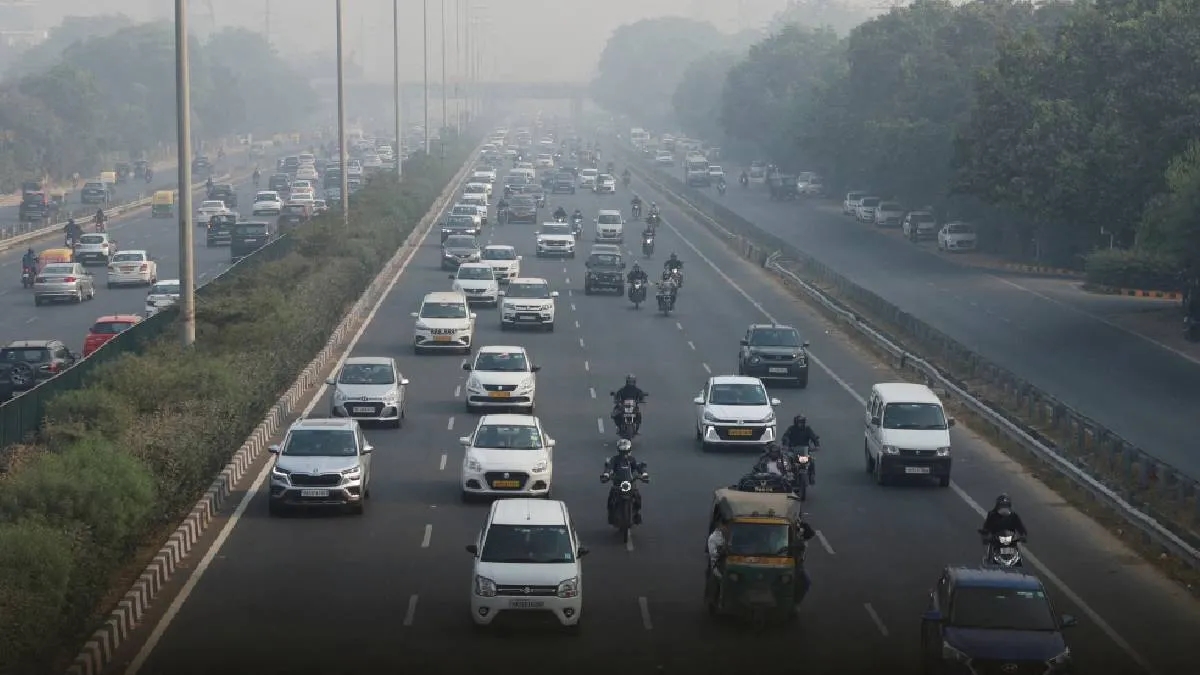
Delhi: The Delhi government has stepped up its fight against rising air pollution by enforcing stricter vehicle-related restrictions across the national capital. As part of the ongoing Stage IV of the Graded Response Action Plan (GRAP), vehicles that do not meet BS-VI emission standards are no longer allowed to enter Delhi, while fuel stations have been directed to deny petrol and diesel to vehicles without a valid Pollution Under Control (PUC) certificate.
The decision comes amid persistently poor air quality levels, especially during the winter months when pollution tends to peak due to a mix of vehicular emissions, stagnant weather conditions and seasonal factors. Officials believe the new measures are necessary to prevent further deterioration of air quality and to protect public health.
According to government estimates, the restrictions could affect nearly 12 lakh vehicles that enter Delhi every day from neighbouring regions of the National Capital Region (NCR). A large number of these vehicles come from cities such as Ghaziabad, Noida, Gurugram and Faridabad. Authorities expect that vehicles failing to meet emission norms will be stopped at city borders and denied access until compliance is ensured.
To implement the decision effectively, the Delhi Police has significantly increased its presence at key entry points. Hundreds of police personnel, along with multiple enforcement vehicles, have been deployed at over 120 border checkpoints. In addition, teams from the Transport Department and municipal bodies are monitoring fuel stations to ensure that the ban on refuelling non-compliant vehicles is strictly followed.
Technology is also playing a key role in enforcement. Automatic Number Plate Recognition (ANPR) cameras installed at petrol pumps are being used to instantly identify vehicles without valid PUC certificates. Officials say this real-time monitoring will help reduce manual checks and prevent violations.
The Delhi government has pointed out that vehicular emissions remain one of the major contributors to winter pollution. Studies referenced by authorities suggest that vehicles account for a significant share of both PM10 and PM2.5 pollution during this period. Alongside restrictions, efforts are underway to ease traffic congestion at major choke points across the city. An integrated traffic management system is being developed to reduce idling time at signals, which could help lower emissions and fuel wastage.
Despite these steps, Delhi’s air quality continues to remain in the “very poor” to “severe” range. Recent Air Quality Index (AQI) readings show only marginal improvement, staying well above safe limits. Health advisories remain in place, with schools for younger children closed and offices encouraged to operate with reduced on-site staff.