

Glasgow: The final medal table rarely tells the complete story of a multi-sport event. Numbers celebrate success, but they seldom explain transformation. India’s campaign at the 2026 Commonwealth Games in Glasgow was precisely that—a story of transition.
It was a Games that tested the country’s sporting depth under unprecedented circumstances. Several of India’s traditional medal-winning disciplines were absent, yet the competition still revealed an evolving sporting identity.
India concluded the Games with 39 medals—13 gold, 17 silver and 9 bronze—to finish fourth overall. On paper, the total was considerably lower than the 61 medals (22 gold, 16 silver and 23 bronze) won at Birmingham in 2022. However, comparing the two editions purely through numbers would be misleading.
A Medal Table Without India’s Traditional Strongholds
Glasgow presented an entirely different competitive landscape. The absence of wrestling, shooting, badminton, table tennis, hockey and cricket dramatically altered India’s medal prospects even before the opening ceremony.
Collectively, those sports accounted for the majority of India’s medals at Birmingham 2022. Wrestling alone contributed 12 medals, while shooting—historically one of India’s richest medal-producing disciplines—was not included in the programme.
Their absence effectively removed dozens of realistic podium opportunities.
Instead, India entered Glasgow with a compact 10-sport programme that demanded excellence in disciplines where competition was often deeper and medal opportunities were fewer.
Viewed in that context, finishing fourth with 39 medals reflects not decline but remarkable adaptability.
Boxing Becomes India’s New Powerhouse
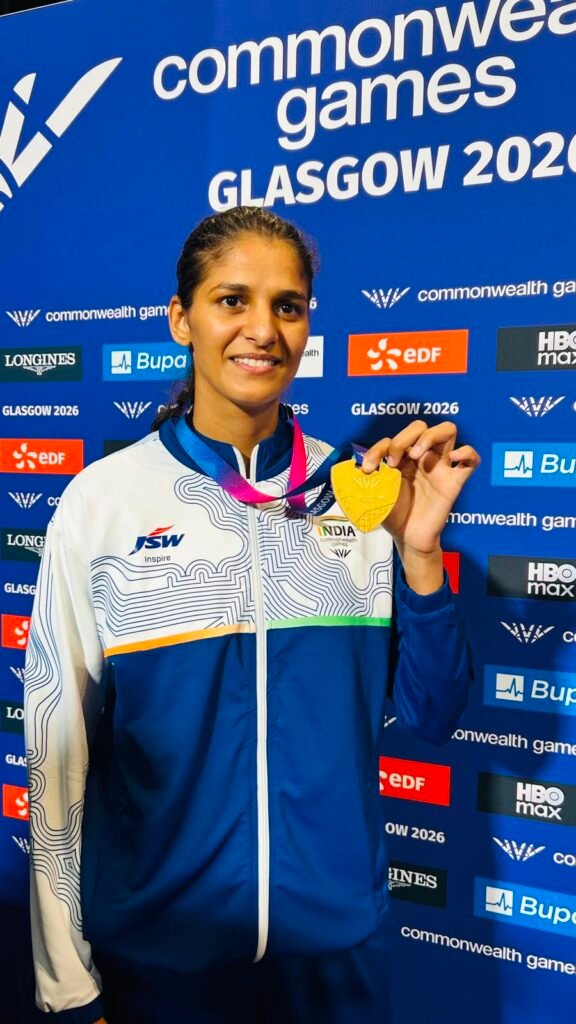
If one sport symbolised India’s evolution, it was boxing.
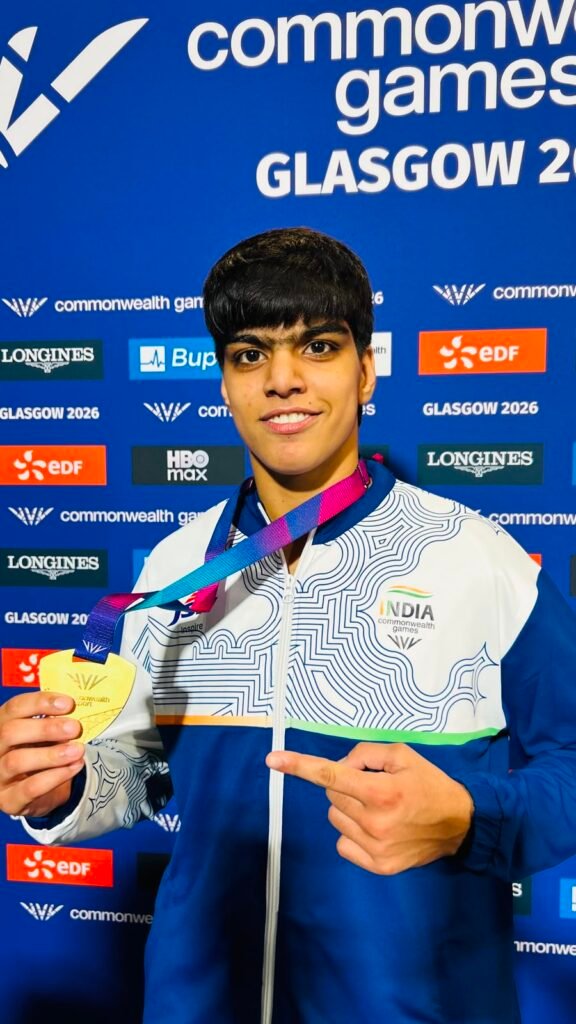
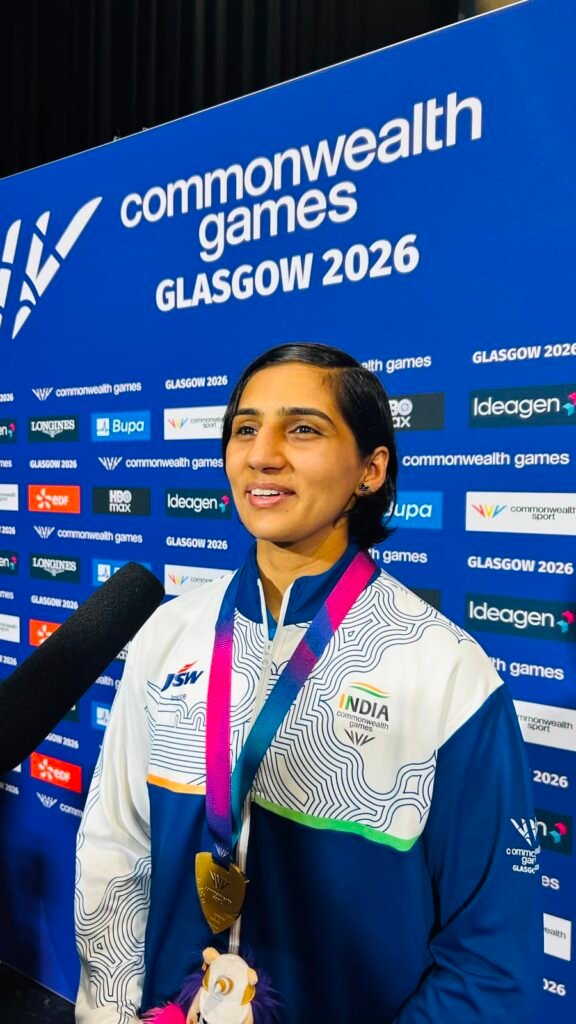
Indian boxers delivered arguably their finest Commonwealth Games campaign, with the women leading the way in impressive fashion. Preeti Pawar, Jaismine Lamboria, Sakshi Chaudhary, Arundhati Choudhary and Priya Ghanghas all captured gold medals, while Sachin Siwach struck gold in the men’s competition.
India’s overall boxing campaign reached unprecedented heights.
Their success reflected far more than physical dominance. Indian boxers displayed superior ring management, intelligent tactical adjustments and remarkable composure under pressure. Their performances suggested that India’s boxing programme has matured into one capable of sustained international success rather than isolated brilliance.
Weightlifting’s Enduring Reliability
Weightlifting once again justified its reputation as India’s most dependable medal-producing discipline.
Mirabai Chanu reinforced her legendary status by winning a third consecutive Commonwealth Games gold medal, while Rishikanta Singh, Muthupandi Raja, Gyaneshwari Yadav, Valluri Ajaya Babu, Harjinder Kaur, Lovepreet Singh and Bindyarani Devi ensured the medal stream never slowed.
The encouraging aspect was not merely the medal count but the squad’s depth.
India is no longer dependent on a handful of elite lifters. Multiple weight categories are now consistently producing athletes capable of competing at the highest international level.
Athletics Finally Delivers Historic Moments
Indian athletics produced several milestones that may ultimately prove more significant than the medal tally itself.
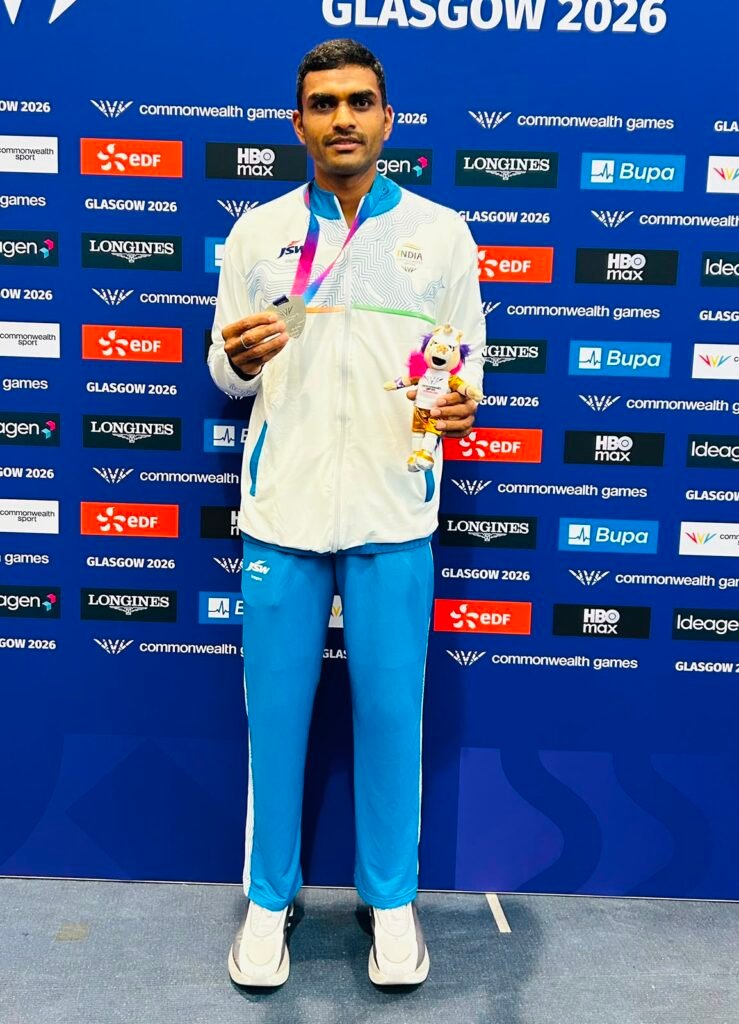
Murali Sreeshankar’s courageous comeback from a career-threatening patellar tendon injury culminated in a Commonwealth Games silver medal, reaffirming his place among the world’s leading long jumpers.
Sarvesh Kushare created history by becoming the first Indian man to win a Commonwealth Games medal in the high jump, claiming silver.
Gulveer Singh scripted history by winning silver in the men’s 10,000 metres and bronze in the 5,000 metres, becoming the first Indian athlete to win two medals at a single edition of the Commonwealth Games. He also became the first Indian to win a Commonwealth Games medal in the men’s 5,000 metres.
Neeraj Chopra once again demonstrated his remarkable consistency by securing another major international medal in the men’s javelin throw.
Tejaswin Shankar showcased his extraordinary versatility by winning bronze in the decathlon. Having won bronze in the high jump at Birmingham 2022, he became the first Indian to win Commonwealth Games medals in two different athletics disciplines.
Collectively, these performances demonstrated that Indian athletics is becoming less dependent on one or two global stars. Multiple disciplines are now producing athletes capable of competing consistently for medals on the international stage.
Para Athletics Announces Its Arrival
If Glasgow had one defining sporting narrative for India, it was undoubtedly para athletics.
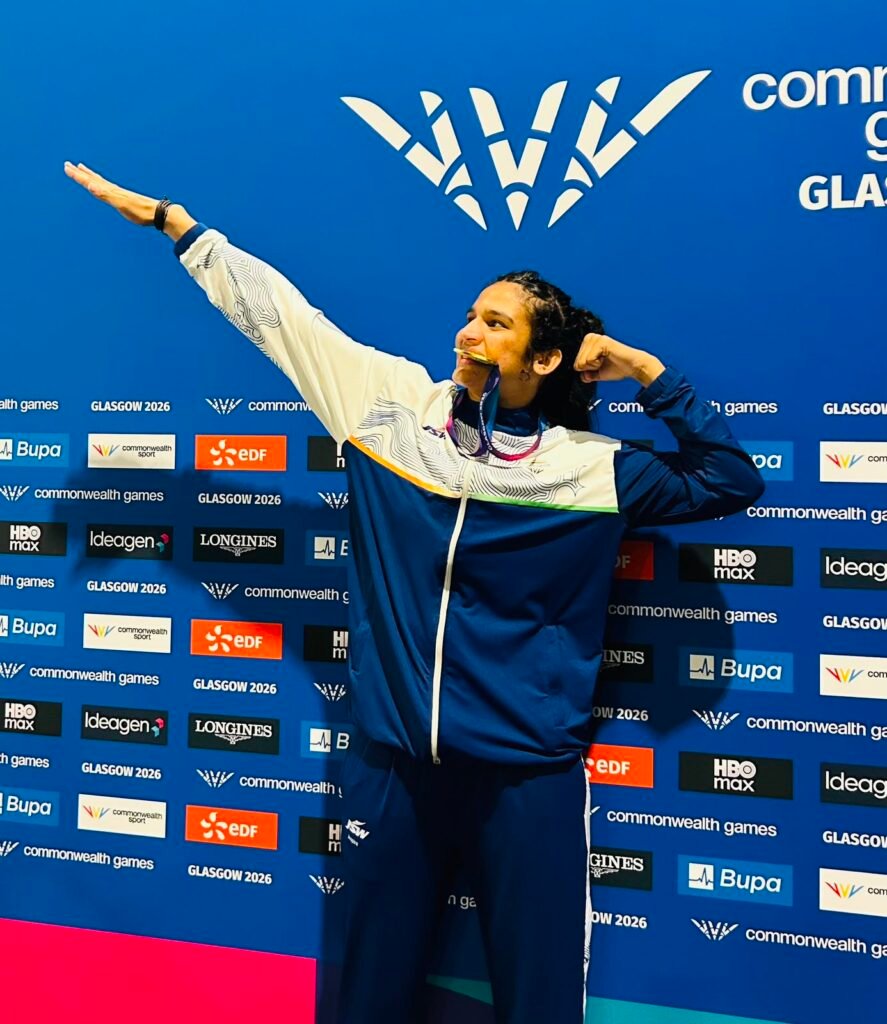
Sharmila Dhankar became India’s first para athletics gold medallist at the Commonwealth Games, while Shilpa Kanchugarakoppalu Shyla joined her on the podium with bronze in the same event.
Dilip Gavit, Soman Rana and several other Indian para athletes ensured the discipline emerged as one of the country’s biggest success stories.
Beyond medals, the Games also witnessed a world record in para athletics, reinforcing the extraordinary quality of competition and highlighting how integrated para sport has become an essential part of the Commonwealth movement.
India’s para athletes competed with confidence rather than merely participating.
They have become genuine medal contenders across multiple events, reflecting the growing professionalism of India’s high-performance sports system.
Historic Moments Beyond India
Glasgow 2026 will also be remembered for several landmark achievements that transcended national boundaries.
Rwanda celebrated its first-ever Commonwealth Games medal, symbolising the expanding competitive reach of the Commonwealth sporting family.
Several athletes completed multi-gold campaigns, highlighting the emergence of a new generation of elite performers capable of dominating their disciplines.
The Games also showcased one of the most successful integrations of para sport within a major multi-sport championship, with para events becoming central to the competition rather than peripheral additions.
Lessons Before the Asian Games in Japan
Attention now shifts to the Asian Games in Japan.
Glasgow exposed both strengths and vulnerabilities.
India’s technical events continue to improve, but sprinting depth remains limited. Middle- and long-distance running produced encouraging breakthroughs, yet consistency remains the next challenge.
Cycling and swimming still require significant investment if India hopes to compete regularly against Asia’s strongest sporting nations.
Greater emphasis is also needed on sports science, recovery protocols and injury prevention. Several leading athletes entered Glasgow after lengthy rehabilitation periods. Sustaining elite performance will increasingly depend on robust medical, biomechanical and sports science support systems.
The emergence of younger athletes across boxing, athletics, judo and para sport also highlights the importance of long-term succession planning rather than relying solely on established champions.
Looking Towards Ahmedabad 2030
As India symbolically received the Commonwealth Games flag, Glasgow’s closing moments carried significance far beyond ceremony.
For India, Ahmedabad 2030 is no longer simply the next Commonwealth Games.
It represents an opportunity to showcase not only world-class infrastructure and organisational excellence but also a sporting system that is becoming broader, deeper and increasingly competitive across disciplines.
Glasgow proved that India can remain among the Commonwealth’s leading sporting nations even without several of its traditional medal-winning sports.
The challenge over the next four years is to convert that resilience into complete sporting excellence.
The countdown has already begun.
India is preparing to welcome the Commonwealth to Ahmedabad in 2030—not merely as hosts, but as a nation determined to celebrate sporting excellence, inclusivity and friendship on one of the world’s biggest sporting stages.


