

From a spectacular opening ceremony led by King Charles III to India’s medal ambitions gathering momentum, Glasgow begins its Commonwealth Games journey with renewed purpose
Glasgow: Long before the first spotlight pierced the darkness inside the OVO Hydro, Glasgow had already embraced the spirit of the Commonwealth Games. As the evening light faded over the River Clyde, thousands of spectators made their way to the arena, wrapped in the colours and flags of the Commonwealth. Volunteers welcomed visitors with warm smiles despite the familiar Scottish drizzle, athletes greeted old friends and fierce rivals alike, and dozens of languages echoed through the concourse.
There was an unmistakable feeling in the air that the occasion was more than the start of another sporting event. After months of uncertainty over whether the Commonwealth Games would even take place, Glasgow was ready to prove that the Games still mattered.
Then the arena came alive.
The opening ceremony did not attempt to overwhelm with extravagance. Instead, it celebrated Glasgow itself—its humour, resilience, music and unmistakable identity. The first-ever indoor opening ceremony in Commonwealth Games history felt intimate rather than distant, allowing every spectator to become part of the performance rather than merely watching it.
One of the evening’s most memorable moments came when King Charles III and Queen Camilla made their dramatic entrance through the iconic TARDIS from Doctor Who, a theatrical tribute that instantly connected British popular culture with the Games’ celebration of imagination. The audience erupted before settling into an evening that seamlessly blended Scottish traditions with contemporary performance.
Sir Chris Hoy, Scotland’s most celebrated Olympian, added an emotional layer to the ceremony, symbolising the country’s rich sporting legacy.
The Parade of Nations remained the emotional heartbeat of the evening.
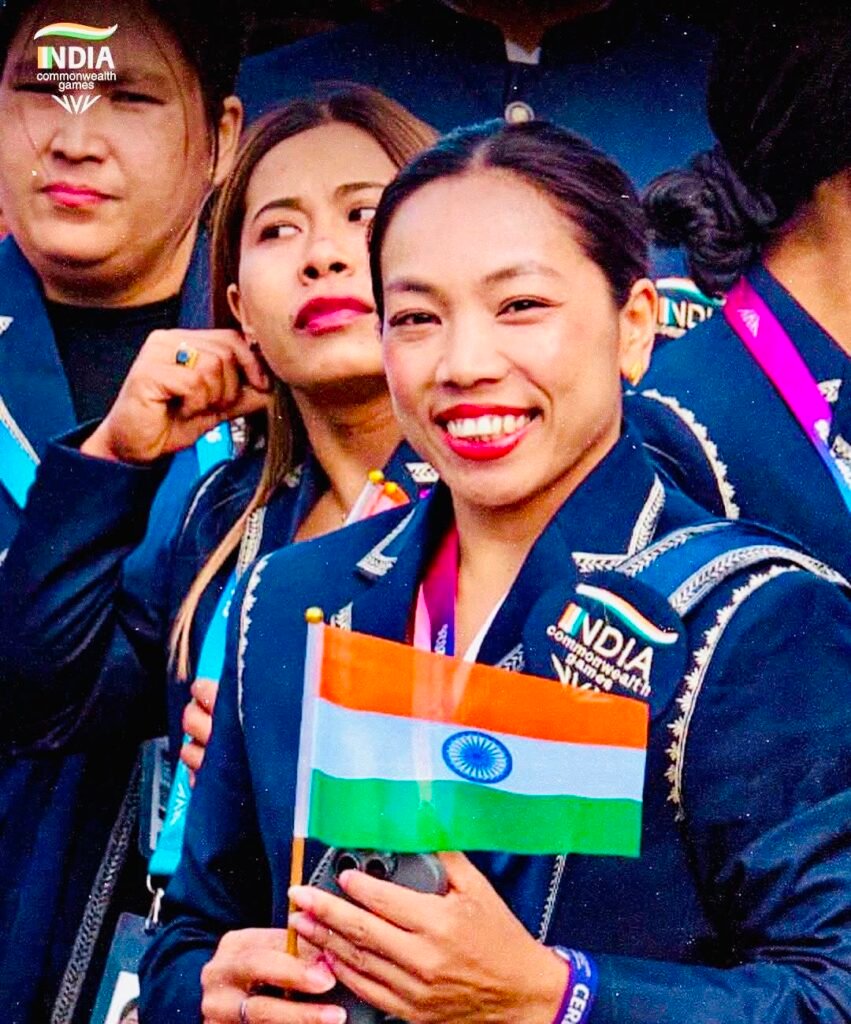
When India entered the arena, the reception was unmistakably warm. Flag-bearers Mirabai Chanu and Lovlina Borgohain walked proudly at the front of a confident Indian contingent, carrying not merely the tricolour but also the expectations of one of the strongest teams in the competition. Their smiles reflected a squad arriving with genuine medal ambitions across multiple disciplines.
King Charles III officially declared the XXIII Commonwealth Games open after reading the traditional message from the King’s Baton, formally launching 11 days of competition involving more than 3,000 athletes representing 74 nations and territories.
It was more than protocol; it marked the rebirth of an event that had faced serious questions over its future only a short time ago.
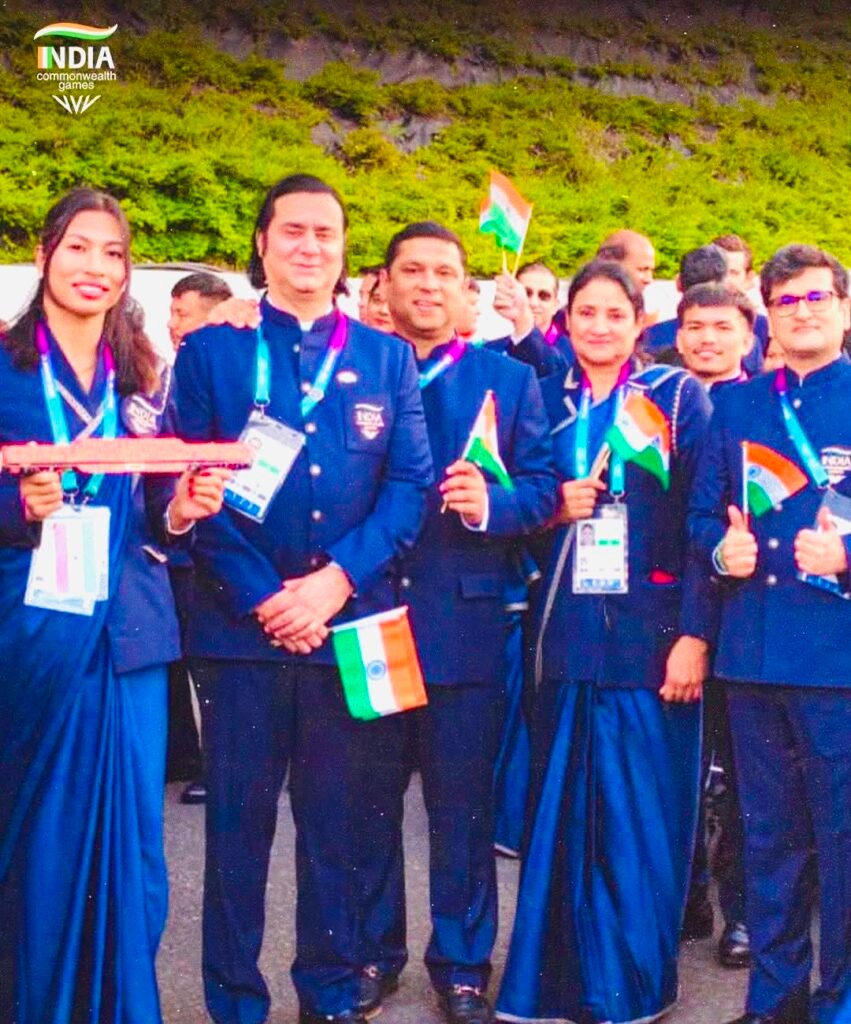
India’s Campaign Begins with Confidence
Even before the opening ceremony concluded, India had reasons for optimism.
The lawn bowls team, inspired by its historic breakthrough in Birmingham four years ago, opened positively. Putul Sonowal impressed in the men’s singles, while the women’s pairs combination of Pinki Singh and Rupa Rani Tirkey also began with encouraging victories, suggesting that Birmingham’s success was no isolated achievement.
Boxing, another traditional Indian stronghold, also offered encouraging signs. Olympic medallist Lovlina Borgohain progressed directly into the semifinals of the women’s 75 kg category after receiving a bye, immediately guaranteeing herself at least a bronze medal and placing India on the early medal table.
The opening day may not have produced a flood of medals, but it established something equally valuable—momentum.
Bigger Challenges Begin on Friday
If Thursday belonged to ceremony, Friday belongs to competition.
India’s busiest day so far will feature action across gymnastics, swimming, para swimming, boxing, lawn bowls and para powerlifting.
Among the biggest attractions will be Srihari Nataraj, whose explosive speed in the backstroke events continues to place him among India’s finest swimmers. His ability to produce fast finishes in major championships makes him one of India’s strongest hopes of reaching the later rounds.
Gymnastics also assumes significant importance. India’s men’s team enters qualification knowing that consistency across all apparatus, rather than brilliance on a single routine, will determine progression. Clean landings and execution scores could prove decisive.
The boxing ring promises another demanding day. India’s squad combines experienced international campaigners with fearless young talent, and early victories will be essential in building confidence for the later elimination rounds.
Perhaps India’s strongest medal expectations, however, rest in para powerlifting.
The nation has developed remarkable depth in the discipline over recent years, and Friday’s finals present genuine opportunities to begin the medal collection. Success here would provide the perfect psychological boost for the remainder of the Games.
Meanwhile, lawn bowls continues quietly to emerge as one of India’s most intriguing success stories. Once viewed as an unlikely medal sport, it now commands genuine attention following Birmingham’s historic breakthrough.
Neeraj Waits in the Wings
Although Friday offers plenty of action, one name continues to dominate conversations across the Athletes’ Village and media centre.
Neeraj Chopra, the Olympic and world champion, remains India’s biggest attraction at these Games. Every training update draws attention, every appearance attracts cameras, and every conversation inevitably returns to the same question—how far can he throw?
His event still lies ahead, but his presence already shapes the narrative of India’s campaign.
Glasgow Embraces a New Beginning
These Commonwealth Games are different.
They are more compact, more economical and concentrated within a remarkably small footprint across Glasgow. Yet none of that diminished the atmosphere inside the Hydro.
Instead, the ceremony demonstrated that sporting greatness is measured less by spectacle than by emotion.
As athletes dispersed into the Scottish night, the opening celebrations gave way to preparation. Coaches returned to tactical meetings. Physios resumed treatment sessions. Equipment managers organised the final checks. The Games had finally moved beyond celebration and into competition.
For India, the opening chapter has been encouraging.
Now comes the far more difficult task—turning promise into podium finishes over the days ahead.


