

London: For a few fleeting moments, the noise belonged to Pakistan. The sea of blue inside Edgbaston had fallen strangely quiet. India’s two most explosive batters, Shefali Verma and Jemimah Rodrigues, were back in the pavilion. Pakistan’s players were celebrating. Their supporters sensed an opportunity.
In a rivalry where pressure can suffocate even the most experienced cricketers, India suddenly found themselves wobbling at 18 for 2. And then as usual, Smriti Mandhana walked into the centre of the story. What followed was not just another India-Pakistan victory. It was a lesson in composure, patience and championship temperament. It was the kind of performance that title contenders produce when the stakes are highest.
By the end of the night, India had transformed early uncertainty into complete dominance, defeating Pakistan by 64 runs in their opening match of the ICC Women’s T20 World Cup 2026 and sending a strong message to the rest of the tournament.
The rivalry that stops time
Few matches in cricket generate the anticipation of an India-Pakistan contest. Hours before the first ball, Edgbaston was already alive with colour, noise and nervous energy. Thousands of supporters filled the stands, creating an atmosphere more reminiscent of a knockout game than a group-stage encounter. The World Cup was only beginning, but the spotlight had already found its biggest rivalry.
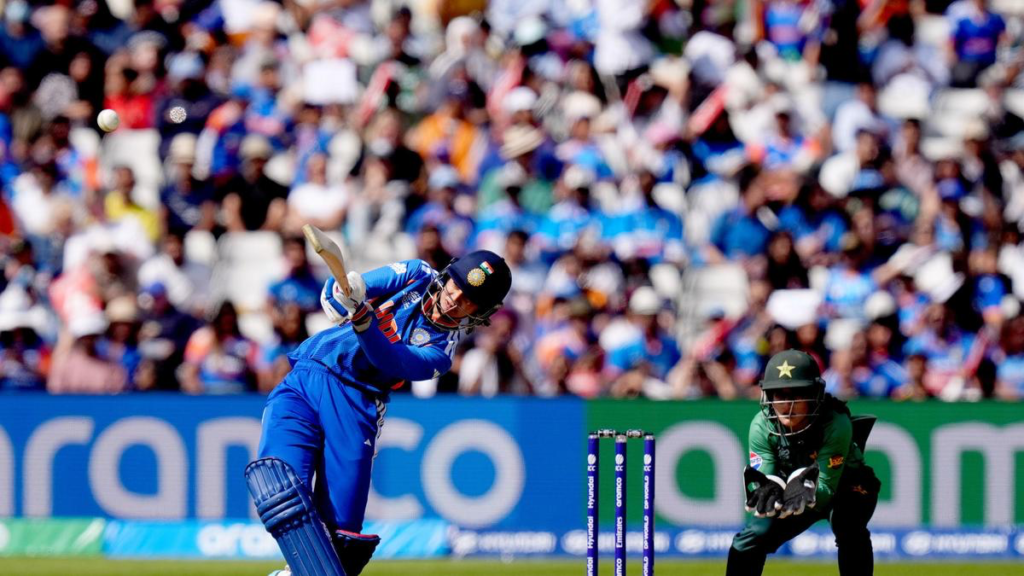
Harmanpreet Kaur won the toss and chose to bat, trusting her strong batting lineup to make a statement. India brought in Bharti Fulmali, while Pakistan handed a World Cup debut to young pacer Tasmia Rubab. The conditions looked ideal for batting. Yet by the end of the evening, it would be the slower bowlers who decided the match.
Pakistan lands the first punch
The drama began immediately. Shafali Verma announced her intentions by launching the very first ball she faced from Sadia Iqbal into the stands. It felt like a statement. Seconds later, it became a warning. Sadia struck back in the same over, removing the dangerous opener and instantly shifting the momentum.
The celebrations in the Pakistan camp grew louder when debutant Tasmia Rubab dismissed Jemimah Rodrigues for just one. For the first time all evening, Pakistan looked in control.
Mandhana changes the mood
Great players often reveal themselves not when everything is going well, but when things begin to unravel. Mandhana’s response was a masterclass. There was no panic. No rush. No attempt to force the game. Instead, she quietly began rebuilding India’s innings, shot by shot. A crisp cover drive here. A delicate sweep there. A flick through midwicket. A punch-through point. The boundaries started arriving with increasing frequency.
At the other end, Harmanpreet Kaur provided exactly what her team needed. The captain recognised the situation and played with maturity, allowing Mandhana to settle before she began scoring. Together they slowly wrestled the game away from Pakistan. The partnership grew. Fifty arrived. Then one hundred. And with every passing over, India’s grip tightened.
The chance Pakistan could not afford to miss
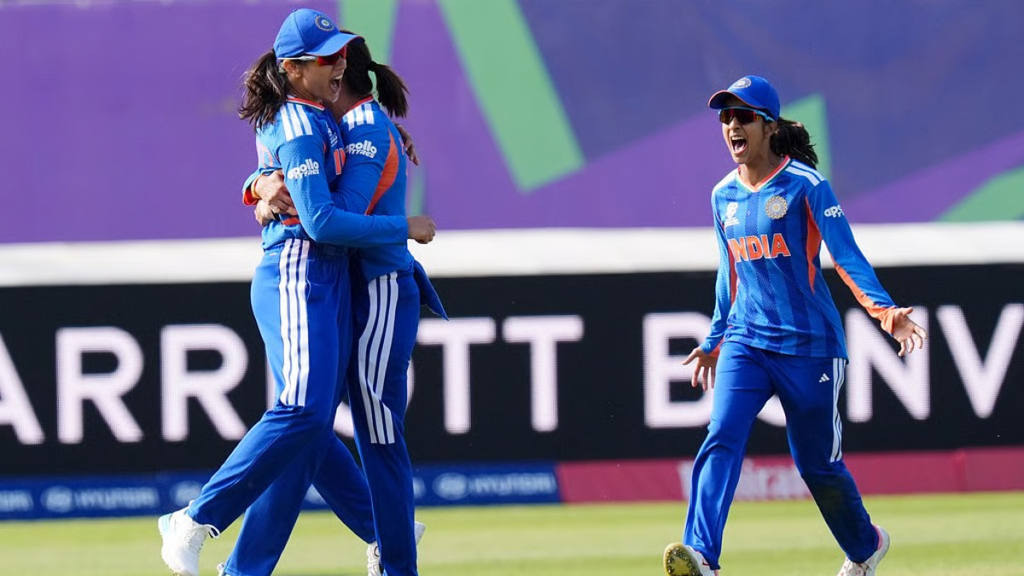
Every big match has a moment that changes its direction. Pakistan’s moment came when Mandhana was on 55. The catch went down. Instead of walking back to the pavilion, Mandhana watched the ball race away for six. It was a small mistake. It became a huge consequence.
The left-hander punished Pakistan relentlessly after that reprieve, driving and lofting the spinners with remarkable ease. By the time Fatima Sana finally held a brilliant catch at long-on to dismiss her for 68, the impact was already clear. The innings included nine boundaries and two sixes, but its true value lay in its timing. When India was vulnerable, Mandhana stood tallest.
Enter Richa Ghosh
If Mandhana rebuilt the innings, Richa Ghosh detonated it. The wicketkeeper-batter has developed a reputation for changing games in a matter of overs, and she produced another breathtaking cameo when India needed it most.
Pakistan had fought its way back through Sadia Iqbal and Fatima Sana. For a brief period, the momentum seemed balanced. Then came the nineteenth over. Richa tore into Tasmia Rubab with astonishing brutality. Four, Six, Four, Four, Four. Edgbaston erupted. The over-transformed a competitive total into a daunting one. Her unbeaten 34 from just 17 deliveries provided the finishing touch to India’s innings of 168 for 6. It was a score that felt bigger than the numbers suggested.
Pakistan fight, then collapses
Chasing 169, Pakistan refused to retreat. Muneeba Ali and Gull Feroza came out attacking. Boundaries flowed freely in the opening overs, with Pakistan racing to 34 without loss. For a brief spell, India appeared under pressure again. But champions rarely stay rattled for long.
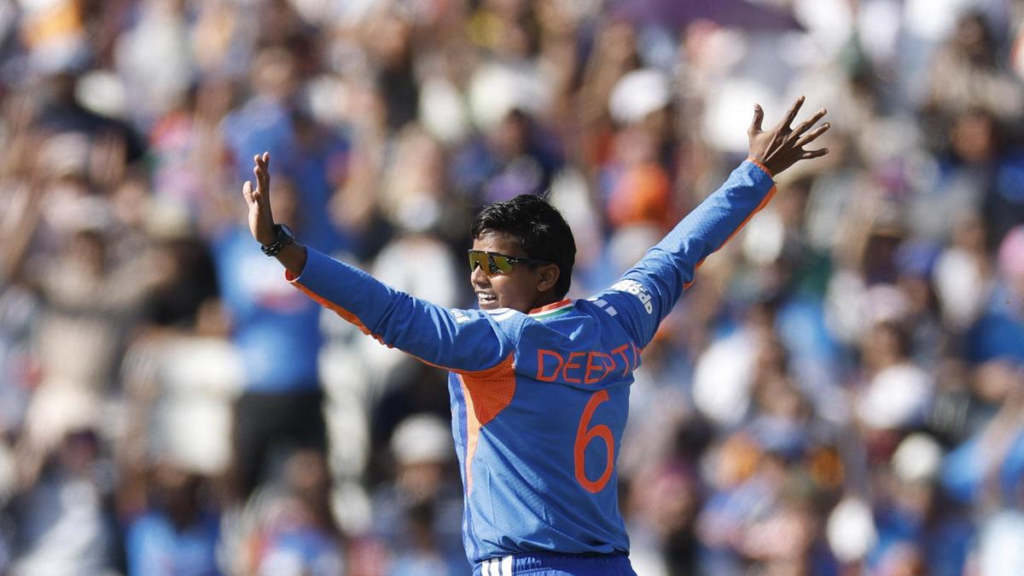
Deepti Sharma broke the opening stand. Then she removed the aggressive Ayesha Zafar. Shree Charani joined the party soon after, dismissing Saira Jabeen and tightening the screws. Still, Muneeba Ali continued to fight. Her 41 kept Pakistan alive and gave the chase a heartbeat. Then came the moment that ended it.
The run-out that broke the chase
At 75 for 3, Pakistan were still hanging on. One partnership could have made things more compelling. Instead, Deepti Sharma produced the decisive moment of the match. A sharp piece of fielding at backward point. A direct hit. Muneeba is short of her crease. Out!
The dismissal felt bigger than a wicket. It felt like the end of Pakistan’s resistance. Within minutes, the innings unravelled. Fatima Sana fell for a duck. Natalia Pervaiz departed. Rameen Shamim followed. The chase had become a collapse.
Deepti’s night
As if her run-out and earlier breakthroughs were not enough, Deepti returned to finish the job in spectacular fashion. The final over belonged entirely to her. Aliya Riaz became wicket number three. Tasmia Rubab followed. Then Nashra Sandhu. Five wickets completed. Pakistan were all out for 106.
The figures — five wickets for just ten runs — underlined a performance of extraordinary control and intelligence.
More than just two points
World Cups are not won in the first week. But they can certainly be shaped there. India’s victory was about more than the points table. It was about how they responded when under pressure. It was about Mandhana producing another innings worthy of the biggest stage. It was about Harmanpreet’s leadership. It was about Richa’s finishing power. And it was about Deepti Sharma delivering one of the defining bowling performances of the tournament.
For Pakistan, there were positives in the early aggression and moments of promise. For India, however, there was something far more valuable. Belief. The kind that grows when a team survives an early storm, absorbs pressure and then completely takes over. If this performance is any indication, India has not arrived in England merely hoping to compete. They have arrived believing they can lift the trophy.


