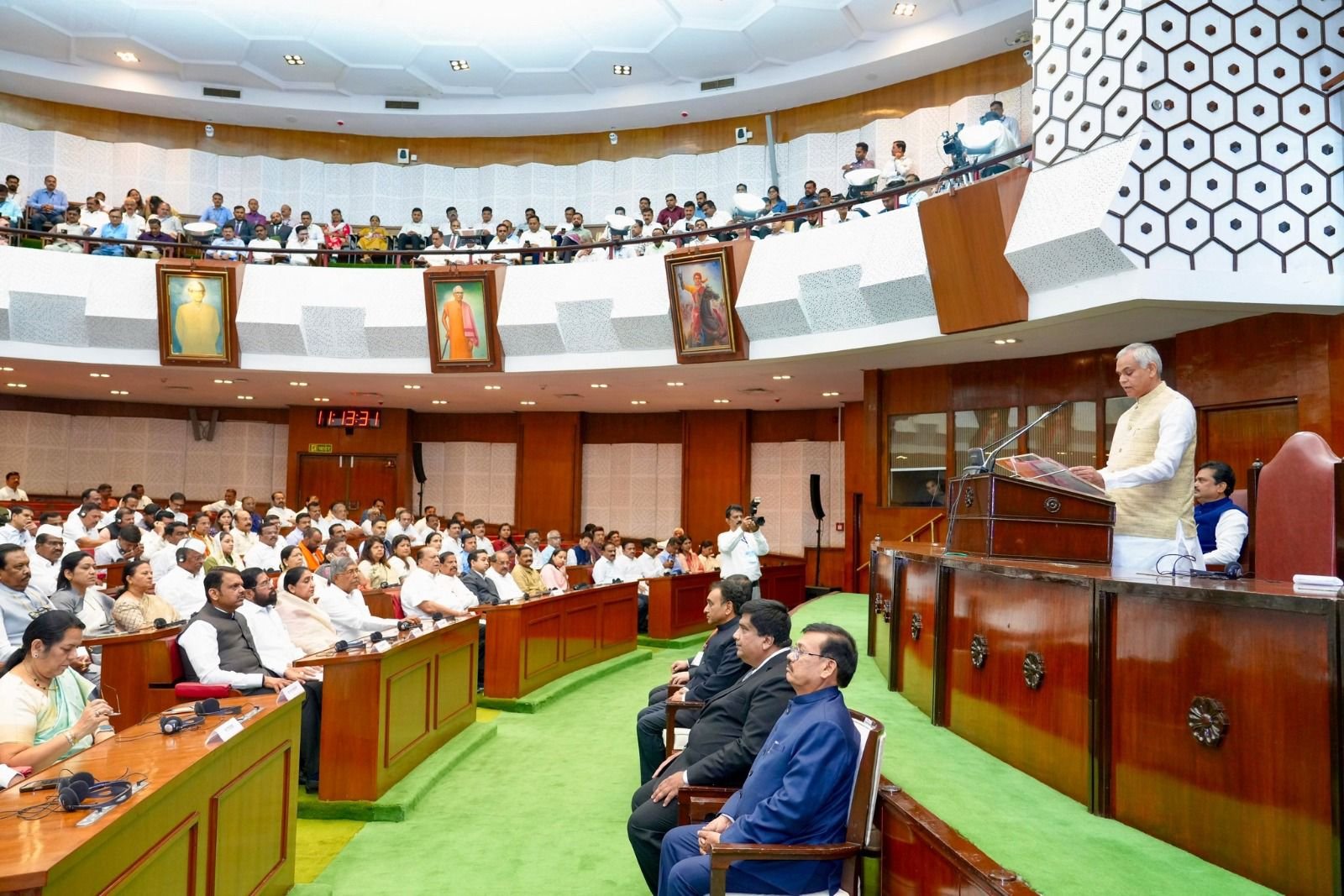
Mumbai: The Governor’s address to the Maharashtra Legislature in 2026 was a sweeping recital of ambition, achievement, and aspiration. Packed with record-breaking investment figures, policy announcements, and welfare claims, the speech projected Maharashtra as India’s undisputed growth engine — confident, reform-oriented, and future-ready.
Yet, behind the cascade of numbers and schemes lies a deeper question: does this address reflect lived realities on the ground, or merely the government’s preferred narrative of progress?
The Economic Pitch: Maharashtra as India’s Growth Capital
The address repeatedly underlined Maharashtra’s economic dominance — contributing over 13.5% to India’s GDP and attracting nearly 39% of total FDI inflows in 2024-25. The Davos MoUs are worth ₹30 lakh crore, and the promise of 40 lakh jobs was highlighted as proof of global investor confidence.
However, MoUs are intent statements, not investments. Maharashtra has witnessed similar announcements in the past, many of which never translated into factories, employment, or local value chains. The address remained silent on conversion ratios, timelines, or district-wise dispersion of this promised growth.
Vision 2047 and Policy Proliferation
The government’s roadmap for “Viksit Maharashtra – 2047” and the goal of a $5 trillion state economy were accompanied by a proliferation of sector-specific policies — from industry and startups to bamboo, gems and jewellery, AVGC-XR, shipbuilding, and Global Capability Centres.
Policy announcements, however, are no longer the challenge. Execution is. The address offered little insight into institutional capacity, monitoring mechanisms, or accountability frameworks that would ensure these policies do not remain PowerPoint exercises.
Infrastructure Push — and the Debt Question
Major road projects, the Samruddhi Expressway extension, port-led development, and the creation of a state-level Infrastructure Investment Trust (Maha InvIT) were presented as structural reforms aimed at reducing debt and unlocking capital.
Yet, the speech did not disclose the current debt burden, projected liabilities, or the long-term fiscal implications of asset monetisation. For a state already under heavy borrowing pressure, transparency on public finance remains conspicuously absent.
Agriculture: Schemes Without Structural Repair
The address listed MSP procurement, free electricity, solar pumps, AI-driven agriculture, natural farming missions, farm roads, and compensation for crop losses.
What it did not address was farmer distress as a systemic crisis. There was no mention of farm incomes, market volatility, rising input costs, or debt stress — only scheme-based relief. Welfare without reform risks becoming a cycle of dependency rather than resilience.
Governance, Ease of Living — and Legal Amnesties
The repeal of pre-Independence laws, the decriminalisation of minor offences, land-use regularisation without a premium, and the removal of non-agricultural permission requirements were framed as ease-of-living reforms.
But these measures also raise concerns about the post-facto legitimisation of past violations and potential misuse, particularly in urban land markets, where opacity has historically benefited the powerful.
Social Sector: Inclusion as Optics or Outcomes?
From women’s self-help groups and tribal empowerment schemes to disability inclusion, student mental health, cancer care, and skill development, the address painted a picture of inclusivity.
Yet, outcome data — drop-out rates, employment retention, quality of healthcare access, and regional disparities — were missing. Announcements without measurable impact indicators remain politically convenient but administratively hollow.
Culture, Heritage and Symbolism
UNESCO recognition of forts, temple development plans, the Kumbh Mela authority, cultural grants, film and tableaux awards, and sporting felicitation formed the emotive core of the speech.
These gestures reinforce identity and pride — but they also conveniently shift focus from unresolved governance challenges.
The Unspoken Gaps
What the address did not talk about is as important as what it did:
- Urban infrastructure stress in Mumbai and Tier-2 cities
- Unemployment quality versus quantity
- Education outcomes beyond policy translation
- Climate vulnerability beyond tree plantation counts
- Transparency in mega projects and tendering processes.
The Governor’s 2026 address presented Maharashtra as a state marching confidently toward prosperity. But for legislators — and citizens — the real task lies in separating headline-friendly ambition from ground-level accountability.
The ongoing budget session will determine whether these promises mature into policy outcomes — or remain a familiar ritual of grand announcements and deferred answers.
Maharashtra does not need more slogans. It needs delivery, disclosure, and democratic scrutiny.