

X: @prashanthamine
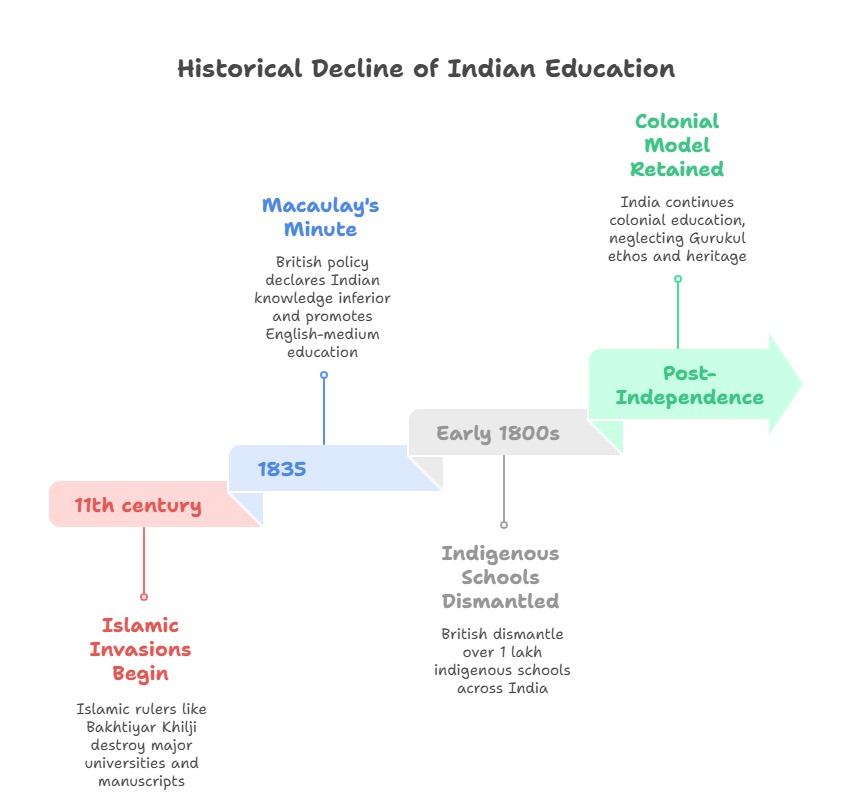
Mumbai: According to Lord Thomas Babington Macaulay native Indians had wasted the best years of life in learning what procures for them neither bread nor respect! For Macaulay of all foreign tongues, the English tongue is the most suited for native Indians. He further claims that there are no books on any subject which deserve to be compared to that with English literature.
The utter contempt for Sanskrit and Arabic language and literature Lord Macaulay had was such that he considered English as more valuable than that of Sanskrit literature. Not only did he demand stopping of the printing of Sanskrit and Arabic language books, he also wanted the Council to stop giving subsidies to the native Indian students learning Sanskrit and Arabic.
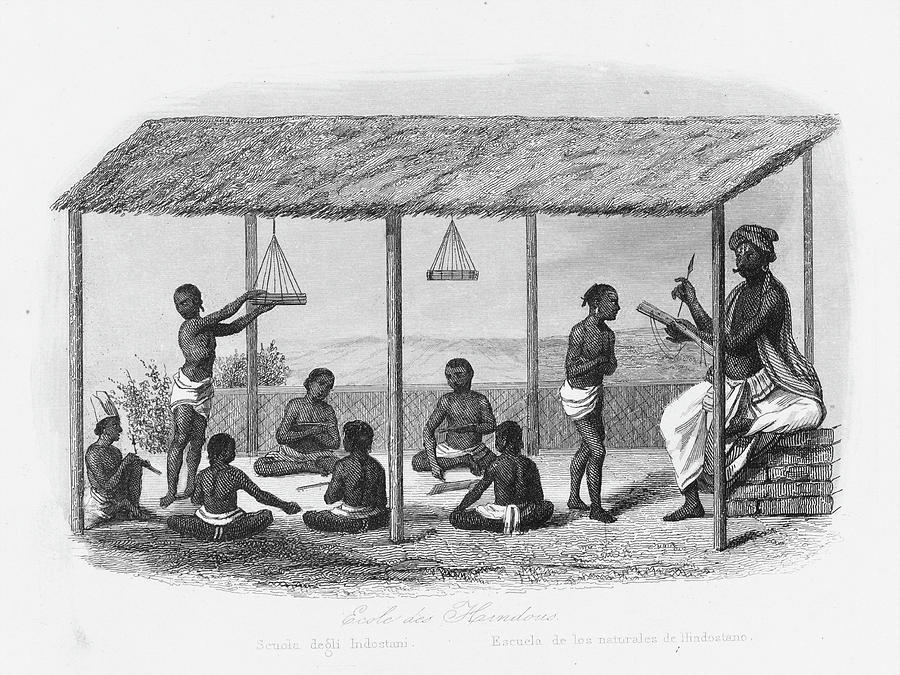
To Lord Macaulay it was even more surprising to find that it was not customary in those times for Indian students to pay for their education in monetary terms. The contempt for the native Indians is reflected when he says, “The people of India do not require to be paid for eating rice when they are hungry, or for wearing woollen cloth in the cold season.”
Minute by Thomas Babington Macaulay (2 February, 1835).
Part 2 – Continued…
It abounds with works of imagination not inferior to the noblest which Greece has bequeathed to us; with models of every species of eloquence; with historical compositions, which, considered merely as narratives, have seldom been surpassed, and which, considered as vehicles of ethical and political instruction, have never been equalled; with just and lively representation of human life and human nature; with the most profound speculations on metaphysics, morals, government, jurisprudence, and trade; with full and correct information respecting every experimental science, which tends to preserve the health, to increase the comfort, or to expand the intellect of man.
Whoever knows that language has ready access to all the vast intellectual wealth, which all the wisest nations of the earth have created and hoarded in the course of ninety generations. It may safely be said, that the literature now extant in that language is of far greater value than all the literature which three hundred years ago was extant in all the languages of the world together.
Nor is this all. In India, English is the language spoken by the ruling class. It is spoken by the higher class of natives at the seats of Government. It is likely to become the language of commerce throughout the seas of the East. It is the language of two great European communities which are rising, the one in the south of Africa, the other in Australasia; communities which are every year becoming more important, and more closely connected with our Indian empire.
Whether we look at the intrinsic value of our literature, or at the particular situation of this country, we shall see the strongest reason to think that, of all foreign tongues, the English tongue is that which would be the most useful to our native subjects.
The question now before us is simply whether, when it is in our power to teach this language, we shall teach languages in which, by universal confession, there are no books on any subject which deserve to be compared to our own; whether, when we can teach European science, we shall teach systems which, by universal confession, whenever they differ from those of Europe, differ for the worse; and whether, when we can patronise sound Philosophy and true History, we shall countenance, at the public expense, medical doctrines, which would disgrace an English farrier,—Astronomy, which would move laughter in girls at an English boarding school,—History, abounding with kings thirty feet high, and reigns thirty thousand years long,—and Geography, made up of seas of treacle and seas of butter.
We are not without experience to guide us. History furnishes several analogous cases, and they all teach the same lesson. There are in modern times, to go no further, two memorable instances of a great impulse given to the mind of a whole society,—of prejudices overthrown,—of knowledge diffused,—of taste purified,—of arts and sciences planted in countries which had recently been ignorant and barbarous.
The first instance to which I refer, is the great revival of letters among the Western nations at the close of the fifteenth and the beginning of the sixteenth century. At that time almost every thing that was worth reading was contained in the writings of the ancient Greeks and Romans. Had our ancestors acted as the Committee of Public Instruction has hitherto acted; had they neglected the language of Cicero and Tacitus; had they confined their attention to the old dialects of our own island; had they printed nothing and taught nothing at the universities but Chronicles in Anglo-Saxon, and Romances in Norman-French, would England have been what she now is?
What the Greek and Latin were to the contemporaries of More and Ascham, our tongue is to the people of India. The literature of England is now more valuable than that of classical antiquity. I doubt whether the Sanscrit literature be as valuable as that of our Saxon and Norman progenitors. In some departments,—in History, for example, I am certain that it is much less so.
Another instance may be said to be still before our eyes. Within the last hundred and twenty years, a nation which had previously been in a state as barbarous as that in which our ancestors were before the crusades, has gradually emerged from the ignorance in which it was sunk, and has taken its place among civilized communities.—I speak of Russia.
There is now in that country a large educated class, abounding with persons fit to serve the state in the highest functions, and in no wise inferior to the most accomplished men who adorn the best circles of Paris and London. There is reason to hope that this vast empire, which in the time of our grandfathers was probably behind the Punjab, may, in the time of our grandchildren, be pressing close on France and Britain in the career of improvement.
And how was this change effected? Not by flattering national prejudices: not by feeding the mind of the young Muscovite with the old woman’s stories which his rude fathers had believed: not by filling his head with lying legends about St. Nicholas: not by encouraging him to study the great question, whether the world was or was not created on the 13th of September: not by calling him ‘a learned native’ when he has mastered all these points of knowledge: but by teaching him those foreign languages in which the greatest mass of information had been laid up, and thus putting all that information within his reach. The languages of Western Europe civilized Russia, I cannot doubt that they will do for the Hindoo what they have done for the Tartar.
And what are the arguments against that course which seems to be alike recommended by theory and by experience? It is said that we ought to secure the co-operation of the native public, and that we can do this only by teaching Sanscrit and Arabic.
I can by no means admit that when a nation of high intellectual attainments undertakes to superintend the education of a nation comparatively ignorant, the learners are absolutely to prescribe the course which is to be taken by their teachers. It is not necessary, however, to say any thing on this subject.
For it is proved by unanswerable evidence that we are not at present securing the co-operation of the natives. It would be bad enough to consult their intellectual taste at the expense of their intellectual health. But we are consulting neither,—we are withholding from them the learning for which they are craving, we are forcing on them the mock-learning which they nauseate.
This is proved by the fact that we are forced to pay our Arabic and Sanscrit students, while those who learn English are willing to pay us. All the declamations in the world about the love and reverence of the natives for their sacred dialects will never, in the mind of any impartial person, outweigh the undisputed fact, that we cannot find, in all our vast empire, a single student who will let us teach him those dialects unless we will pay him.
I have now before me the accounts of the Madrassa for one month,—the month of December, 1833. The Arabic students appear to have been seventy-seven in number. All receive stipends from the public. The whole amount paid to them is above 500 rupees a month. On the other side of the account stands the following item: Deduct amount realized from the out-students of English for the months of May, June and July last, 103 rupees.
I have been told that it is merely from want of local experience that I am surprised at this phenomena, and that it is not the fashion for students in India to study at their own charges. This only confirms me in my opinion. Nothing is more certain than that it never can in any part of the world be necessary to pay men for doing what they think pleasant and profitable. India is no exception to this rule.
The people of India do not require to be paid for eating rice when they are hungry, or for wearing woollen cloth in the cold season. To come nearer to the case before us, the children who learn their letters and a little elementary Arithmetic from the village school-master are not paid by him. He is paid for teaching them.
Why then is it necessary to pay people to learn Sanscrit and Arabic? Evidently because it is universally felt that the Sanscrit and Arabic are languages, the knowledge of which does not compensate for the trouble of acquiring them. On all such subjects the state of the market is the decisive test.
Other evidence is not wanting, if other evidence were required. A petition was presented last year to the Committee by several ex-students of the Sanscrit College. The petitioners stated that they had studied in the college ten or twelve years; that they had made themselves acquainted with Hindoo literature and science; that they had received certificates of proficiency: and what is the fruit of all this!
‘Notwithstanding such testimonials’ they say, ‘we have but little prospect of bettering our condition without the kind assistance of your Honorable Committee, the indifference with which we are generally looked upon by our countrymen leaving no hope of encouragement and assistance from them.’
They therefore beg that they may be recommended to the Governor General for places under the Government, not places of high dignity or emolument, but such as may just enable them to exist. ‘We want means’ they say, ‘for a decent living, and for our progressive improvement, which, however, we cannot obtain without the assistance of Government, by whom we have been educated and maintained from childhood.’
They conclude by representing, very pathetically, that they are sure that it was never the intention of Government, after behaving so liberally to them during their education, to abandon them to destitution and neglect.
I have been used to see petitions to Government for compensation. All these petitions, even the most unreasonable of them, proceeded on the supposition that some loss had been sustained—that some wrong had been inflicted. These are surely the first petitioners who ever demanded compensation for having been educated gratis,—for having been supported by the public during twelve years, and then sent forth into the world well furnished with literature and science.
They represent their education as an injury which gives them a claim on the Government for redress, as an injury for which the stipends paid to them during the infliction were a very inadequate compensation. And I doubt not that they are in the right. They have wasted the best years of life in learning what procures for them neither bread nor respect.
Surely we might, with advantage, have saved the cost of making these persons useless and miserable; surely, men may be brought up to be burdens to the public and objects of contempt to their neighbours at a somewhat smaller charge to the state. But such is our policy. We do not even stand neuter in the contest between truth and falsehood.
We are not content to leave the natives to the influence of their own hereditary prejudices. To the natural difficulties which obstruct the progress of sound science in the East, we add fresh difficulties of our own making. Bounties and premiums, such as ought not to be given even for the propagation of truth, we lavish on false taste and false philosophy.
To be continued…


