

Uttam Kumar, Soumitra Chatterjee and Prosenjit
Kolkata : Because of the growing emphasis on the patriarchal bias in the representation of women in Indian cinema, comparatively little attention has been paid to questions of masculinity on screen. Was the extraordinary popularity of Uttam Kumar linked, in some subtle way, to the kind of masculinity he represented? There may be no definitive answer because masculinity is not an ideological monolith born simply out of patriarchy. It changes from time to time, place to place and culture to culture, shaped by socially internalised ideas of how men ought to look, behave, speak and relate to parents, wives, sisters, brothers and children. In the case of a matinee idol, these expectations also shape the public image.
Uttam Kumar, whose birth centenary was marked on September 3, redefined masculinity in Bengali popular cinema by merging it with the Bengali bhadralok identity that found favour with men and women alike. The term bhadralok broadly refers to the educated, culturally refined Bengali “gentlefolk” who emerged as a distinctive social group in colonial Bengal, historically associated largely with the upper-caste, English-educated middle classes. In his paper, Bengalis, But Not Men? Bhadralok Masculinities in Adda (SubVersions, Vol. 1, Issue 1, 2013), Romit Chowdhury argues that masculinities, “far from being natural, are made in particular socio-cultural contexts.” His paper examines the ways in which ideas of bhadralok masculinity are produced through a particular form of sociality in contemporary Kolkata.
Uttam Kumar’s screen image fitted comfortably into this cultural world, yet he also transformed it. His appeal to women stretched across generations. The late Anjana Bhowmik, his heroine in several films, once said that during the making of a film he could make his leading lady believe he had fallen in love with her. Only after the shooting ended, she recalled, would she realise that he had created that emotional intimacy to make the performance convincing. Uttam himself understood that screen romance could not be performed in exactly the same way opposite every heroine. “I pattern and redefine my romantic scenes according to the star I am cast against,” he once said. With Suchitra Sen, there was “a kind of healthy competition”; with Arundhati Devi, he brought an intellectual restraint to his performance; and with Sabitri Chatterjee, he remained constantly alert because she could, in his words, “beat me hollow in a scene without my knowing it.” That adaptability was central to his masculine appeal. He could be romantic without making physical aggression the basis of masculinity, emotionally expressive without appearing weak, and urbane without seeming remote. In this sense, he moved beyond the screen charisma of his predecessor, Pramathesh Barua, the legendary Devdas of New Theatres, whose own screen persona had exercised a very different fascination over Bengali audiences.
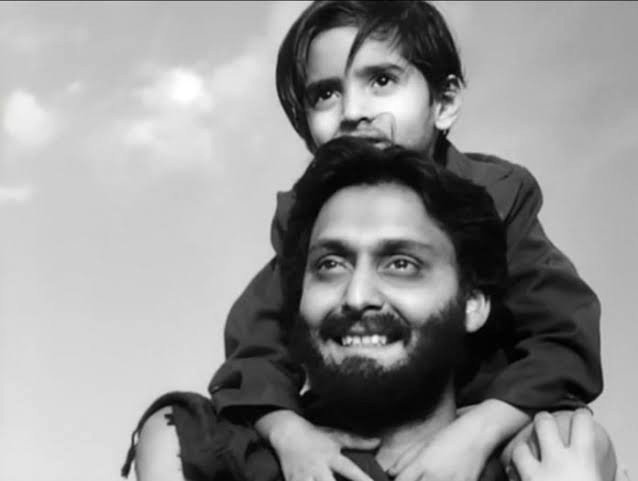
Then came Soumitra Chatterjee, bringing another shade of masculinity to Bengali cinema. His screen persona belonged more recognisably to post-Independence India, though it was born in Satyajit Ray’s Apur Sansar, set in an earlier Bengal. He still represented the Bengali bhadralok, but in a more understated, intellectual and self-conscious form. Soumitra was arguably the more conventionally handsome man, but he and Uttam complemented rather than cancelled each other out. Their very different charisma allowed both to command enormous loyalty. Soumitra’s education and cultural refinement came through naturally on screen, whether he played the romantic Amal in Ray’s Charulata or a thief in Tarun Majumdar’s Sansar Seemantey.
Soumitra once admitted that as a young man, conditioned by the best of international cinema, he had looked at Bengali cinema with a degree of snobbery. Pather Panchali changed that. He later recalled that Ray’s film altered his understanding of Indian cinema and, eventually, “changed the course of my life.” His diction, too, became part of his screen identity. The bhadralok mode of speech came naturally to Soumitra, while Uttam Kumar is said to have worked hard on his pronunciation and enunciation, reading aloud regularly to improve his diction.
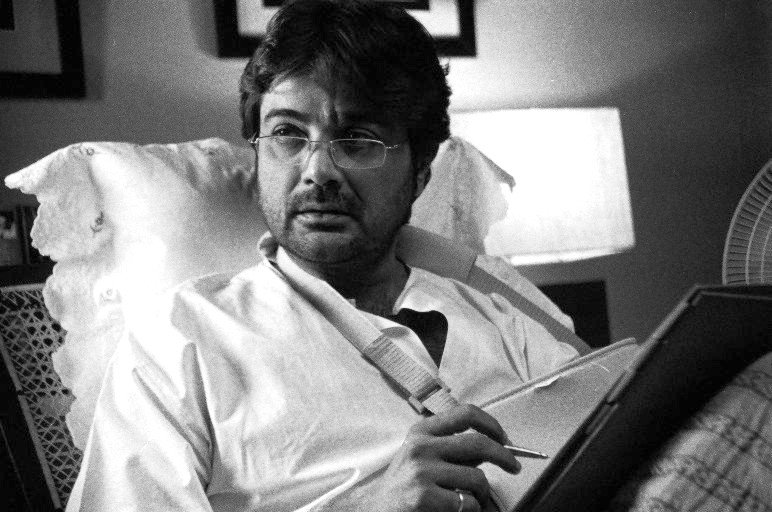
The screen bhadralok had therefore travelled from Barua’s Devdas to Uttam Kumar’s Harano Sur and Soumitra Chatterjee’s Saat Pake Bandha. Their most enduring masculine images did not depend on six-pack abs, rippling muscles, abusive language or physical spectacle. They could spout poetry, sing songs, suffer, hesitate and love. Their appeal rested as much on temperament, language and cultural identification as on physical presence. Their successor in another era was Prosenjit Chatterjee, whose screen career stretches back to childhood and whose career as a leading man spans more than four decades. His great strength has been adaptability. He moved from the conventional romantic, singing-dancing commercial hero to mature and complex roles in films such as Gumnaami, Jyeshthoputro, Mayurakshi and Moner Manush. He has worked with newer generations of filmmakers while retaining the charisma of a star.
By Prosenjit’s era, the popular definition of masculinity in Indian cinema had shifted considerably towards the male body — sculpted muscles, six-pack abs and physical spectacle often taking precedence over the older ideal of the cultured gentleman. Prosenjit does not fit naturally into that muscular template. His longevity rests instead on discipline, reinvention, screen presence and the ability to age without surrendering stardom. The Bengali bhadralok hero has changed with every generation. Barua, Uttam Kumar, Soumitra Chatterjee and Prosenjit did not embody the same masculinity, yet each reflected the cultural expectations of his time. Uttam Kumar’s centenary offers an occasion not merely to celebrate a beloved star, but to ask what kind of man Bengali cinema once admired — and what has changed since.


