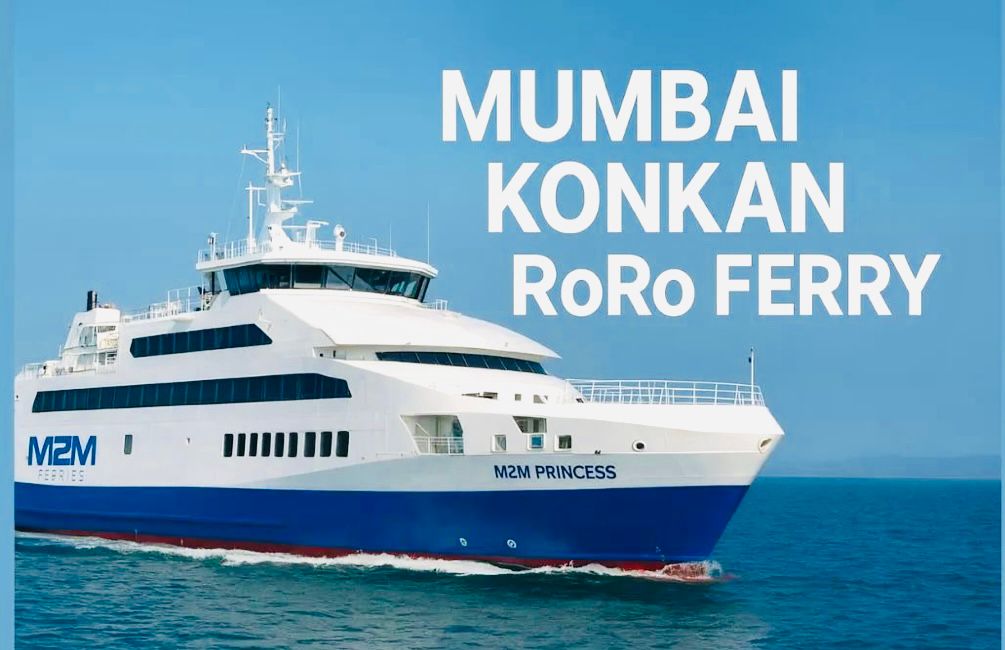
Mumbai / Sindhudurg: Maharashtra’s Konkan coast witnessed a historic moment as the much-awaited Mumbai–Konkan roll-on/roll-off (Ro-Ro) ferry finally touched down at Vijaydurg in Sindhudurg district. The arrival marks the beginning of South East Asia’s largest coastal connectivity initiative and the promise of a complete economic and social transformation for the region.
The ferry, which commenced operations from Mumbai’s Bhaucha Dhakka on September 1, slashes travel time dramatically—what was once a gruelling 10–12-hour road journey can now be completed in just five to six hours by sea. For Ratnagiri, Jaigad and Alibaug, the transit shrinks further to three to four hours. For lakhs of Konkan residents, this is more than a convenience—it is the beginning of genuine integration with Mumbai’s economic, cultural, and social ecosystem.
A Vessel That Symbolises Change
The service is being operated by a modern vessel, capable of carrying over 650 passengers along with dozens of cars and two-wheelers. More than the statistics, however, the symbolism matters. After decades of stalled plans and bureaucratic clearances, the sight of the Ro-Ro ferry docking at Sindhudurg for the first time has been hailed by locals as the revival of a maritime legacy.
“Vijaydurg was once a fort and port town of immense importance. Today’s ferry is a new chapter in that history,” said a resident who had gathered to watch the docking.
Ripple Effects on Real Estate and Tourism
The economic implications are equally significant. Coastal towns like Alibaug, Ratnagiri, and Sindhudurg are expected to witness a sharp surge in real estate activity, with developers and investors already eyeing projects that can now bank on shorter travel times from Mumbai. Industry veterans like Niranjan Hiranandani have publicly underlined how such connectivity unlocks lifestyle and investment opportunities. His recently launched Hiranandani Sands at Alibaug is being positioned as a model for sustainable coastal living, banking on this new wave of accessibility.
Hospitality, homestays, and allied services are also poised for growth. For Konkan’s younger generation, this translates into new opportunities for entrepreneurship, employment, and skill development. Small traders and farmers in the belt too expect easier access to Mumbai’s vast consumer market.
Political and Policy Dimensions
For the Maharashtra government, the Ro-Ro ferry is more than an infrastructure project—it is a statement. Coming at a time when coastal road projects and Mumbai’s port redevelopment are under scrutiny, the ferry provides a tangible success story. Transport Minister Nitesh Rane has already pitched this as the “fastest Ro-Ro service in South Asia,” while officials confirmed that all 147 mandatory clearances were secured after months of rigorous inspection.
Crucially, the move also holds electoral weight in the Konkan, a region where infrastructure neglect has long been a political issue. By delivering a visible, people-centric project ahead of festival season, the ruling coalition hopes to consolidate its standing.
Looking Beyond Sindhudurg
Today’s docking is only the beginning. Plans are already underway to expand Ro-Ro services further south towards Goa and northwards to Shrivardhan and Mandwa. If realised, this would stitch together the entire western coastline into a seamless travel corridor, boosting not just tourism but also reducing pressure on the state’s overburdened road and rail networks.
The Road Ahead
Challenges remain—questions over the affordability of fares, environmental sustainability, and ensuring that the economic benefits reach local communities rather than just big developers. Yet, for the Konkan region, which has historically seen its youth migrate to Mumbai for opportunities, the ferry represents a chance to reverse the flow—bringing investment, jobs, and visibility back home.
For now, the arrival of the Mumbai–Konkan Ro-Ro ferry at Sindhudurg is being hailed as a landmark. A coastal belt once seen as distant and disconnected has, quite literally, been brought closer to Mumbai. The test in the months ahead will be to ensure that this connectivity delivers on its promise—not just for investors and tourists, but for the people of Konkan whose lives stand to be transformed.