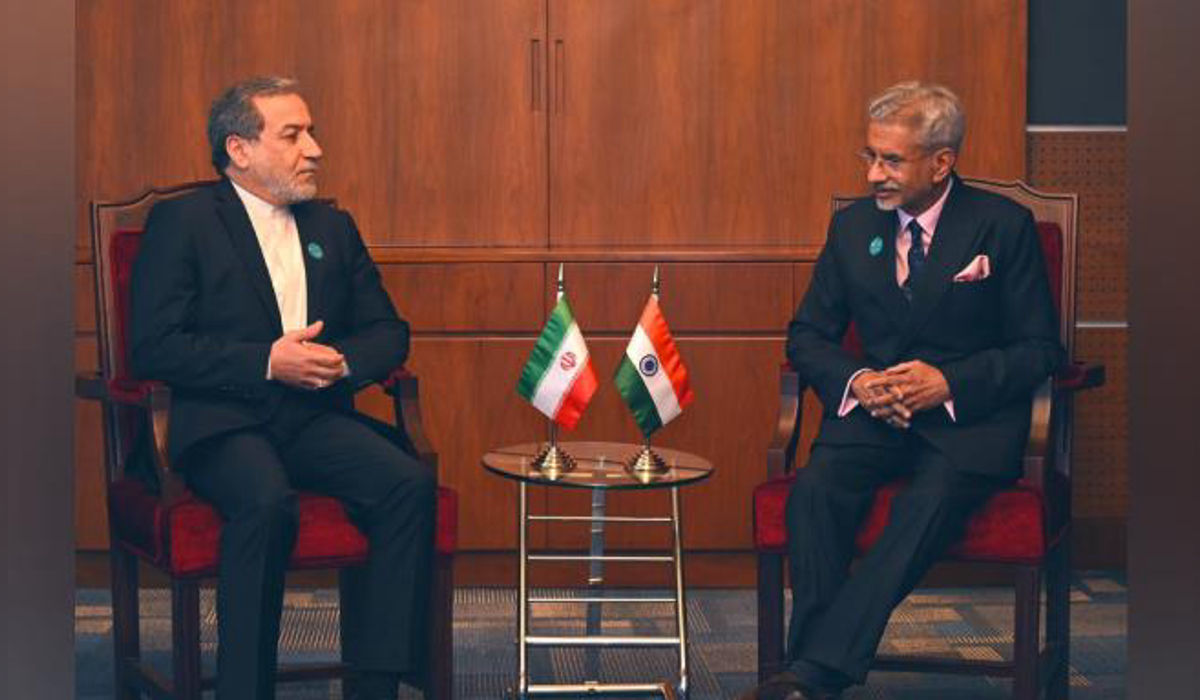
India’s diplomatic balancing act in the Middle East came into sharp focus after S. Jaishankar held a crucial phone conversation with Iran’s Foreign Minister Seyed Abbas Araghchi amid the deepening West Asia crisis.
The discussion, described by Jaishankar as a “detailed conversation on recent developments,” comes at a time when tensions in the region have escalated dramatically following military strikes and shifting political leadership in Iran.
According to diplomatic sources, the two ministers agreed to remain in contact as the situation evolves, signalling that both India and Iran are keen to maintain communication despite rising geopolitical uncertainty.
The call marks the third conversation between the two leaders since the West Asia crisis began, highlighting the importance both countries attach to keeping their relationship stable during turbulent times.
What Triggered the Latest India–Iran Conversation?
The phone call came shortly after a dramatic political shift in Tehran.
Iran recently appointed Mojtaba Khamenei as the country’s new Supreme Leader following the death of his father, Ali Khamenei, who was reportedly killed during a joint military strike conducted by the United States and Israel.
The development has intensified tensions across West Asia and raised fears of wider regional instability.
During the phone call, Tehran strongly condemned the actions of Washington and Tel Aviv, but noticeably avoided any criticism of New Delhi.
Why Did Iran Avoid Criticising India?
Iran’s official statement after the conversation emphasised that the Indian foreign minister stressed the importance of continuing and strengthening bilateral relations.
Tehran also acknowledged India’s call for ongoing consultations to help restore stability in the region.
Analysts believe this restrained tone reflects Iran’s strategic calculation.
Despite India’s close ties with the United States and Israel, Iran sees New Delhi as an important partner that could play a moderating role on the global stage.
How Important Is India for Iran’s Strategy?
Several factors explain why Iran wants to preserve its ties with India even during periods of geopolitical tension.
Energy Trade:
India is one of the world’s largest energy markets. Before sanctions forced New Delhi to halt purchases in 2019, Iran supplied nearly 10 percent of India’s crude oil imports.
Regional Connectivity:
Projects like the development of Chabahar Port remain crucial for Iran’s economic strategy, especially as Western sanctions continue to limit its global trade.
Diplomatic Influence:
Iran believes India’s voice in international forums such as the United Nations could help encourage dialogue rather than confrontation.
What Did India Signal Through This Phone Call?
India’s approach remains consistent: engagement without taking sides.
New Delhi has repeatedly emphasised de-escalation, dialogue and regional stability in response to the growing crisis in West Asia.
The country also formally expressed condolences after the death of Ali Khamenei, reflecting a diplomatic approach focused on respectful engagement even during tense geopolitical moments.
Why Is Stability in West Asia So Important for India?
The stakes for India are extremely high.
Nearly 10 million Indians live and work in Gulf countries, meaning any escalation in the region could affect diaspora safety, remittances and trade flows.
Additionally, a large share of India’s energy imports passes through the Strait of Hormuz, one of the world’s most critical oil shipping routes.
Maintaining stable relations with Iran therefore remains essential for India’s long-term economic and strategic interests.
A Relationship Built Over Decades
India and Iran share a long diplomatic history.
Formal ties began soon after India’s independence with a friendship treaty signed in 1950. Later milestones included the Tehran Declaration 2001 and the New Delhi Declaration 2003, both aimed at expanding cooperation in trade, connectivity and energy.
High-level visits also strengthened relations, including Narendra Modi’s visit to Iran in 2016 and the trip by former Iranian president Hassan Rouhani to India in 2018.
More recently, Araghchi visited New Delhi in May 2025 to co-chair the India-Iran Joint Commission Meeting.
Can India Act as a Stabilising Voice?
As tensions continue to rise across West Asia, diplomatic observers believe India may attempt to position itself as a bridge between competing geopolitical blocs.
By maintaining dialogue with all sides — including Iran, the United States and Israel — New Delhi hopes to protect its strategic interests while promoting regional stability.
For Tehran, keeping India engaged offers economic opportunities and diplomatic leverage.
For India, the relationship ensures continued access to key trade routes, energy supplies and connectivity corridors linking South Asia to Central Asia.