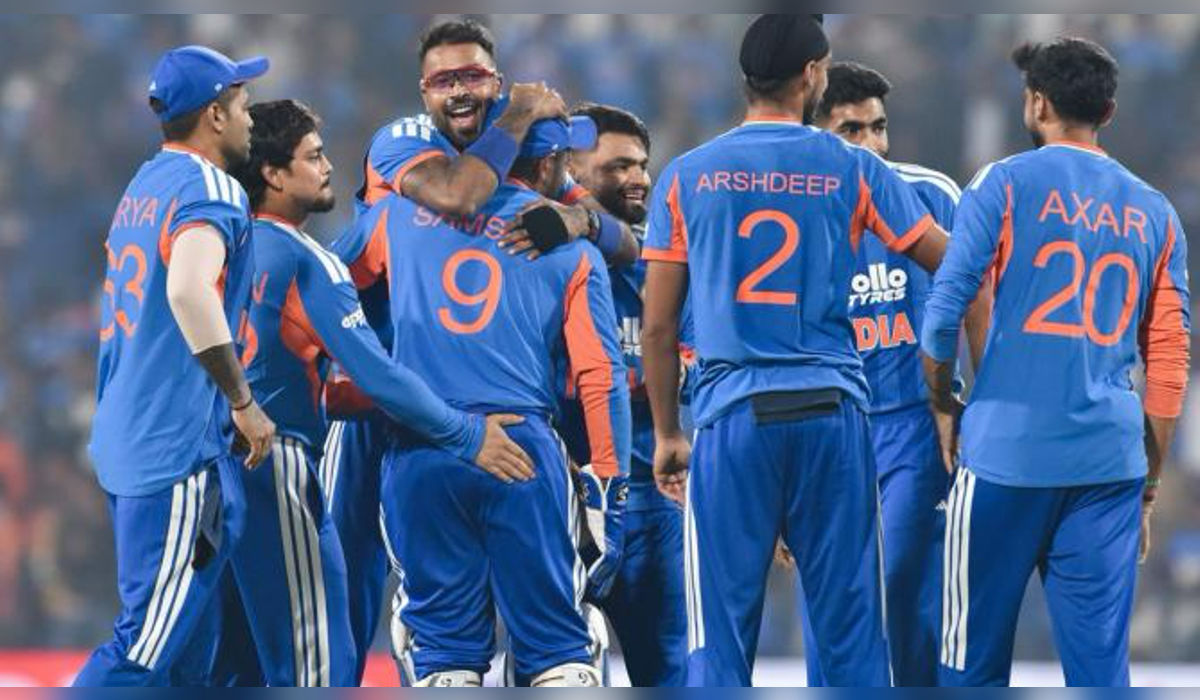
The India national cricket team is ready for a huge Super Eight match against the South Africa national cricket team at the Narendra Modi Stadium, which was built for big events with a lot of noise.
Ahmedabad: The tournament is getting more serious and intense as the Super Eight stage begins. This Group 1 opener promises to be one of the most captivating tactical encounters. India comes in with rhythm and authority. Their campaign so far has been marked by disciplined bowling and calculated aggression with the bat. South Africa, just as confident, has athletic fielders, a lot of pace, and a middle order that can change the game in just a few overs.
Pakistan plays New Zealand, and Sri Lanka plays England in Group 2, which will quickly reveal who the early favourites are. Group 1 also includes Zimbabwe and the West Indies. The result could change not only the standings but also the confidence, strategy, and qualification equations.
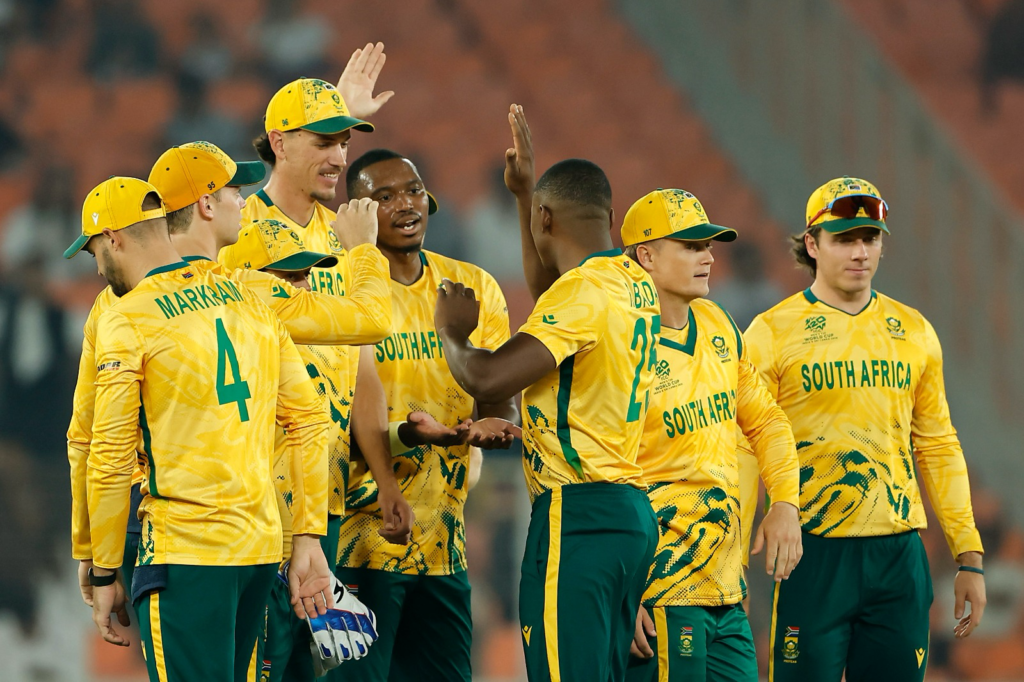
Cricket in the Super Eight is tough. Margins get smaller. One over can change the course of a campaign. Every calculation of the net run rate starts to mean something. In this case, an early statement victory becomes crucial.
India’s challenge is to turn promise into dominance by using home conditions without giving in to expectations. For South Africa, it’s about breaking old habits and making a name for itself on the world stage.
This match is not just something that happens on the schedule. Ahmedabad is prepared to witness a clash of ambition, personality, and belief.
In what a lot of people are calling a “group of deaths”, there isn’t much room for error. India, the defending champion and favourite to win the tournament, is the top team in a group full of strong teams. Zimbabwe has already shocked Australia in the league phase, showing that they can beat anyone on any given day. The West Indies have the unpredictability and power that are hallmarks of modern T20 cricket. And South Africa is still one of the most dangerous teams in world cricket because they are clinical, balanced, and tactically smart.
But India doesn’t seem to care.
“Pressure will always be there,” said captain Suryakumar Yadav the day before the game. “If there isn’t any pressure, this game isn’t fun.”
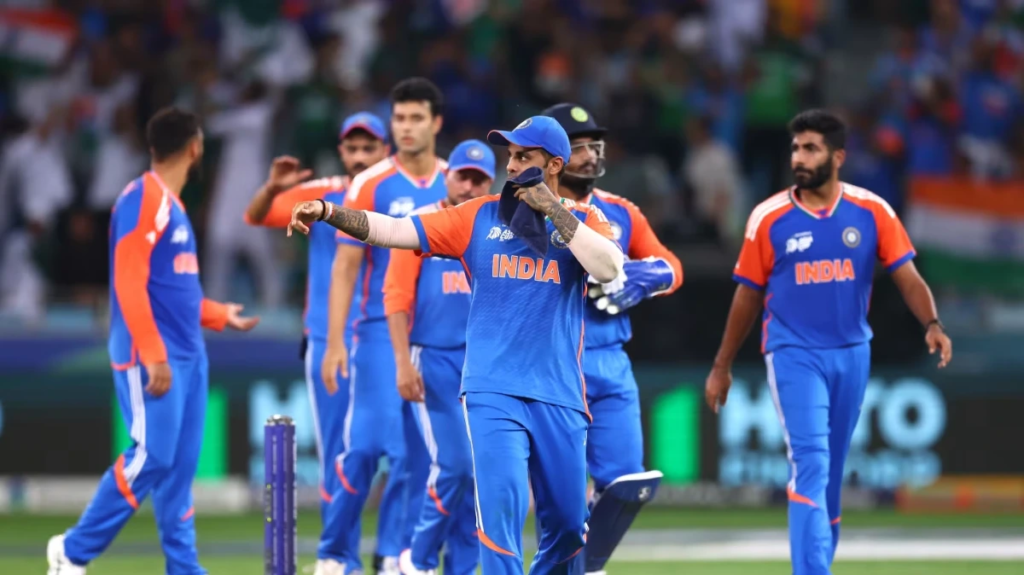
While South Africa has played most of its matches in Ahmedabad, Suryakumar dismissed the suggestion that familiarity could tilt the contest.
“Almost all our players have played several games here. In franchise cricket, players adapt to different venues all the time. I see it as a 50-50 contest. Whoever plays better cricket tomorrow will win.”
India believe the breaks between matches have allowed them to prepare specifically for each opponent — a luxury not always available in a compressed tournament schedule.
India’s consistency since the 2024 World Cup has prompted questions about whether a dip is statistically “due.” Suryakumar brushed aside talk of the law of averages.
“What’s happened before is history. On a given day, you focus only on that match. Yes, when you keep winning, people talk about averages catching up. But we try to stay in the present and focus on our strengths.”
That clarity of thought will be crucial against a South African side that thrives on exploiting phases of stagnation.
“There was temptation to chase,” Suryakumar admitted. “But during practice we saw heavy dew. We thought it was better to bat first, absorb that pressure, and let our bowlers experience bowling under dew. Preparation is about covering all scenarios.”
The captain’s faith in his bowling unit remains unwavering. “In T20 cricket, even 170-180 can be defended if you trust your bowlers. I take a lot of pride in our attack. They can save and win games for us.” That confidence could prove decisive if Sunday’s match turns into a tactical arm-wrestle rather than a run-fest.
India’s only visible concern is Abhishek Sharma’s form, the world’s No. 1, who has endured a lean run in this tournament. Despite three consecutive ducks and five in his last seven innings, the team management remains relaxed. Bowling coach Morne Morkel dismissed any suggestion of internal debate. “There’s absolutely no discussion in the group about that. He’s a world-class player. It’s just a matter of getting a start.”
The numbers reveal a dip—0, 0, 0, 30, 0, 68, 0—but India is backing their explosive opener to rediscover rhythm when it matters most.
If there is an area demanding improvement, it is catching. India have dropped nine catches in the tournament, including four in a high-profile clash against Pakistan.
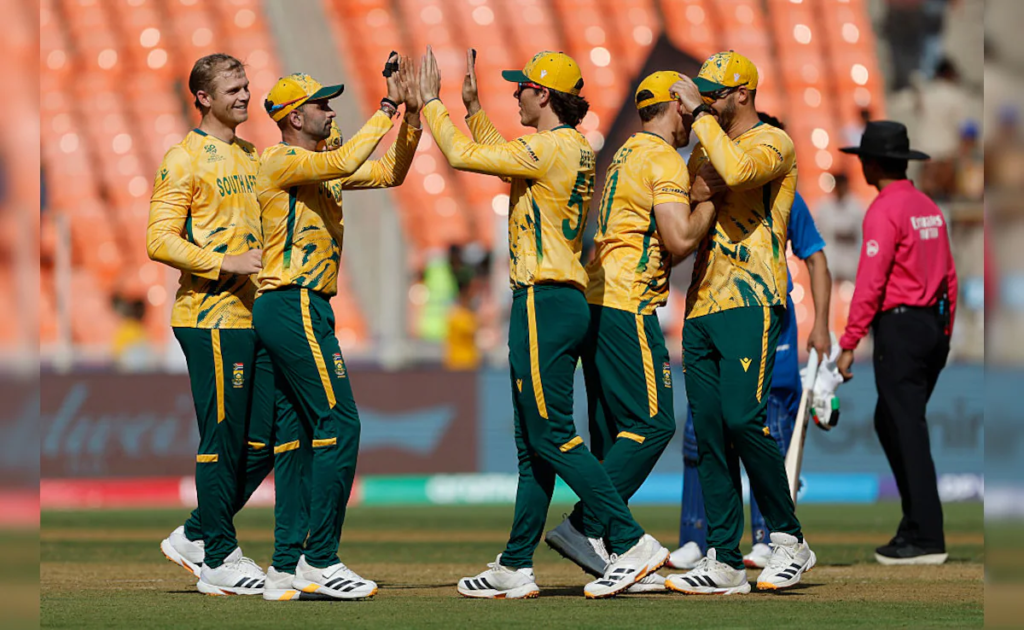
Morkel acknowledged the concern. “Catching will play a big part in the business end. No catch is easy, but we’re putting in the work. Those 50-50 chances can change the momentum of a game.” In knockout-style cricket, margins are microscopic.
Two days before the game, training sessions hinted at a tactical subplot: off-spin against India’s mostly left-handed top order. Aiden Markram, the captain of South Africa, spent a lot of time working on his offspin, focusing on rough patches and practicing angles that could be hard for India’s left-handers to hit. In the meantime, India’s nets were full of offspinners testing Tilak Varma, Ishan Kishan, and Rinku Singh.
India’s middle overs haven’t been as strong as they were before the tournament. During overs 7–10, their scoring rate has been lower than that of other Super Eight teams. South Africa is statistically ahead in that phase.
Morkel said, “Plan A is to put pressure on them and use spin. But you also need to understand the situation. Once we establish a rhythm, we can exert significant pressure on the bowling units.’’
India has still been able to score competitive totals, often around 190 or 200, and they still can finish strong. The challenging part will be getting through that lull after the power play without losing momentum.
Suryakumar downplayed the importance of the toss. “It’s a little too much. You can defend if you bat well at first, even with dew. We have faith in our bowling. India’s approach is based on that belief, not on circumstances or coin flips.
Also Read: India vs Pakistan – Inside the Boundary, Outside the Diplomacy
The bigger picture
Sunday’s match is more than just a Super Eight fixture. It sets the tone in a tough group where every point counts. South Africa brings order and clear strategy. India gives us depth, flexibility, and a fearless plan based on intention.
Ahmedabad is ready for the show. The margins will be fine. The stress is huge.
And India, by their words, is ready to roar.