X: @anjanasasi
Colombo: Muhammad Bilal, a Pakistan supporter, left the R. Premadasa Stadium in Colombo with tears in his eyes after the game.
“I don’t know what’s going on with our players,” he said, trying to keep his voice steady. “Politics and cricket are getting mixed up. We can only imagine how much pressure they are under. Why should two nations act this way, even in sports? Overall, it’s just a game. I can’t stand to see how heavy their load is.’’
He wasn’t the only one who was sad. Many of Pakistan’s fans felt very strongly about their team’s loss in the T20 World Cup match in Sri Lanka. What happened to them was more than just a loss; it was a collapse. The carefully built hopes over weeks crumbled in a few relentless overs. The much-discussed Indian team decisively defeated the Pakistani team.
There are cricket games, and then there are India–Pakistan games. The latter come with a lot of history, expectations, and political overtones long before the first ball is bowled. India showed once again that they can handle pressure by beating Pakistan by 61 runs in a strong performance. They played clearly and confidently, as they were the defending champions and tournament favourites, and they made it to the Super 8s.
India set a target of 176 runs, which is the most they have ever scored against Pakistan in T20 cricket. While the target itself was impressive, the manner in which they achieved it was even more noteworthy. After losing an early wicket, India gradually rebuilt the innings before accelerating with purpose. During the middle overs, India exerted a tight, planned pressure on the ball, leaving minimal space for recovery. India’s win improved their World Cup record against Pakistan to 8–1, which strengthened the psychological edge that has long been present in this rivalry.

Shoaib Malik, the former captain of the Pakistan cricket team, said on TV after the match that Pakistani players have lost confidence over the years. He said, “Only a system can give you confidence,” which means that players can’t play freely or without pressure in the current environment.
A Pakistani journalist in the media box said the same thing. He talked about how the chairman of the Pakistan Cricket Board, Mohsin Naqvi, came to see the team the night before the game and wondered if these kinds of visits make people more anxious instead of less. “Our politicians never let sports grow,” he said, shaking with rage. It wasn’t just analysis; it was pain.
The night in Colombo showed something more human than just tactics and scorecards: the weight of expectation, the sting of defeat, and the emotional toll of a rivalry that often goes beyond the boundary rope.
Politics and the India–Pakistan Cricket Equation
Few sports rivalries in the world are as intense as the one between India and Pakistan. Every time the two sides meet, there is a lot of history, memory, and national pride between them. So when India reportedly turned down a handshake before the match again, the conversation quickly moved on from cricket to whether or not sports need symbolic acts of civility and how much politics should affect what happens on the pitch.
Cricket between these neighbours rarely happens on its own. Bilateral series have been put on hold, neutral venues are now the norm, and even tournament matches are seen through a diplomatic lens. Government approvals, safety issues, and public opinion always influence the sporting calendar. In that world, the game is part of a bigger political picture, whether the players like it or not.
But a handshake is not a simple formality. It separates competition from respect, and everyone knows that once the contest starts, it stays in the spirit of the sport. In a game with so much emotion, even the smallest gestures mean a lot. When they aren’t there, people start to guess. Was it a policy? A protest without words? Was it a personal choice? Sometimes what doesn’t happen says more than what does.
Some people say that national teams can’t separate themselves from state positions, especially when things are tough. Some people say that sportsmanship is even more important when there are tensions. A handshake may not bring people together politically, but it does remind everyone who is watching that athletes are not enemies in a fight.

The more important question is whether cricket should be as cold as diplomacy or be a rare place where people are polite. When politics interfere with play, players consider more than just strategy or skill. But when gestures of respect last, even after a loss, they reassure fans that rivalry doesn’t have to turn into hostility.
That night, ICC chairman Jai Shah and PCB chairman Mohsin Naqvi were in the stands. Naqvi quietly left the scene as Pakistan lost its first few wickets. It was a small moment, but it seemed to show how much more this match meant than just cricket. You could see the stress in the dugout and in the way players and coaches moved their bodies.
Also Read: A World Cup Starts with a Warning and a Rescue at Wankhede
For the athletes in the middle, this much weight can be too much to handle. They are expected to perform in front of millions of people while carrying the weight of history and politics. And sometimes, that weight is just too much for any team to handle.
At first, Pakistan denied the match with India. They said they only want to play if Bangladesh also gets a chance. Ahead of the ICC Men’s T20 World Cup India–Pakistan clash, Mohsin Naqvi, the chairman of the Pakistan Cricket Board, reportedly set out three key conditions to the International Cricket Council before the board would reconsider its boycott threat and agree to play. The three things are:
- Higher Revenue Share/Compensation: Pakistan wanted an increased share of ICC revenue and financial assurances, including for Bangladesh Cricket. The board took action following Bangladesh’s expulsion from the tournament.
- Resumption of India–Pakistan Bilateral Cricket: Naqvi called on the ICC to help restore bilateral cricket ties between India and Pakistan, which have been dormant for years due to political tensions.
- Sporting Etiquette Agreement: The PCB also pushed for a formal handshake or sporting etiquette protocol, prompted by controversies such as India’s refusal to shake hands after an Asia Cup match.
These conditions were part of negotiations that led to Pakistan eventually playing the match in Colombo. But during the toss, Indian skipper Surya Kumar Yadav denied the handshake again. From there, it’s clear that BCCI is not going to approve what Naqvi asked for.
Ultimately, governance decisions may always reflect diplomatic realities. However, the spirit of the game hinges on mutual acknowledgement within the boundaries. A handshake may last only seconds, yet in an India-Pakistan match, it can symbolise something larger: that sport, at its best, remains a contest of talent and temperament—not a theatre for unresolved politics.
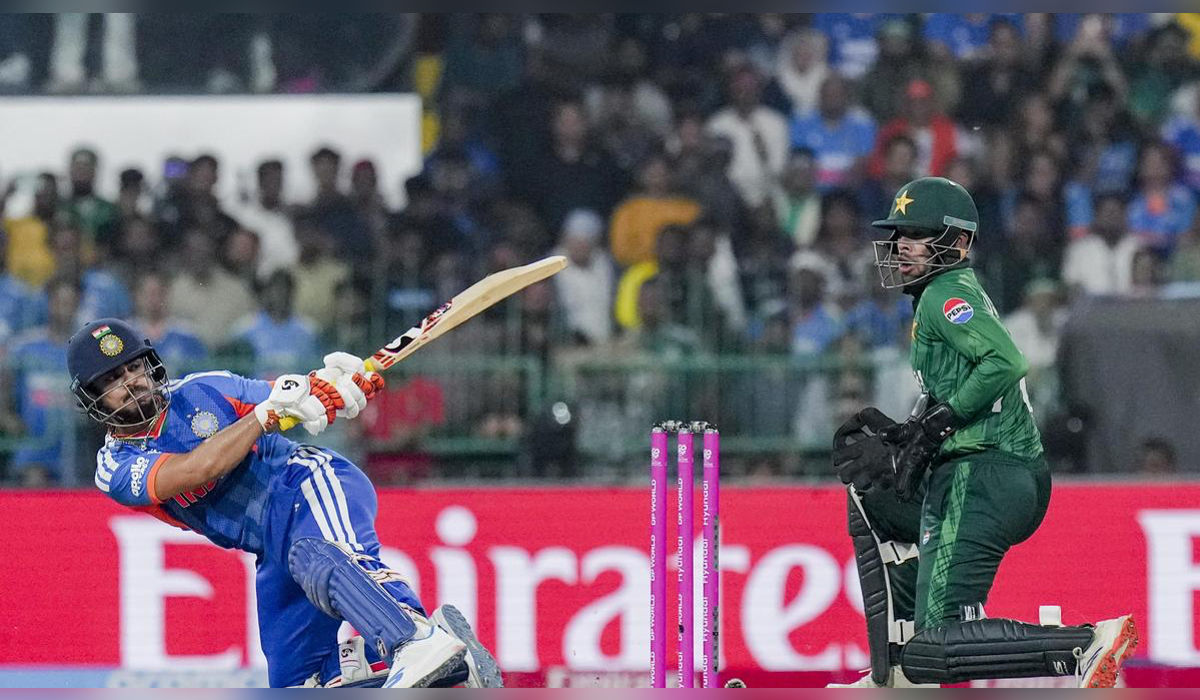
India beat Pakistan by 61 runs in Colombo
Politics will follow its course. However, for the players, the game remains centred around bats and balls. Indian cricketers, like any athletes, would prefer to avoid carrying the weight of diplomatic tension onto the field. There is always pressure in an India–Pakistan match. Expectation, noise, scrutiny, but for Pakistan, this felt closer to a do-or-die moment.
As India’s skipper, Surya Kumar Yadav, said at the press conference, it is still just a match in a long tournament. In the T20 format, everything can change in an instant — a mistimed shot, a brilliant catch, a single over. India walked in to face an opponent, not an enemy. Pakistan captain Salman, too, had spoken before the game about wanting to play like the old days — to forget the past and focus on the present. But sometimes the atmosphere around a contest becomes so heavy that playing freely becomes the hardest task of all.
On Sunday night, the R. Premadasa Stadium slowly turned into a stage for India’s authority. There was an early jolt when Abhishek Sharma departed for a four-ball duck, caught comfortably by Shaheen Afridi after a sharp delivery from Salman Ali Agha. For a brief moment, Pakistan sensed opportunity.
But the mood shifted quickly. Ishan Kishan took charge with fearless intent, striking 77 off just 40 deliveries. His innings was not reckless; it was measured aggression. Boundaries threaded through gaps, lofted shots timed with clarity. Suryakumar Yadav added 32 with calm assurance, while Tilak Varma’s 25 ensured the tempo never dipped in the middle overs. Saim Ayub fought back with key wickets—removing Ishan Kishan, Tilak Verma, and Hardik Pandya—and contributed on the field with sharp catches. Yet India kept rebuilding. Even with wickets falling at intervals, they closed at 175 for 7 in 20 overs, a total that carried both weight and belief.
Pakistan’s chase began under immediate strain. Hardik Pandya’s opening over was a wicket-maiden, Shahibzada Farhan edging to Rinku Singh. Jasprit Bumrah followed with another early breakthrough. At 13 to 3, Pakistan was already fighting the scoreboard and the occasion.
Usman Khan tried to steady the innings with a determined 44 off 34 balls, refusing to retreat. But the squeeze never loosened. Axar Patel, Varun Chakravarthy and Kuldeep Yadav struck at crucial moments, while the pace attack maintained relentless discipline. The required rate climbed, hope thinned, and Pakistan were eventually bowled out for 114 in 18 overs. The 61-run margin reflected not just superiority but control.
Also Read: When the Anthem Falls Silent: Absence, Expectation, and What Players Carry Beyond the Field
Ishan Kishan was named Player of the Match, his innings setting the tone for a victory that propelled India into the Super 8 of the ICC Men’s T20 World Cup. With momentum building, India moves forward with confidence drawn from balance – aggressive batting paired with disciplined bowling.
Elsewhere, the Super 8 picture is taking shape. The West Indies were the first to qualify after a dominant win over Nepal in Group C. India followed from Group A. South Africa sealed their place from Group D, while England secured qualification with a 24-run victory over Italy. Co-hosts Sri Lanka advanced from Group B, leaving Australia under pressure.
Still, three Super 8 spots remain open. Pakistan, Zimbabwe, the USA and New Zealand remain in contention, each carrying their own hopes and calculations for the final stretch.
As the tournament moves toward its decisive phase, the margins will grow thinner and the stakes higher. T20 cricket allows little room for error; one over, one catch, or one brave decision can rewrite the narrative. What lies ahead promises intensity, unpredictability and moments that will define the World Cup long after the final ball is bowled.