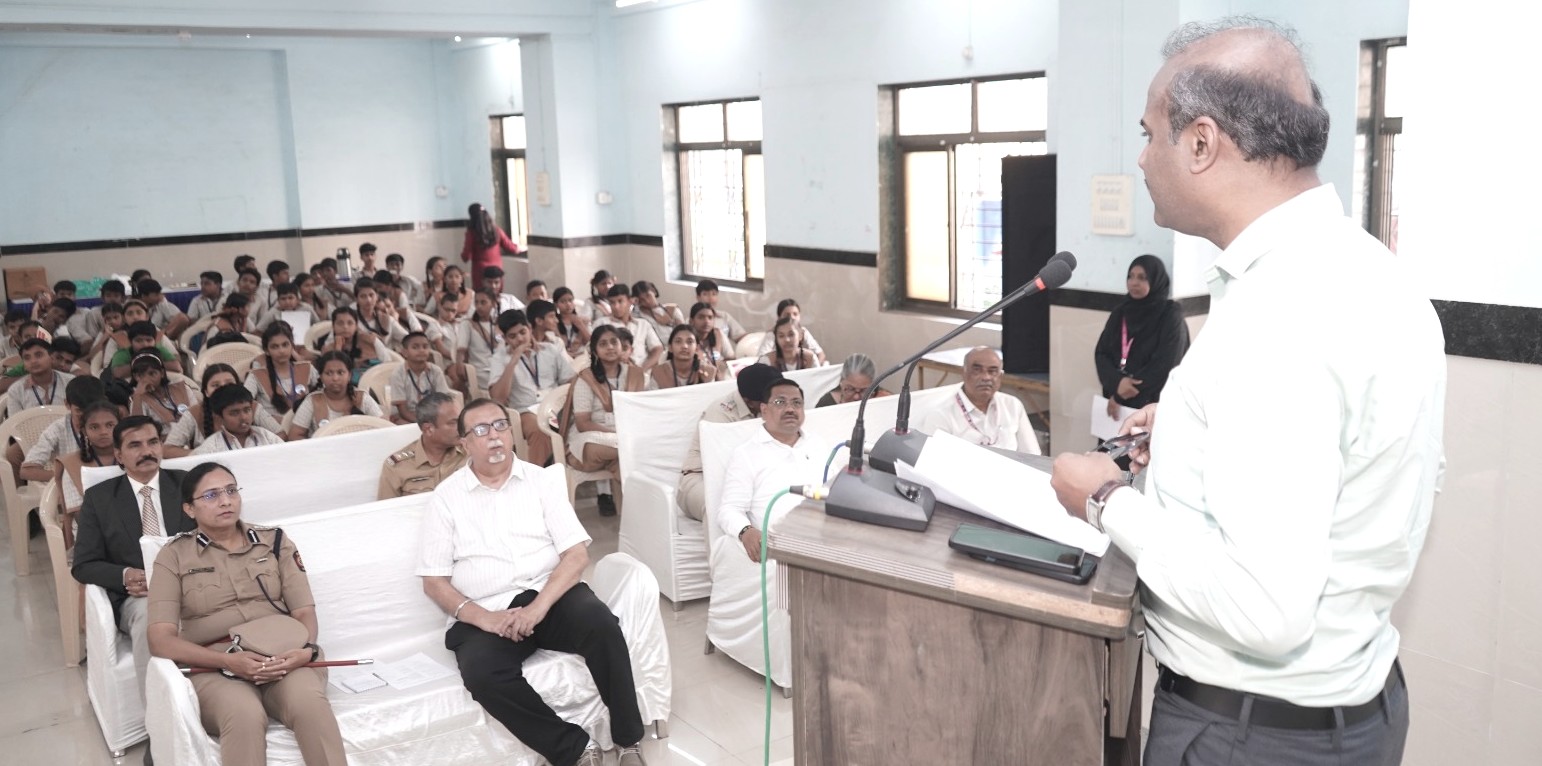
Mumbai: In a first-of-its-kind initiative aimed at improving road safety around schools, UNICEF and the Centre for Advocacy and Research (CACR) implemented a year-long pilot project titled “Strengthening Road Safety for Children and Adolescents” across municipal schools in the K-East Ward of Brihanmumbai Municipal Corporation in Andheri.
The project, conducted in collaboration with the BMC Education Department, focused on creating awareness about road safety among students, teachers, and local communities while helping schools identify infrastructure gaps that could endanger children.
Implemented between February 2025 and March 2026, the initiative reached 2,609 students from 34 municipal schools. A total of 94 student peer leaders were trained as “Road Safety Messengers,” while 57 teachers were trained as “Road Safety Ambassadors.”
The project was based on a framework developed by the Centre for Environmental Education and emphasised a participatory approach involving schools, parents, civic authorities, and local communities.
Safety Audit Reveals Infrastructure Gaps
A School Road Safety Audit conducted in August 2025 across the 34 schools in K-East Ward revealed significant infrastructure deficiencies that could pose risks to students.
The audit found that many schools lacked clearly visible “School Zone” signboards, speed-limit indicators and warning signage. In several locations, footpaths were missing, damaged or encroached upon, forcing students and pedestrians to walk on busy roads.
Heavy traffic congestion during school opening and closing hours, along with random parking near school gates and the absence of designated drop-off zones, further increased safety risks for children.
Teachers and Students Lead Awareness Drive
To address these challenges, the initiative trained teachers and students as road safety advocates.
So far, 94 student peer leaders have conducted around 180 awareness sessions, reaching more than 2,600 students, while School Safety Committees have been established in all 34 participating schools, conducting 144 meetings to identify and address local safety concerns.
“Creating safer school environments and improving traffic management during arrival and dispersal hours are essential. The audit shows that basic road safety infrastructure around many schools in K-East Ward is inadequate and requires coordinated action from the traffic police and local authorities,” said Gorakhnath Bhavri, Administrative Officer (Schools), K-East Ward.
Echoing similar views, Surekha Marathe, Headmistress of Marol Police Camp Marathi Municipal School, said teachers and student leaders are now acting as long-term road safety advocates in their communities.
Visible Improvements in School Zones
One example cited in the report is Nityanand Municipal School, located near the Western Express Highway. Following the audit and intervention, speed breakers, zebra crossings and school-zone signboards were installed, and separate entry and exit gates were created to manage student movement safely.
The project also involved community participation, with 965 community members sensitised on road safety, including auto unions and delivery partners such as Zepto and Blinkit.
Organisers say the programme will now aim to expand the model to more schools across Mumbai, with periodic monitoring and joint review meetings involving civic authorities and traffic police to ensure sustained improvements in school-zone safety.