

Chennai: On a surface that rewarded patience more than power, Chennai Super Kings produced a performance that was built on understanding the game rather than forcing it. They won by eight wickets against the Mumbai Indians at the M. A. Chidambaram Stadium. Discipline with the ball and a chase that rarely drifted out of control defined Chennai’s night at the M. A. Chidambaram Stadium.
Chennai’s bowlers dictated the tempo
Mumbai never quite settled into their innings. Mukesh Choudhary set the tone early by opening with a tight over and conceding just a single. The pressure told immediately. Anshul Kamboj struck in the next over, drawing a tentative push from the opener with a back of a length delivery that seamed away, taking the outside edge through to the keeper.
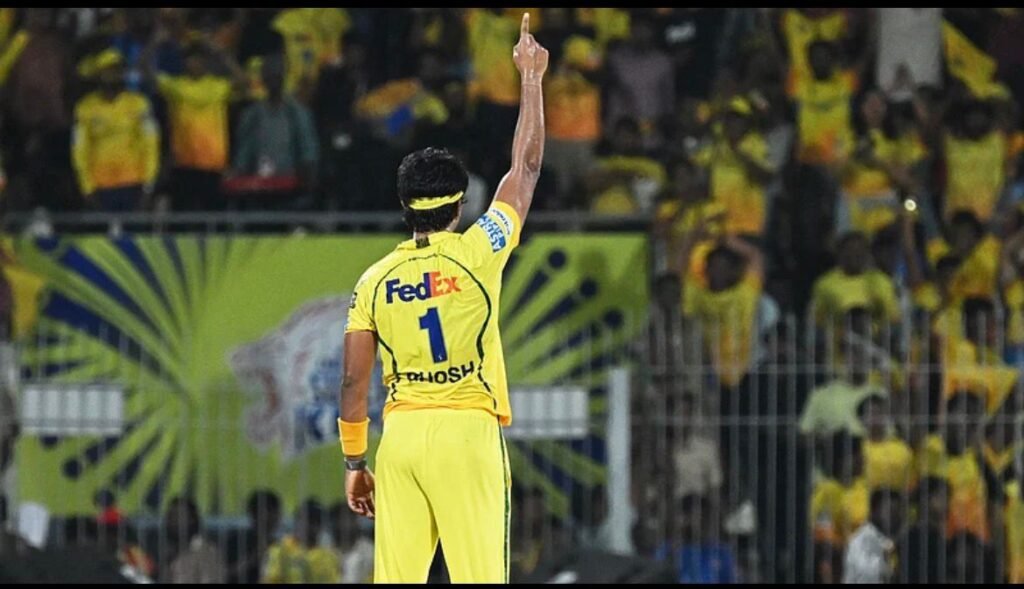
A sharp moment followed in the field. Debutant Ramakrishna Ghosh sprinted across from deep point to complete a full-length diving catch, removing Will Jacks, who had miscued a cut shot off a short, rising delivery.
At 20/2 inside three overs, Mumbai were forced to rebuild. Ryan Rickelton responded with intent, pulling anything short over mid-wicket and lofting fuller balls straight down the ground. A brief surge, highlighted by an over that yielded boundaries off both pace and spin, took Mumbai past 50 in the powerplay.
But Chennai’s response was measured. Noor Ahmad broke the momentum with a classic spinner’s dismissal. A tossed up delivery outside off that invited Rickelton into a big shot, only for him to mistime a slog sweep, the ball spiralling high for a simple catch in the deep.
The middle overs became a squeeze. Ramakrishna Ghosh struck again, removing Suryakumar Yadav with a fuller delivery angled across, inducing a lofted drive that found long off. Noor returned to dismiss Tilak Varma, who misread the length and top-edged a sweep against a quicker, flatter ball.
At 120/3 after 15 overs, Mumbai still had a base. Naman Dhir kept them afloat with a composed half century, using the crease well, nudging singles, pulling short balls, and driving through cover when given width. But his dismissal, caught at deep mid wicket after mistiming a slower ball, triggered a late stumble.
Kamboj returned at the death to deliver a decisive spell. Hardik Pandya fell attempting to force a yorker-length delivery, only to find the toe end and offer a catch in the infield. Another batter was bowled by a skidding full delivery that sneaked under the bat. Mumbai closed on 159/7, respectable but short of imposing.
A chase built on control
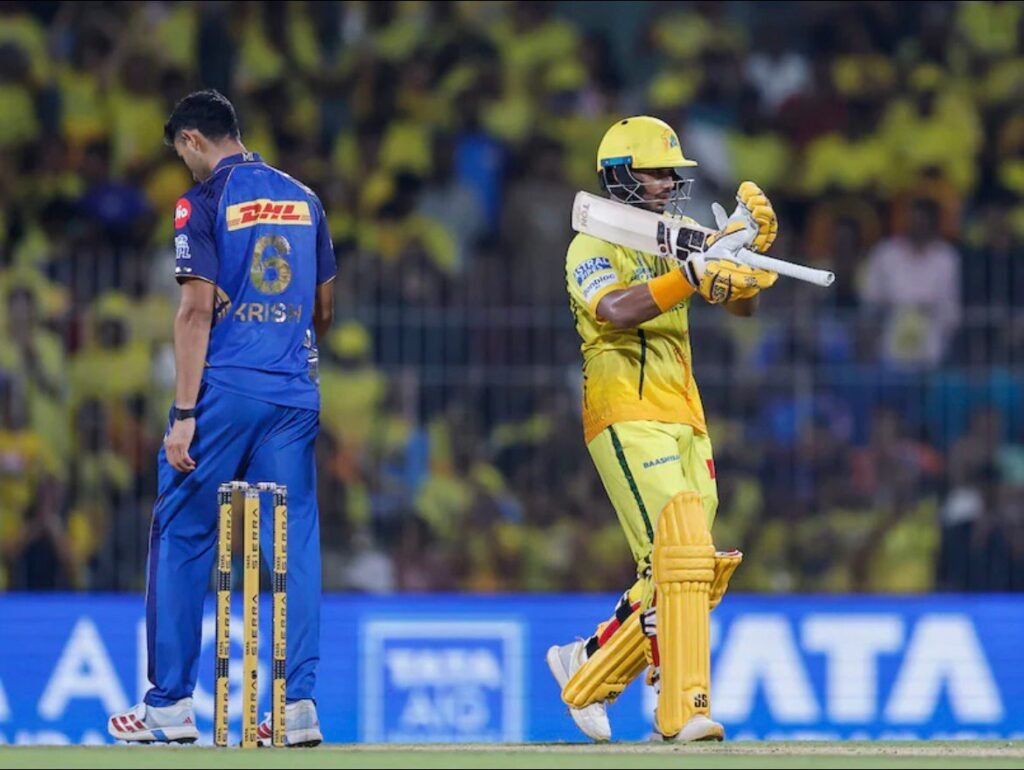
The target demanded composure, and Chennai began accordingly. Chennai began cautiously, aware of the conditions but confident in their approach. The early breakthrough came when Jasprit Bumrah dismissed Sanju Samson, caught behind after a rising delivery forced an edge. Urvil Patel followed soon after, bowled while attempting an ambitious stroke, leaving Chennai momentarily under pressure.
That, however, was as far as Mumbai progressed. Ruturaj Gaikwad ensured that didn’t last long. His innings was less about dominance and more about direction. He used the pace of the ball rather than fighting it. Late cuts behind point, soft hands into gaps, and the occasional pick-up shot over square leg when the bowlers erred in length. His fifty came through placement as much as timing, a reflection of how well he read the conditions.
At the other end, Karthik Sharma grew into the innings. Initially cautious, he began to open up once set—driving through extra cover, lofting over mid-on, and pulling confidently against shorter balls. The partnership gradually took the game away from Mumbai, not through bursts, but through steady accumulation.
The finish
By the time both batters moved into their fifties, the equation had narrowed to formality. Boundaries began to come more freely as Mumbai searched for breakthroughs that never arrived.
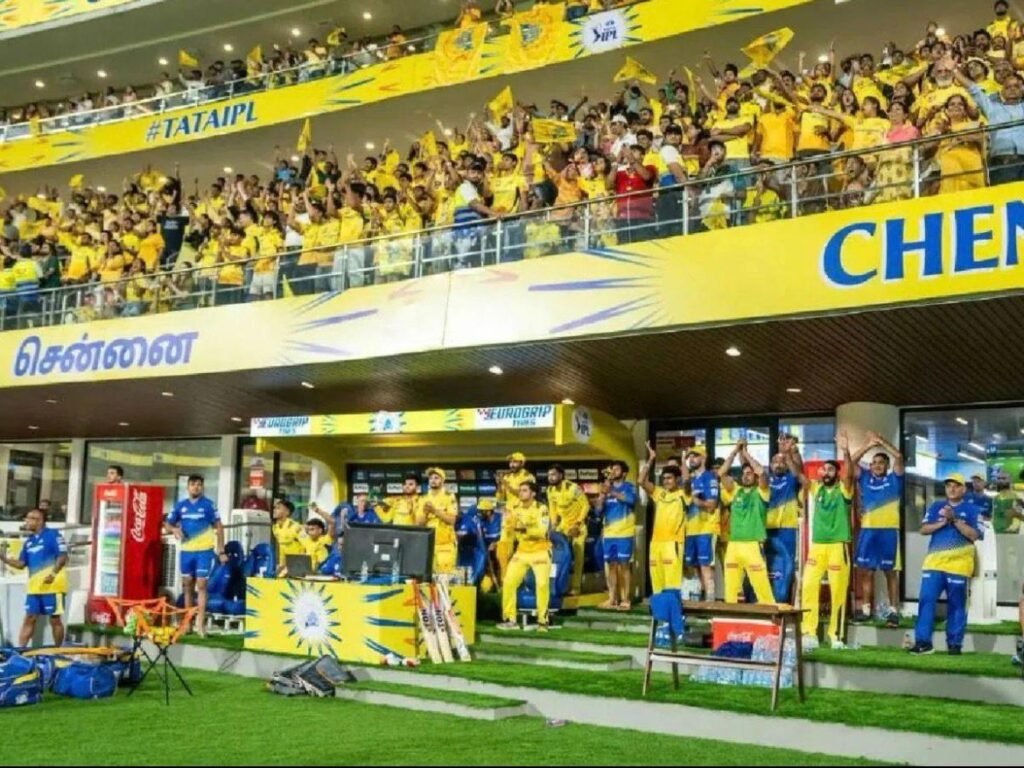
Fittingly, the chase ended with a touch of flair—Gaikwad finishing with a controlled reverse hit behind point, a shot that summed up Chennai’s evening—confident, calculated, and completely in control.
The difference
The margin, eight wickets, told only part of the story. The real difference lay in phases. Chennai controlled more of them, and when they didn’t, they recovered quickly.
Mumbai, once again, had moments but not momentum.
For Chennai, the victory was not just a win. It was a reminder of how they operate best—through patience, clarity, and an understanding of when to press and when to hold back.


