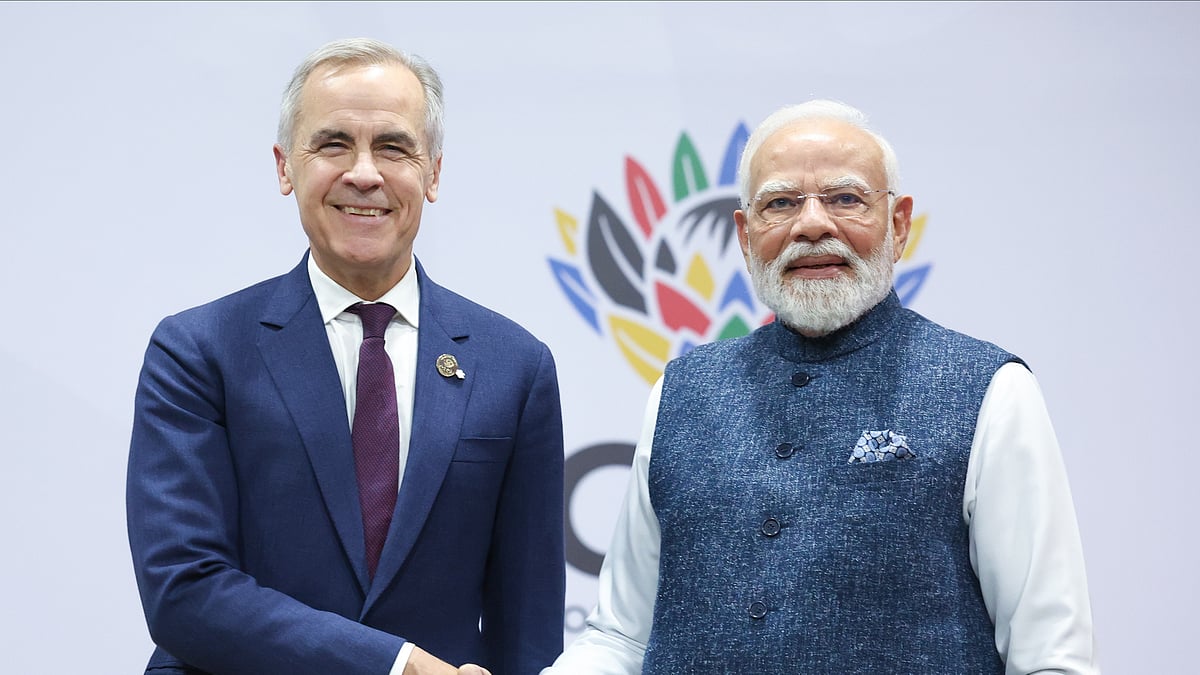
In a notable change of tone, the Canadian federal government has indicated that it currently sees no active connection between India and violent criminal activity in Canada. The remarks were made by senior officials during a background media briefing ahead of Prime Minister Mark Carney’s upcoming visit to India.
According to officials, security agencies from both countries have maintained close diplomatic engagement, including discussions at the level of national security advisers. “We are confident that such activities are not continuing,” a senior government source said, suggesting that earlier concerns about foreign interference are no longer viewed as ongoing threats.
Diplomatic Reset Before High-Level Meetings
Carney is scheduled to travel to Mumbai and New Delhi as part of a broader Indo-Pacific outreach. During the visit, he is expected to hold talks with Prime Minister Narendra Modi. Canadian officials describe the trip as part of a more pragmatic foreign policy approach aimed at strengthening trade, investment, and security cooperation with India.
Bilateral ties had sharply deteriorated following the June 2023 killing of Hardeep Singh Nijjar in British Columbia. At the time, then Prime Minister Justin Trudeau stated that there was credible intelligence linking Indian agents to the incident—an allegation New Delhi strongly rejected. The dispute resulted in diplomatic expulsions and months of strained engagement.
Security Cooperation Back in Focus
Despite earlier tensions, officials now say improved communication channels have helped stabilise the situation. The Royal Canadian Mounted Police (RCMP) had previously cited concerns about foreign-linked criminal activities, but current briefings suggest authorities do not see active interference tied to India at present.
India’s High Commissioner to Ottawa, Dinesh Patnaik, welcomed the renewed engagement, stating that disagreements should be resolved through dialogue rather than prolonged confrontation. He highlighted recent meetings between National Security Adviser Ajit Doval and his Canadian counterpart Nathalie Drouin as an important step toward rebuilding trust.
According to Patnaik, both sides are working on enhanced cooperation in tackling transnational crime, cyber threats, extremism, and illegal trafficking. Plans to appoint liaison officers to streamline law enforcement coordination have also been discussed.
Mixed Reactions at Home
While Ottawa appears keen on resetting relations, sections of Canada’s Sikh community remain skeptical. Activists have expressed concern over the government’s renewed outreach to India, arguing that security and accountability issues must remain a priority.
Former national security adviser Jody Thomas noted that intelligence findings and legal processes operate differently in Canada compared to other jurisdictions, and said security considerations remain under review.
A Test for Future Relations
The upcoming visit is widely seen as a test of whether both nations can move past a turbulent chapter while balancing domestic sensitivities. Canadian officials maintain that stronger trade and people-to-people ties can coexist with ongoing law enforcement cooperation.
As Ottawa recalibrates its global partnerships and seeks to diversify economic ties beyond traditional allies, India’s growing strategic and economic importance appears central to that shift.