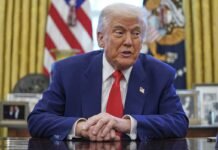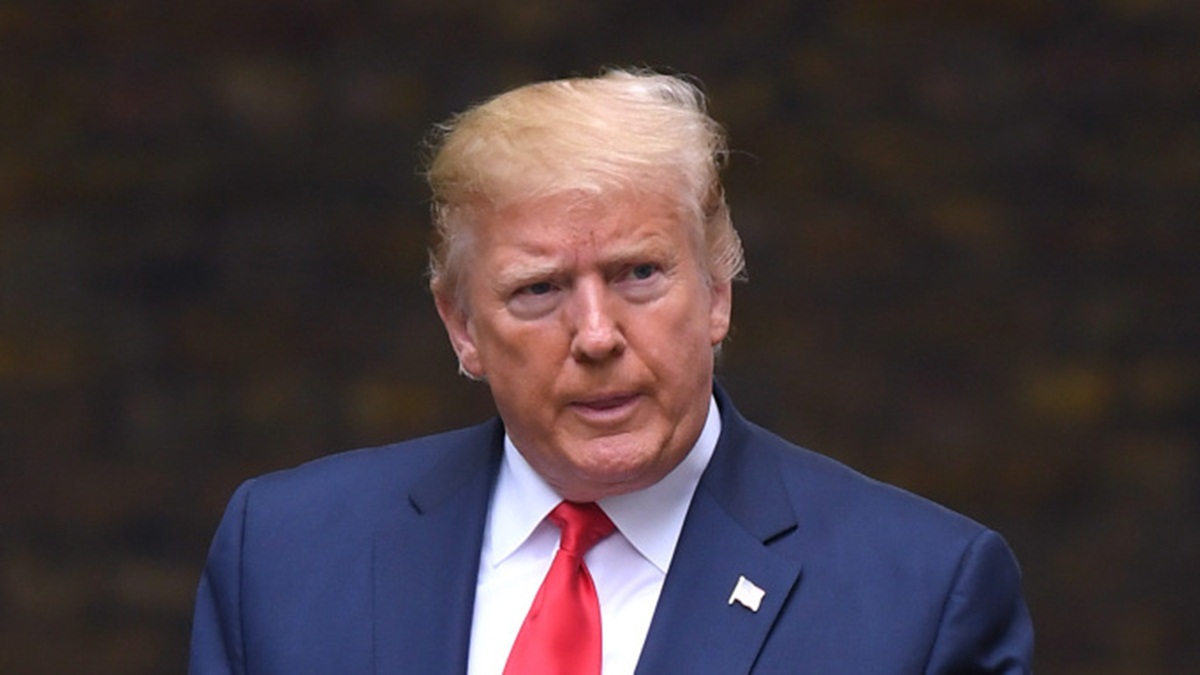
US President Donald Trump openly criticised a recent Supreme Court decision that invalidated his sweeping global tariff orders, calling the judgment “very unfortunate” during his State of the Union address at the United States Capitol.
The remarks were delivered in the presence of senior members of the judiciary, including Chief Justice John Roberts, Justice Neil Gorsuch, and Justice Amy Coney Barrett.
Court Blocks Key Trade Move
The controversy stems from a February 20 ruling by the Supreme Court of the United States, which struck down tariffs imposed by Trump under the International Emergency Economic Powers Act (IEEPA) of 1977.
In a 6–3 verdict authored by Chief Justice Roberts, the court concluded that while the law allows a president to regulate certain economic transactions during a national emergency, it does not clearly authorise the imposition of broad tariffs. The judgment stated that such sweeping taxation powers require explicit approval from Congress.
Importantly, the ruling only applies to tariffs introduced under IEEPA. Other trade duties enacted under separate legal provisions were not part of the case and remain intact.
Trump Defends ‘America First’ Policy
Responding to the decision, Trump defended his trade strategy, arguing that the tariffs were necessary to counter what he described as unfair practices by foreign nations. He reiterated that several countries had benefited at the expense of American industries for years.
According to the President, even after the court’s ruling, US trading partners remain cautious because he retains constitutional authority to renegotiate trade agreements. He suggested that any future negotiations could result in stricter terms for those countries.
Golden Age Narrative Continues
Despite the judicial setback, Trump maintained a confident tone. He told lawmakers that the United States had entered a period of renewed economic strength and global influence. Describing the current phase as a “golden age,” he portrayed his administration as having reversed years of economic decline and restored national pride.
The address combined strong defence of his trade agenda with criticism of the judiciary, signalling that the debate over executive authority and trade policy is likely to continue in the months ahead.