
In the Suwanee area of Atlanta, a young girl named Nelika Nilesh Ingulkar chose to spend her summer vacation somewhat differently from many children her age. Having completed her schooling at Settles Bridge Elementary School and preparing to enter the sixth grade at Riverwatch Middle School, Nelika used part of her long American summer break to explore education, culture and the environment.
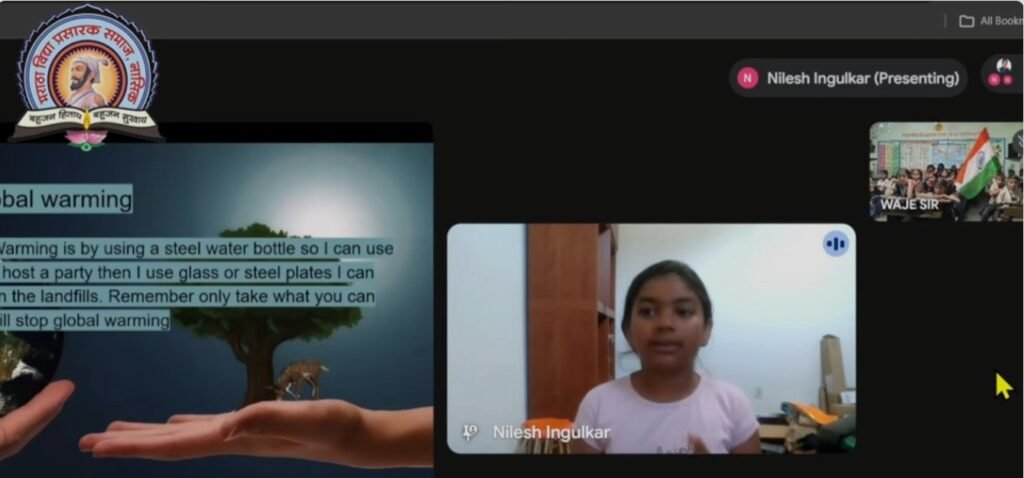
One of the most meaningful experiences of that journey took her, virtually, thousands of miles away—from Atlanta in the United States to the Government Ashram School at Mohpada, situated in the tribal belt of Surgana taluka in Maharashtra’s Nashik district. There, children growing up in two very different worlds came face to face through technology. What followed was not a one-sided lesson from America to India, but an exchange of experiences, ideas and knowledge in which both sides had something valuable to share.
Learning Beyond Borders
Behind Nelika’s growing engagement with education and the environment is her mother, Dr. Sangeeta Todmal-Ingulkar, an environmental educator who conducts lectures and workshops for students and teachers in different countries. Accompanying her mother during such educational engagements has given Nelika opportunities, at a young age, to interact with students and educators from different backgrounds and learn about diverse approaches to education and innovation. Rather than remaining merely an observer, she gradually began taking on the role of communicator herself. It was in this spirit that she interacted with the students of Mohpada under the “Learning Beyond” series.
Though Atlanta and Mohpada are separated by thousands of kilometres, technology made it possible for children from these very different environments to sit together, see one another and exchange ideas. On the Mohpada side, an important role was played by Namdeo Waje, a teacher at the Government Ashram School, who coordinated the students’ participation and prepared them for the interaction. His contribution deserves particular recognition because opportunities for such global interaction do not come easily to children studying in remote tribal areas. Bringing students onto an international platform requires more than simply arranging an online connection. They must be encouraged to overcome hesitation, formulate questions, listen to unfamiliar experiences and confidently express their own ideas.
The success of the interaction therefore belonged not only to the child speaking from Atlanta, but also to the teacher and students in Mohpada who turned a technological connection into a meaningful educational experience.
Two Different Classrooms, Two Kinds of Knowledge
The students of Mohpada Ashram School largely come from tribal communities whose everyday lives remain closely connected with forests, water, soil and agriculture. For these children, nature is not merely a chapter in a textbook. It is part of the world in which they grow up. That gave the interaction an interesting dimension. When the conversation turned towards the environment and sustainable development, Nelika spoke about what she had experienced in the American education system, while the children of Mohpada drew upon knowledge rooted in their own surroundings and communities.
Nelika described the emphasis placed on hands-on and experiential learning in her schooling. She spoke about activities such as strawberry and apple picking, visits to museums, paper crafts and making toys from grass, twigs and other natural materials. Through such activities, she explained, children are encouraged to learn not only by reading but also by observing, creating and experiencing things directly.
For the students of Mohpada, some of these examples were new. Yet the conversation also revealed something equally important: their own surroundings already offered enormous possibilities for experiential learning. The forest, farms, water sources and traditional practices around them were themselves living classrooms. What was required was not necessarily to reproduce an American model, but to recognise the educational value already present in their own environment and connect that knowledge more consciously with formal learning.
Libraries, Forests and a Two-Way Conversation
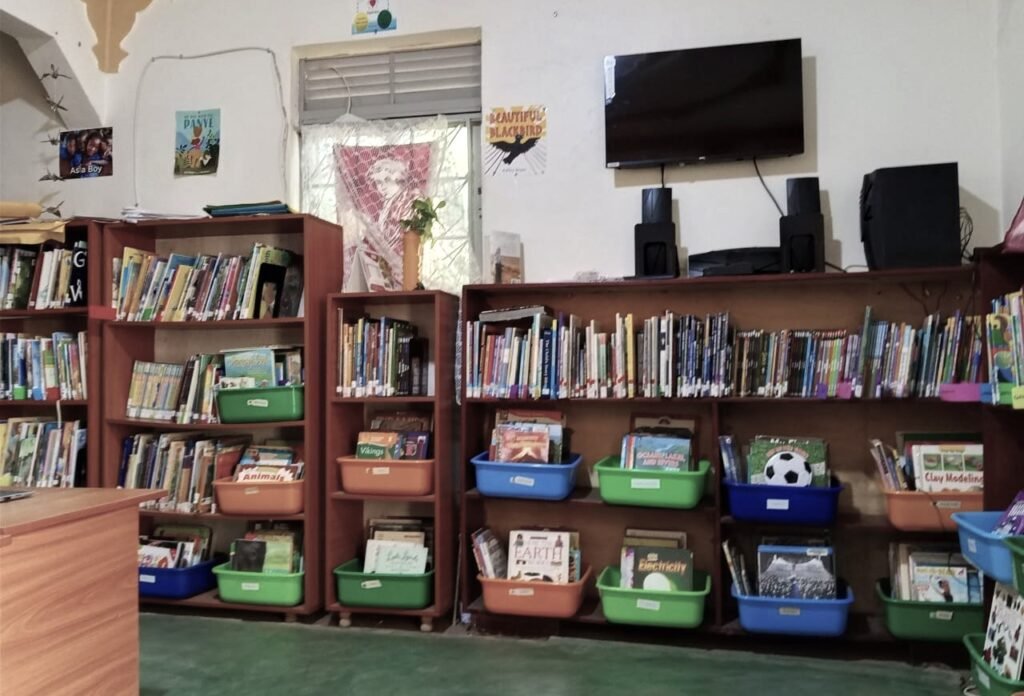
Nelika also spoke about the public libraries she had seen in the United States and the role such institutions play in encouraging children to read, explore ideas and develop creativity. For students studying in a remote tribal region, hearing about such facilities opened a window onto a different educational environment and encouraged discussion about the importance of books, libraries and access to learning resources. But the flow of knowledge did not move in only one direction. The children of Mohpada, in turn, spoke about their experiences of forest conservation, traditional water-harvesting practices and organic farming methods rooted in their communities.
Both sides listened to each other, asked questions and exchanged experiences. And somewhere within that simple conversation emerged the real significance of the initiative. The children began to see that environmental challenges do not belong to one country, one community or one education system. They are shared challenges, but the knowledge required to address them can emerge from very different places. A child growing up amid the resources of an American suburb may encounter sustainability through school activities, museums, libraries and organised environmental learning.
A tribal child growing up in the hills of Surgana may encounter the same idea through forests, farming, water conservation and knowledge passed through generations. Neither experience needs to diminish the other. Instead, each can enrich the other.
A Shared Connection With Nature
Nelika’s own interest in the environment extends beyond classroom discussions. At home, she has developed a small kitchen garden where she grows plants and saplings and enjoys experimenting with nature. That personal curiosity gave her another point of connection with the Mohpada students. On one side were children whose families have lived close to forests and agriculture for generations. On the other was a young girl growing plants in her garden in suburban America.
Their circumstances could hardly have been more different. Yet their affection for nature gave them a common language. And perhaps that was the most valuable lesson of the entire exchange: education becomes richer when children are given an opportunity not merely to receive knowledge, but to share what they already know.
The journey from Atlanta to Mohpada, therefore, was never simply about distance. It was about building a bridge between two worlds—and discovering that learning could travel across that bridge in both directions.


