

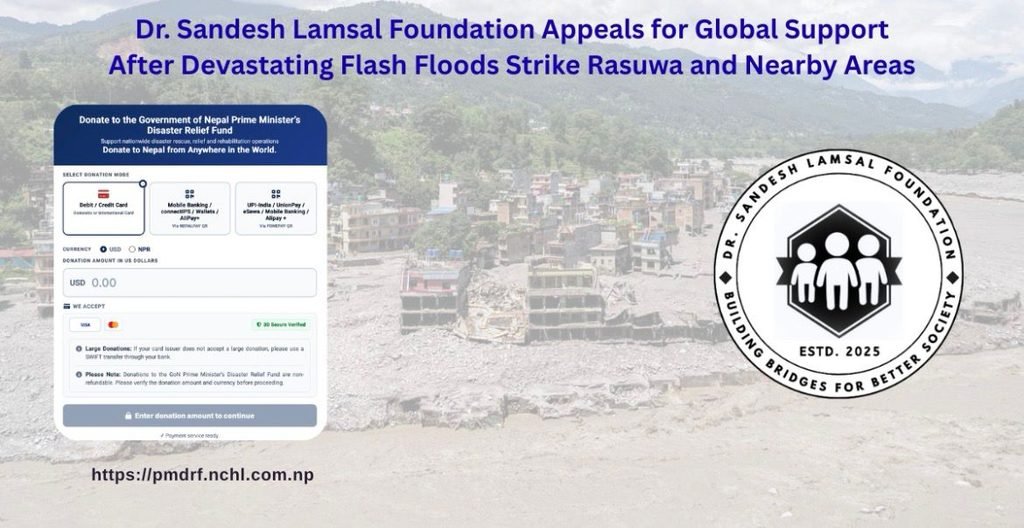
Kathmandu: The Dr. Sandesh Lamsal Foundation has appealed for international humanitarian and financial support following the devastating August 26 flash floods that struck Nepal’s Rasuwa district and swept through the Bhote Koshi–Trishuli river corridor, causing extensive loss of life and damage to settlements, roads, hydropower infrastructure and border facilities.
The disaster began on the morning of August 26 after a massive rock-and-ice collapse occurred high in the Lhende catchment near the Nepal–China border. Satellite imagery and scientific assessments indicate that glacier ice and underlying bedrock detached from the high mountain slope, triggering an avalanche that mobilised rock, sediment and water before surging downstream through Rasuwagadhi and the Bhote Koshi–Trishuli system.
The flood rapidly devastated settlements and infrastructure across parts of Rasuwa and downstream districts. Nepal’s government subsequently declared affected municipalities disaster crisis zones and launched large-scale search, rescue and relief operations. The World Health Organization said communities in Rasuwa, Nuwakot, Dhading, Chitwan, Gorkha and Tanahun were among those affected.
The scale of the disaster continued to evolve as rescue teams searched through debris and isolated valleys. Reuters reported on September 2 that Nepal had confirmed 1,114 deaths and listed 2,916 people as missing, while China reported additional casualties and missing persons across the border. Thousands of army personnel, helicopters, excavators and other emergency resources have been deployed in the continuing search effort.
The Dr. Sandesh Lamsal Foundation said the catastrophe demonstrates the growing vulnerability of Himalayan communities to cascading mountain hazards and called for stronger early-warning systems, improved cross-border information sharing and more resilient infrastructure.
The disaster has also renewed scrutiny of Nepal’s high-altitude warning network. Reuters reported that authorities plan to rebuild the early-warning system along the China border using seismic sensors, cameras and satellite-based communication equipment after the existing system proved inadequate during the flood. Nepal is also seeking improved real-time glacier and water-level information from China.
The Foundation said traditional flood-warning systems focused largely on rainfall and river levels are insufficient for sudden glacier, rock and ice-collapse events occurring at high altitude.
It has called for high-altitude monitoring equipment, satellite communications in vulnerable valleys, locally positioned emergency machinery and mandatory climate-risk assessments for hydropower, highways and other major infrastructure projects in Himalayan regions.
The Foundation has also appealed to the international community for humanitarian assistance, technical expertise and financial support for rehabilitation and reconstruction.
It urged travellers who have already planned visits to Nepal not to cancel their journeys unnecessarily, arguing that continued tourism can contribute to the recovery of communities dependent on the sector.
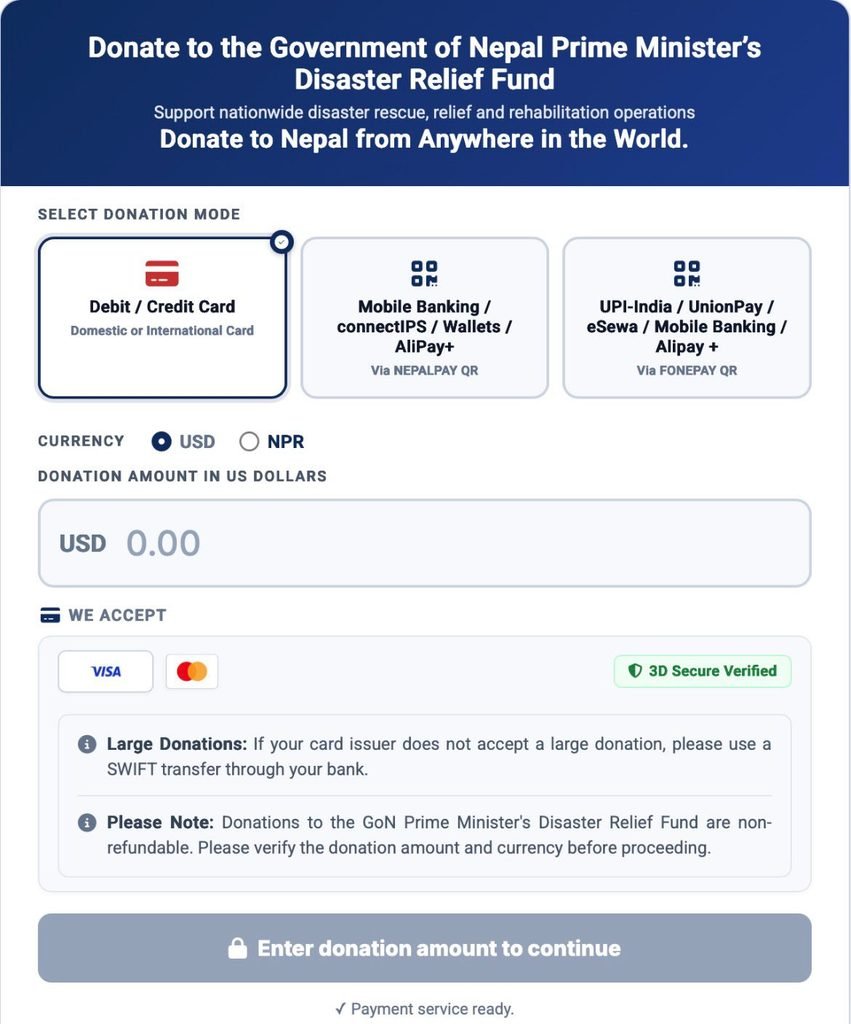
Separately, the Government of Nepal has formally appealed for financial contributions toward disaster rescue, relief and rehabilitation. The Ministry of Home Affairs said the August 26 flood caused major loss of life and property and appealed to individuals and institutions to contribute to the Prime Minister’s disaster relief mechanisms.
The Foundation has asked prospective donors to contribute only through the Nepal government’s official disaster-relief mechanism rather than sending funds directly to the Foundation.


