
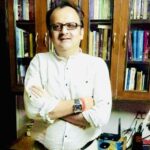
The Bar Council of Delhi results were declared nearly six months after polling, following prolonged litigation and allegations of irregularities. Among the outcomes drawing attention is first-time contestant B.S. Jakhar’s second-place finish.
New Delhi:The results of the Bar Council of Delhi Elections 2026 were formally declared on August 19, nearly six months after advocates cast their votes at the Delhi High Court.
The declaration followed a Supreme Court order of August 14 permitting the results to be announced, while making them subject to the outcome of election petitions pending before the designated Election Tribunals.
That extraordinary delay — from voting in February to declaration in August — is one reason the election has remained a talking point across Delhi’s court complexes.
Another is the performance of Advocate B.S. Jakhar, who was contesting for the Council for the first time and finished second among the candidates who crossed the prescribed quota.
His result has attracted attention particularly among district-court lawyers, where Jakhar has built much of his organisational base.
Why This Election Drew So Much Attention
The Bar Council of Delhi is not merely a representative association.
Constituted under the Advocates Act, 1961, it performs statutory functions ranging from enrolment of advocates and disciplinary proceedings to welfare measures and representation of the profession.
The 2026 election therefore carried significance well beyond an internal contest among lawyers.
A total of 221 candidates contested 23 seats, with polling taking place over three days — February 21, 22 and 23 — at the Delhi High Court.
The election used the preferential voting system, under which candidates receive first-preference votes and can subsequently benefit from transferred preferences as other candidates are eliminated.
The counting process itself became controversial.
During the elimination stage in April, election officials detected altered preference markings on certain ballot papers. Counting was halted and the matter led to police action as well as litigation before the Delhi High Court and Supreme Court.
The legal proceedings prolonged the election process considerably.
Eventually, on August 14, the Supreme Court permitted declaration of the results but made it clear that the outcome would remain subject to decisions of the Election Tribunals considering pending disputes.
The results were formally declared five days later.
Jakhar’s Second-Place Finish
According to the final declaration, Piyush Gupta was the first candidate to cross the quota.
Jakhar followed.
The declaration records that Jakhar crossed the quota in Round 183. His vote value included a substantial first-preference component as well as transferred preferences.
That combination is politically significant within Bar elections.
A strong first-preference tally usually reflects an identifiable core support base, while transferred votes can indicate acceptability among voters whose first choices lay elsewhere.
For a first-time candidate, finishing so high in a crowded field has naturally drawn attention.
A District-Court Base
Jakhar did not enter the contest without an organisational background.
He has previously served as President of the Dwarka Court Bar Association and as Chairman of the Coordination Committee of All Delhi District Courts Bar Associations.
Those positions gave him visibility across Delhi’s district courts and placed him close to issues that affect practising lawyers on a daily basis — court infrastructure, chambers, welfare measures, coordination among Bar bodies and representation before judicial and administrative authorities.
That background appears to have mattered.
District-court lawyers have often argued that their concerns do not receive the same attention as those associated with the High Court Bar. Jakhar’s performance is therefore being interpreted by some lawyers as evidence that a candidate rooted in district-court politics can build support across the wider Delhi Bar.
He has also previously entered electoral politics outside the legal profession, having contested a Lok Sabha election from West Delhi.
Jakhar comes from a legal family as well. His father, the late R.S. Jakhar, was an advocate who served as Standing Counsel for the Government of Haryana in the Supreme Court.
But this Bar Council result gives the younger Jakhar a mandate of his own.
Why the Result Matters
The significance of Jakhar’s second-place finish lies partly in the structure of the election itself.
In a field of 221 candidates, a contender needs not only committed first-preference voters but also sufficient acceptability to benefit from transferred preferences as counting progresses.
That makes a high finish difficult for a newcomer.
His showing has therefore become part of a wider conversation within Delhi’s legal community about the growing electoral weight of district courts and whether future Bar Council contests will become less centred on established High Court networks.
For younger advocates too, the composition of the Council matters directly.
Questions of welfare, stipends, working conditions, professional dignity, enrolment procedures and access to facilities are becoming increasingly prominent in Bar politics.
A Council Elected After a Long Legal Battle
The 2026 election had an additional layer of significance because it followed a period of court-monitored intervention in State Bar Council elections.
The election process was conducted amid judicial directions aimed at ensuring timely polls and resolving long-pending disputes over representation.
What was expected to be a routine February election eventually stretched into August because of litigation surrounding the counting process.
The Supreme Court has now allowed the elected Council to take shape, but the legal chapter is not completely closed. The declared results remain subject to the outcome of proceedings before the Election Tribunals.
Who Was Declared Elected
The men who crossed the quota, in the order reflected in the final declaration, include Piyush Gupta, B.S. Jakhar, Murari Tiwari, Mahavir Sharma, Mehmood Pracha, Rakesh Sherawat, Rajesh Mishra, Ramit Sehrawat, Sanjay Rathi, Nitin Ahlawat, R.S. Goswami, Ramesh Gupta, Rahul Sharma, K.K. Manan, D.K. Sharma, Raman Sharma, Rajpal Kasana and Kumar Mukesh.
Five women were returned through the prescribed reverse-elimination process: Sangeeta Sondhi, Yukti Rathi, Amrit Kaur Oberoi, Anupriya Yadav and Garima Bharadwaj.
Their election, like the rest of the declared results, remains subject to the outcome of pending election petitions.
From Mandate to Performance
For Jakhar, however, the election result is only the beginning.
A strong debut can generate expectations, but Bar Council membership is ultimately judged by performance — particularly on professional welfare, disciplinary credibility, transparency and the everyday concerns of practising advocates.
What the February vote has already demonstrated is that a first-time candidate with a strong district-court network was able to finish near the top of one of the largest Bar Council contests in the country.
Whether that electoral support translates into influence within the Council will now be watched just as closely as the election itself.


