
Amid the violence and mass displacement of Partition, hospitals, religious organisations, doctors, women’s groups and ordinary volunteers formed an extraordinary network of relief across Delhi.
New Delhi: Whenever Manoj Kumar returned to Delhi, two places in Civil Lines evoked memories that went far beyond geography — Brotherhood House and St Stephen’s Hospital. For the celebrated actor, whose family was uprooted during Partition, they represented a deeply personal chapter from 1947, when families arriving from what had suddenly become another country were searching for shelter, medical treatment and a sense of safety. Kumar later recalled that the Delhi Brotherhood Society (DBS) had helped his family during those traumatic days. The gratitude remained with him decades later.
His story was one among hundreds of thousands.
A Capital Overwhelmed by Partition
Delhi underwent a demographic and humanitarian upheaval of extraordinary proportions in 1947. The 1941 Census recorded the population of Delhi province at roughly 9.18 lakh. Partition transformed that city within a few years. Estimates suggest that around 3.3 lakh Muslims migrated from Delhi towards Pakistan, while approximately five lakh Hindu and Sikh refugees arrived from territories that became part of Pakistan. By the 1951 Census, Delhi’s population had risen to more than 17 lakh. The numbers, however, cannot fully capture what unfolded on the ground.
Railway stations became points of arrival for exhausted, injured and traumatised families. Refugee camps sprang up across Delhi. Hospitals struggled with casualties. Public buildings, religious institutions and open spaces were converted into temporary shelters. Amid communal violence and administrative strain, an enormous humanitarian effort began taking shape.
Brotherhood House Opens Its Doors
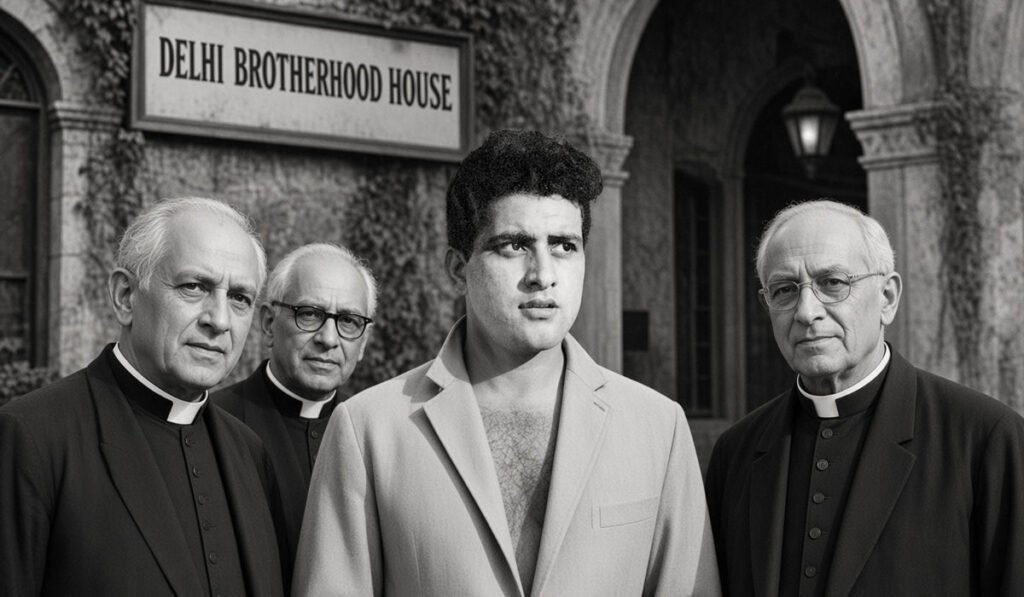
Among the organisations involved was the Delhi Brotherhood Society, whose origins can be traced to the Cambridge Mission to Delhi established in 1877. The Cambridge Brotherhood helped establish St Stephen’s College in 1881, while St Stephen’s Hospital, which began serving Delhi in 1885, grew into one of the capital’s important medical institutions. During the Partition crisis, Brotherhood House in Civil Lines became one of the places where displaced families could find temporary shelter and assistance.
Accounts associated with the Brotherhood recall volunteers helping people arriving in Delhi, arranging medical attention for the sick and wounded and assisting families who had nowhere else to go. It was this humanitarian work that Manoj Kumar remembered years later. Brother Solomon George of the Delhi Brotherhood Society says Kumar retained a deep respect for the institution throughout his life. For families who had lost homes, possessions and sometimes relatives, even a place to sleep, water to drink or someone willing to guide them to a hospital could mean survival.
Hospitals on the Front Line
Delhi’s hospitals were among the most heavily burdened institutions during those turbulent months. St Stephen’s Hospital, founded in 1885 and today located at Tis Hazari, treated the sick and injured who reached the city amid the upheaval. Its doctors and nursing staff were part of a much wider medical response that included Irwin Hospital — now Lok Nayak Hospital — and Lady Hardinge Medical College and Hospital. Doctors sometimes worked extraordinary hours as casualties and displaced families poured into the capital.
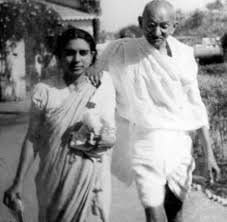
Among the physicians associated with relief during this period was Dr Sushila Nayar, Mahatma Gandhi’s personal physician. She had already been closely involved with Gandhi’s humanitarian work and remained active among communities affected by Partition violence. Gandhi himself spent some of the final months of his life attempting to calm communal tensions and protect vulnerable communities.
The Doctor Who Paid With His Life
One of the most poignant stories from those days is that of Dr N.C. Joshi. A respected surgeon working in the Karol Bagh area, Joshi had devoted himself to treating ordinary people irrespective of community. On September 8, 1947, at the height of communal violence in Delhi, he was shot dead. The hospital associated with him survives today as the Dr N.C. Joshi Memorial Hospital in Karol Bagh — a reminder of a doctor whose service to the wounded ultimately cost him his life. His death reflected the brutal contradictions of Partition: even those trying to save lives could themselves become victims of the violence.
Relief Beyond the Government
The state machinery alone could not cope with displacement on such a scale. Religious institutions, social organisations, doctors, civic volunteers and women’s groups stepped into the vacuum. Organisations associated with the Arya Samaj undertook refugee relief work. Sikh institutions and gurdwaras helped displaced families with food and shelter. Congress relief workers, Gandhian volunteers and local citizens joined efforts to distribute food, clothing and medicines. Women played a particularly important role in caring for displaced families and children, tracing missing relatives and helping refugee women rebuild shattered lives.
International humanitarian organisations were also active. The Red Cross provided medical and relief assistance, while the United Council for Relief and Welfare, headed by Lady Edwina Mountbatten, worked as a coordinating body for many voluntary organisations overwhelmed by the scale of the refugee crisis. The machinery of relief was far from perfect. Resources were limited, communications were chaotic and the violence frequently overwhelmed those trying to respond. But thousands of volunteers continued working.
Delhi Became a City of Refugees
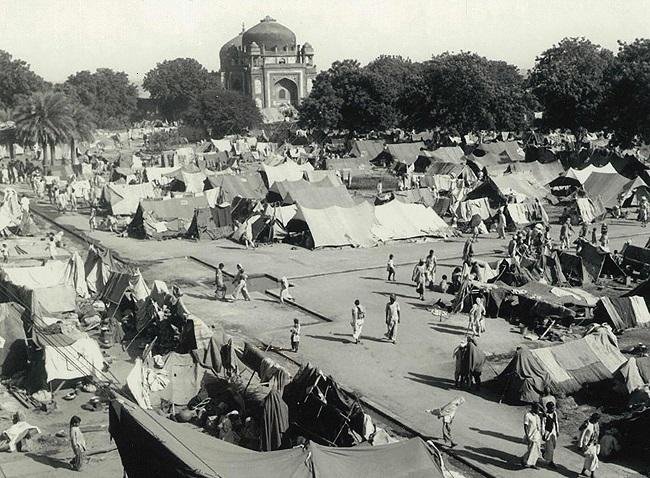
The refugees did not simply pass through Delhi. They transformed it. Families who arrived with almost nothing eventually rebuilt businesses, institutions and neighbourhoods. Camps and temporary settlements gradually gave way to new colonies and markets. Delhi itself changed socially, linguistically and economically. Yet behind that transformation lay an earlier, more fragile moment — when survival depended on refugee camps, hospitals, community kitchens, volunteers and strangers willing to help.
The Partition narrative is often told through political negotiations, communal violence and the unprecedented movement of populations across new borders. Less frequently remembered are those who stood at railway platforms, hospital wards and refugee camps trying to save whoever appeared before them.
The Other Memory of Partition
Partition inflicted wounds that Delhi carried for generations. Lakhs were displaced across northern India and countless families lost homes, livelihoods and loved ones. Delhi witnessed fear, vengeance and communal hatred. But that was not the whole story. In the same streets where violence unfolded, doctors treated strangers. Volunteers carried the wounded. Religious institutions opened their compounds. Women cooked for displaced families. Citizens searched for medicines, clothes and shelter. They did not ask every injured person which side of the new border they had come from before offering help.
That is why places such as Brotherhood House and St Stephen’s Hospital matter in Delhi’s Partition memory. They remind us that while 1947 revealed the terrifying consequences of communal hatred, it also produced acts of extraordinary compassion. Even today, memories survive among elderly families who remember those anonymous men and women working through the days and nights of 1947 — feeding the hungry, treating the injured and helping people who had lost almost everything. In one of the darkest chapters of the subcontinent’s history, they represented another India: an India in which humanity remained possible even when everything around it appeared to be falling apart.


