

India’s medal story at the Glasgow 2026 Commonwealth Games is evolving beyond its traditional weightlifting dominance. From athletics and para athletics to boxing, Anjana Sasi analyses how India’s growing depth across multiple disciplines is redefining its sporting identity.
Glasgow: The familiar soundtrack of Indian success at the Commonwealth Games has long echoed from the weightlifting arena. In Glasgow, that tradition continues—but it is no longer the whole story.
Walking between the SEC complex, Scotstoun Stadium and the Tollcross Aquatics Centre over the past week, one theme has become increasingly evident: India’s medal story is becoming more diverse. The tricolour is no longer rising solely because of its traditional strength sports. Athletics, para athletics and endurance events are beginning to redefine the country’s international sporting profile.
As competition enters July 29, India has firmly established itself among the leading nations with 12 medals—two gold, seven silver and three bronze. More importantly, several performances have rewritten Indian Commonwealth Games history rather than simply adding another medal to the tally.
Weightlifting continues to deliver
If there is one sport that remains India’s most dependable medal factory, it is weightlifting.
Olympic champion Mirabai Chanu once again demonstrated why she remains the face of Indian lifting. Her third consecutive Commonwealth Games gold in the women’s 48kg category was far more than another title—it reaffirmed a remarkable consistency across three editions of the Games. She dominated with technical precision in both the snatch and the clean and jerk, never allowing the competition to dictate the contest.
The supporting cast has been equally impressive. Rishikant Singh opened India’s able-bodied medal account with silver in the men’s 60kg, setting a Commonwealth Games record in the snatch before narrowly missing gold.
Muthupandi Raja followed with silver in the men’s 65kg, while Gyaneshwari Yadav battled through a fiercely competitive women’s 53kg contest to secure another silver. Valluri Ajaya Babu maintained India’s momentum with silver in the men’s 79kg division. Bindyarani Devi’s bronze further underlined the remarkable depth India now possesses in weightlifting.
Collectively, these performances reveal a healthy transition. India is no longer dependent on one or two elite lifters; the production line now stretches across multiple weight categories.
Athletics finally finds its moment
For decades, Indian athletics has searched for consistent Commonwealth Games success beyond isolated performances. Glasgow may well be remembered as a turning point.
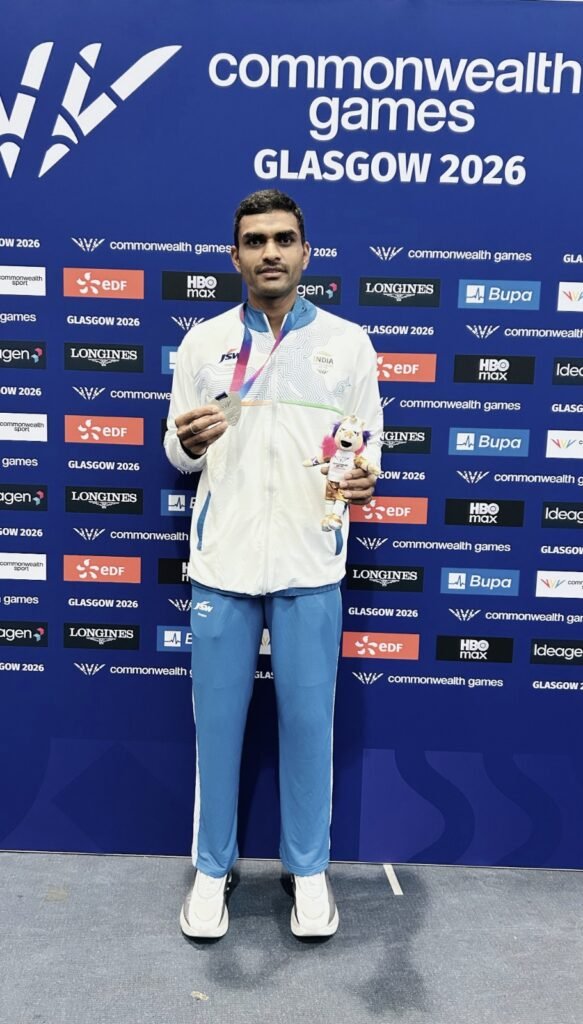
The defining moment came through Sarvesh Kushare, whose silver medal in the men’s high jump carried significance far beyond the podium. His clearance of 2.25 metres made him the first Indian man to win a Commonwealth Games medal in the event.
The medal reflected years of technical refinement rather than a one-off breakthrough. Kushare’s measured progression through the heights, combined with his calm execution under pressure, illustrated how Indian jumping events are steadily closing the gap on the traditional Commonwealth powers.
Another historic chapter unfolded in the men’s 10,000 metres. In difficult rainy conditions at Scotstoun Stadium, Gulveer Singh produced a composed tactical race to secure silver—India’s first Commonwealth Games medal in the event.
Rather than chasing the early pace, he remained within striking distance before producing a powerful finishing surge that rewarded patience and race awareness. It was a performance built as much on tactical intelligence as physical endurance.
Para athletics reaches a historic milestone
Perhaps the most emotional scenes of India’s campaign unfolded in the women’s shot put F57 final.
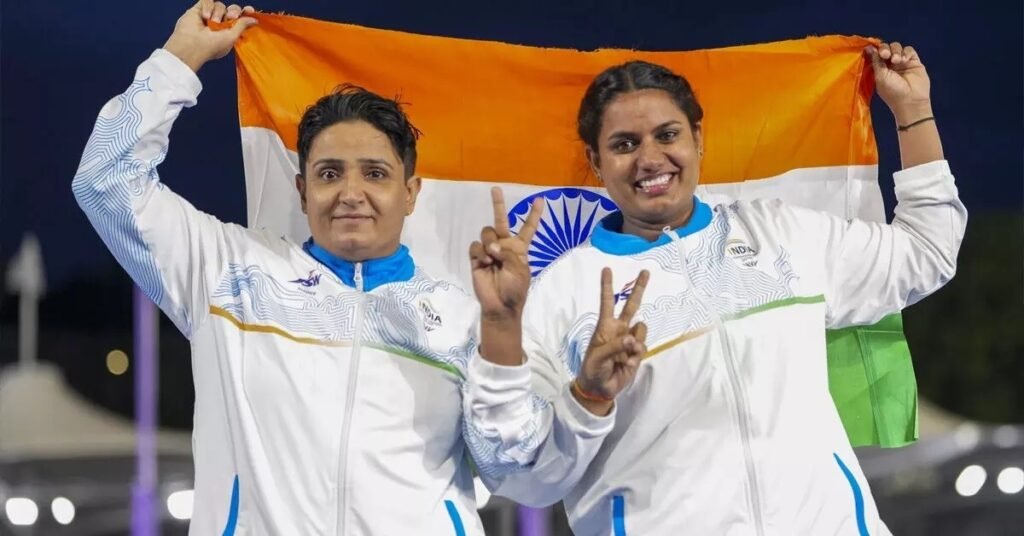
Sharmila Dhankar produced a season-best throw to win gold, becoming India’s first Commonwealth Games para athletics gold medallist.
Her achievement represented far more than individual success. It signalled the growing competitiveness of India’s para sports programme and reflected increasing investment in elite athlete development.
Adding further significance was Shilpa Kanchugarakoppalu Shyla, whose bronze ensured India celebrated a double podium finish in the same event.
Watching the Indian athletes embrace after the medal ceremony was a reminder that some victories reshape sporting narratives rather than simply adding another medal to the table.
The medal that started it all
Every successful campaign has an opening chapter.
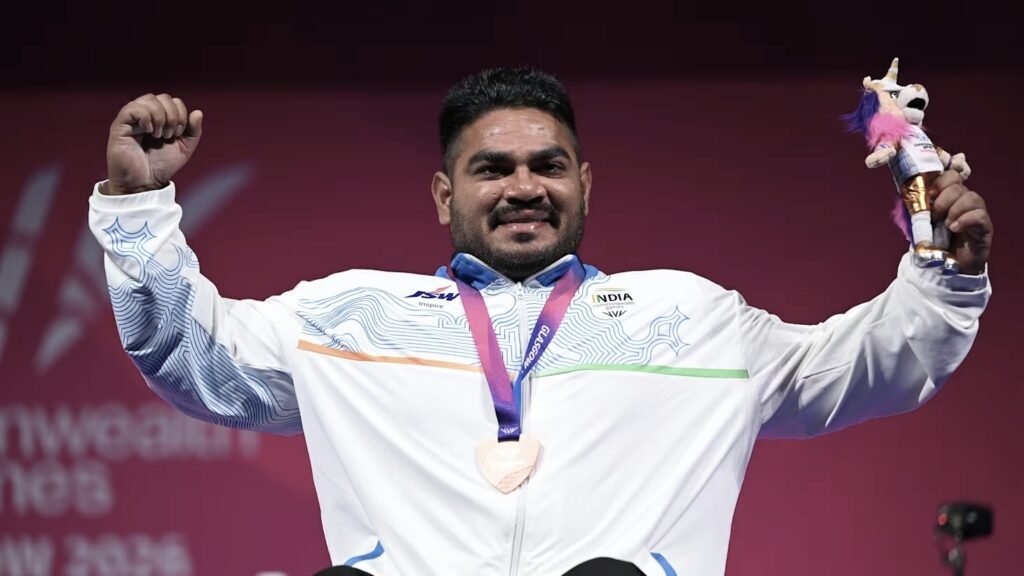
For India, it came through Jhandu Kumar, whose bronze in para powerlifting ensured the contingent settled quickly into the competition. While later achievements naturally attracted greater headlines, his medal provided the psychological momentum that often proves invaluable during a multi-sport event.
Boxing quietly builds momentum
Away from the medal ceremonies, another encouraging development has emerged inside the boxing ring.
Indian boxers have consistently progressed into the latter stages of their respective weight categories, guaranteeing multiple medal opportunities in the days ahead. Their tactical maturity—built around disciplined defence, intelligent footwork and calculated counter-attacking—suggests India’s medal tally could receive another significant boost before the Games conclude.
Beyond the numbers
The medal table tells only part of the story.
The larger takeaway from Glasgow is India’s growing competitive spread. Weightlifting continues to provide certainty, but athletics is beginning to offer belief. Para athletics has demonstrated genuine world-class capability, while boxing appears ready to contribute further.
Perhaps most encouraging is the nature of these performances. Several medals have not arrived through unexpected upsets; they have come from athletes executing well-developed tactical plans under pressure.
That reflects a broader evolution in Indian sport—greater scientific preparation, improved coaching structures and athletes increasingly comfortable performing on major international stages.
With several medal events still to come, Glasgow already feels different from previous Commonwealth Games campaigns.
India is no longer relying on a handful of traditional strengths. It is gradually becoming a nation capable of competing across the sporting spectrum, with success increasingly built on depth rather than dependence on a few established disciplines.


